Some Inconvient Questions
September 5th 2008 (finished just past mid-night)
Ryan Hampton
After hearing much about global warming (we were supposed to read a book about it over the summer for Samford), I think it is time to shed some logical light on the issue. Now this is not going to be a whole bunch of propaganda telling you about how there is definetely no such thing as global warming. I am not going to give you much direct evidence about how our temperature changes are definetely cyclical, or about how I can show there is not temperature or climate change after all. I may hint at some of that evidence, but my main purpose in this post is actually to ask plenty of questions that any proponent of government intervention because of their belief of global warming or climate change has been left unanswered.
What do I mean? Well consider what many global warming finatics tell us. They tell us that the earth is definetely warming (or they may use the term “climate change” on cold days). They tell us it is our fault. They tell us that it is a problem. They tell us that since we caused this problem, then we must be able to fix it over time. But since we are not going to individually take the sacrafice, the government must force the issue upon us by law, and eventually this should turn into a global effort – still, most likely, by force.
Here is the way I look at: the burdon of proof falls upon the one’s making these claims. The idea of a global government controlling the environment comes only after all of the other things have been proven. That is a lot to prove! I mean think about it. Do we have full proof that the earth is really warming up a whole lot? Now I’m sure it has been some. Most people say that. But c’mon. I’ve heard that we just came out of the “little ice age” in the 1800’s. So perhaps we are just recovering from that and it’s all good. Perhaps it is cyclical. Perhaps we are warming a little but is it necessarily a bad thing? Maybe not. Maybe it is even a good thing. Maybe we get more flowers, more sunshine, more green grass (ironically that is what we are supposed to move toward anyway). Maybe it is a problem, but maybe not. Again the burdon of proof is on those who believe that it is a problem because they are advocating doing something about it. And if they do prove that, there are still more questions to answer.
Are humans involved. Sure, we drive SUV’s. Sure, every now and then we accidently set off a wildfire. I’m trying to think what else we may do. Mow our lawns using gasoline. But do these things contribute to global warming? Really? Does mowing my lawn really make the earth hotter? Or even driving the gas-guzzling 1993 Ford Explorer? Where is the proof from those who bear its burden? I have heard that everyone driving cars for about fifteen years does not even put out as much heat into the atmosphere as one single volcano that we can not control. So is it really our fault? If the models that are used to show how the earth’s temperature has risen over-time are correct, we must also admit that the earth’s temperature is cyclical. If the graphs are incorrect, then perhaps people five-hundred years ago were “suffering” from the same heat that we are today.
And you know something? I would wager to say that we are more energy efficient and environmentally beneficial with our recources than we used to be. The “environmental” Native Americans would burn down a whole forest to get some wood or some land. A whole forest when they only needed a little bit of it. Do you know how they would kill just one buffalo? Run a whole herd off of a cliff. They’d kill them all when they only needed one! These actions today would be considered wrong as they should be. The Indians knew no better and had little of the machinery (oh the evil machinery!) to be more energy efficient. We do. So not to sound like a hyper-libertarian, but the free market will work better than government intervention. That goes for a safer environment as well as the economy. We are constantly coming up with better ways to do things because we as humans demand it. There is a scarcity in the world, so we by nature know we must have things that best deal with that scarcity. The free market will probably overtime push SUV’s out of the market because we come up with better solutions for carrying a large family somewhere – more enery efficient and economical ways. And yes we may even by the power of the businessman (oh that evil greedy businessman!) get something other than gasoline to power our automobiles – without government intervention.
And even if we have been causing global warming, could it be that perhaps our actions level off somewhere – where we don’t just keep on and keep on getting warmer? I find it very hard to believe that we will just die in the next fifty years because we got too hot. I believe in God and I don’t think He’d let that happen to His earth. Even if your atheist, you probably believe that the earth has been here for billions of years anyway. So are you just going to all of a sudden think that the earth is warming due to non-cyclical reasons and unless we do something, the earth is going to die? This happened all of a sudden and evolutionists are supposedly uniformists!
But let us assume even yet that the earth is warming, it is a problem, humans are causing it, and it appears that we in and of ourselves are making no progress to fix our problem. This is the beginning – and only the beginning – of an argument for government intervention. If we are not fixing the problem, will the government help? Will the rewards be worth the sacrafices? What about the things we give up? What if we gave the government so much power to control business and our personal decisions that we fell under some sort of tyranny? What if we fell back into the life of the 1700’s? As romantic as it is to think of those times, I am glad for the improvements we have made. Instead of dying from a blizzard riding on the back of a horse to go see an old friend, we drive cars and write e-mails, etc., and then complain of the heat or the price of gasoline! What if we took away all the things that make our life the blessed life it is now, and returned to living in a life where turning 50 was a big deal, and where an out-of-state travel may have taken a couple of weeks if not your life?
Furthermore, even if we realized that government intervention is the right thing to do, we must ask what the proper precedure should be. We should go about this in a Constitutional way – probably an ammendment passed in the way that the Constitution prescribes. And the last thing we need is a global government to get involved. The last time I checked, I am an American, not a globalist. The last time I checked, we can individually take action by picking up after ourselves, not being careless with our recources, etc. I have nothing wrong with personal action to keep the world a better place. But making a wager that we as humans are controlling the weather and the government must get involved because of it, takes much proof to many questions. And so far I see more questions than proof.
My verdict is this: until I see more evidence, the idea of global warming is still up in the air (no pun intended).
What do you think?
God bless America
Pray for our Troops
September 5th 2008
Ryan Hampton
Showing posts with label law. Show all posts
Showing posts with label law. Show all posts
Friday, September 5, 2008


Sunday, August 3, 2008
The Politics of Racism
The Politics of Racism
This will probably a long in-depth blog and might bore you. But I do believe that if you have patience and try to follow this, then it should (hopefully!) be thought provoking, interesting, and possibly even worth your time.
Clifton Gardner did a similar piece on this (1) in which takes up much less of your time to read. I will try to expound upon Clifton's points, and go into deeper detail.
His point was that liberalism is actually filled with much more racism than conservatism, and that, conservatism at its truest is actually not racist at all, despite what the liberals and the media tell you about how conservatives are passionless, authoritarian, rich, white, idiots from the South.
But I will go into deeper points, discussing what worldview and religion have to do with this, and I will be fair. I will give criticism to conservatives when they need it, and I will not bash every liberal in this world as a racist. I will only blame the liberals worthy of being held a racist as a racist, and the rest; I will simply try to inform politely.
But let me explain my politics, which I consider to be more or less conservative, although I may not fit in exactly with every so-called conservative today. It begins with my Christian worldview.
I believe that God created this world and all that is in it. That includes me; that includes you. I can only trust Him for my life, and give thanks ultimately to Him for the blessings upon this life of liberty and property He has given to me. I believe that I, like all other people (except Jesus), am a sinner who deserves Hell, and can only be saved by the blood of Christ. In the New Covenant, this salvation is open to those of all races, both to men and women, from all cultures, ways of life, etc., and can be received simply through faith in Christ. The theology of predestination might could be argued (that is, God predestines His people from before all worlds, so salvation is in God's Hand), but even yet, since we would not know who the elect were, we must assume as if this salvation is offered to all, and must preach the Gospel to everyone as if they can receive it. Obviously, this is not racist.
Now to some, this Christian worldview supposedly leads to the conservative politics of forcing Christianity, hating those who may not believe exactly as they do, etc. But that is not where it leads me or many other Bible-believing conservatives. Here is where it leads me:
God created everyone, and He created him or her equally.
God created everyone good, but each man has responsibility for his sinful nature, and must call upon God to have it forgiven.
God gave us certain Rights under His Law. The core Rights He gave us are the Rights to life, liberty, and property.
The way each individual exercises these Rights is between him and God. He must make his decisions and take responsibility for his actions before God.
But we have a little problem: men being sinners, will want to naturally use force against others to achieve their ends, something they do not have the Right to do under God's Law. Taking the life of someone is murder. Taking their liberty is slavery. And finally, taking their property is theft. All of these things (murder, slavery, and theft) can be used to achieve one's ends at the expense of others. But God works in very subtle ways, and is not going to strike someone down the moment they kill someone. Before the Flood, God pretty much let it go. But when it got out of hand, God sent a flood to destroy the evil of the world. Afterwards, He promised not to destroy the world again like that, so He gave man the authority to set up government for the purpose of punishing wrongdoers (Rom. 13:4).
Therefore governments purpose is to secure everyone, of all races, their Rights to life, liberty, and property, or more broadly, the pursuit of their own happiness.
But we have a catch 22. Government is comprised of sinful men. Sinful men usurp one's Rights. Therefore there must be limits on government. In America, we have a Constitution that limits the Central government to their authorities. We have checks and balances. Also, as written in the Declaration of Independence, it is the Right and Duty of the people to overthrow bad government (certainly as the Declaration says it is wise to suffer under sufferable, for no government is perfect, but there are times to overthrow a bad government). Not all governments do or should limit themselves in the exact way, but a limited government is important so that the government protects our Rights, and does not usurp them.
To sum all of this up, let's look at the Declaration of Independence itself:
We hold these truths to be self-evident, that all men are created equal, that they are endowed by their Creator with certain unalienable Rights, that among these are Life, Liberty and the pursuit of Happiness. — That to secure these rights, Governments are instituted among Men, deriving their just powers from the consent of the governed, — That whenever any Form of Government becomes destructive of these ends, it is the Right of the People to alter or to abolish it, and to institute new Government, laying its foundation on such principles and organizing its powers in such form, as to them shall seem most likely to effect their Safety and Happiness. Prudence, indeed, will dictate that Governments long established should not be changed for light and transient causes; and accordingly all experience hath shewn that mankind are more disposed to suffer, while evils are sufferable than to right themselves by abolishing the forms to which they are accustomed. But when a long train of abuses and usurpations, pursuing invariably the same Object evinces a design to reduce them under absolute Despotism, it is their right, it is their duty, to throw off such Government, and to provide new Guards for their future security.
Now within this Christian worldview that establishes this basic form of government, there are some questions that still linger and are harder to answer. What about war? Immigration? What about social issues, as today we have the homosexual marriage debates, debates over drug laws, abortion, etc.?
With war, we are killing people, blowing things up, doing all sorts of things that destroy life and property, and we are sometimes withholding the liberty of our soldiers. Yet at the same time, it is the duty of the government to protect us at home, and sometimes war becomes the only rational way. Therefore, "war as a last resort" is generally the battle cry for foreign policy. Putting that in perspective in today's world is very hard to do.
Immigration is hard because we should want to offer liberty (although ultimately liberty comes only from God – 2 Corinthians 3: 17) to everyone. We certainly do not want to take it away from those who seek it – even foreigners. But at the same time we must be willing to guard our borders from any enemy we may have. If we have no border, we essentially have no nation or government, and that goes against the Christian worldview.
Social issues are hard as well. Homosexual marriage does not directly take away my life, liberty, or property, but it by no means is apart of the conservative Christian morals that come from the Christian faith, and this relativism can sometimes be enough to destroy a nation. (Abortion would be different, because it involves taking life, which should definitely be protected by government and law.)
And all of the civil rights battles, the civil war, and all of the other political turmoil that has gone on, particularly in the conservative South, does lead some in their right minds to assume that the South or that conservatives our racist. I had one person from Connecticut say that her Aunt, or someone or another told her that a lot of people in the South are racists. And although I find it a bit of a smudge on the South, and very untrue, to someone who does not understand the complicated issues and has had a one-sided education on the "Civil War," it may seem like a fair statement.
And while certainly I am no liberal on the issues I listed above (war, immigration, homosexual marriage), I do think it is possible that some conservatives are a bit too hard-nosed the other way. I would not consider it racist that they support the war, want real tough immigration laws, and are morally and legally against homosexual marriage, but perhaps some conservatives do border a small amount of bigotry, or if not, perhaps it can easily be seen that way to someone who grew up hearing liberal propaganda.
So I have been fair. I have, to the degree that I can without falling over dead, put myself in the shoes of a liberal, and seen how some conservatives may could border or appear to border being bullies, or being bigots of some sort. But now it is time to look at the liberal point of view, and show its racism. And I will begin with none other than an atheistic worldview.
How do liberalism and atheism go together? Liberals are all for giving, right? And isn't that what Christianity is largely about? Helping the poor, providing equality for everyone, etc.? And how would racism fit into this?
I am not going to say that all liberals are racist, or that all liberals are atheists, or even all atheists are racist, or any other combination of the three there is. But the platform of modern liberalism is very atheistic, and very racist in its essence. How so?
Well imagine that there is no God (atheism). We are all here by the chance of predestined molecules that arranged in the way they did to form us. There is no real standard of good and evil, we must make it for ourselves. Furthermore, Darwin's idea of "survival of the fittest" becomes supreme, where if one group of species can survive over another by force, then so be it. And if that worked for different kinds of fish, then it could work (though no one would admit it), for humans today, where one race can claim superiority over another. Consider what Darwin had to say: "Whilst living with the Feugians on board the Beagle, with the many little traits of character, shewing how similar their minds were to ours, and so it was with a full-blooded negro with whom I happened once to be intimate." (2).
And with no God, we have no destiny, nothing to live for other than today, etc. We live for ourselves; for today; that's it.
So what is the purpose of government, if it is not to punish wrongdoers as Paul spoke of in some of his writings? In an atheistic worldview, there is either no government (because there is no real "sin"), or there is an all-powerful government, because it is now the government's job to become god. This sounds like modern liberalism: moral relativism, yet the government controls wages and measures equality, and, to put radically, teaches racial superiority. Abortion is kind of the climax of it, because it teaches both moral relativism, and it teaches that the government can strip an unborn child of its Right to life. It teaches that we can by force take away the unwanted children of the world.
And government programs that liberals ask for fits right in with this atheistic racism. Equal opportunity becomes equal wages, or at least that's what it seems. It's not the government's job to control wages. Our property is between God and us. The government, at the very least, stands as the middleman between God and us in the world of modern liberalism. Think about it: liberals call conservatives racists, when it are the liberals themselves asking to distribute wealth by force from one group of people to another based on race and/or social status. That is the real racism!
Government control of education, as offered by the liberals, is atheistic, and in a sense, racist. It puts all of man into on common basket for the government to control. It strips poorer children the opportunity to receive better education because they are stuck in the bad sides of town with bad school zones. So much for the cultural diversity that liberals are supposedly for. So much for the freedom to choose our religion that liberals are supposedly for. We are stuck being taught what the government wants us to be taught – whether it is politics, religion, etc.
Modern liberalism took hold in the mid nineteenth century, mostly in the North. Interestingly enough, they were called Republicans. Northern intellectuals were the one's who founded government schools. Darwin, someone of the middle of this century, brought evolution to a whole new perspective. Even Abraham Lincoln, America's "hero" and the one who supposedly saved the blacks, was swept into the idea of racial superiority. Consider his words:
I will say then that I am not, nor ever have been in favor of bringing about in anyway the social and political equality of the white and black races - that I am not nor ever have been in favor of making voters or jurors of negroes, nor of qualifying them to hold office, nor to intermarry with white people; and I will say in addition to this that there is a physical difference between the white and black races which I believe will forever forbid the two races living together on terms of social and political equality. And inasmuch as they cannot so live, while they do remain together there must be the position of superior and inferior, and I as much as any other man am in favor of having the superior position assigned to the white race. I say upon this occasion I do not perceive that because the white man is to have the superior position the negro should be denied everything. (3)
Strong words for the man who "united" America. Of course, Lincoln was also the person who waged the bloodiest war in American history.
This Republican Party stayed strong in the North until the Democrats in the South lost touch with reality and taught the things this new liberalism began to teach. Republicanism began to change into what it is today: a moderate change from oppressive liberalism. The ideas of liberalism then spread to people such as Karl Marx among others who took the ideas into a more radical approach. These liberal extremist ideas were coined with terms such as "communism," "socialism" and "fascism," although even many Republicans today are fascists. It becomes easier to see how atheism and communism fit together, but modern liberalism is really not far from communism or socialism. Consider the song "Imagine" by John Lennon:
Imagine there's no heaven
It's easy if you try
No hell below us
Above us only sky
Imagine all the people
Living for today...
Imagine there's no countries
It isn't hard to do
Nothing to kill or die for
And no religion too
Imagine all the people
Living life in peace...
You may say I'm a dreamer
But I'm not the only one
I hope someday you'll join us
And the world will be as one
Imagine no possessions
I wonder if you can
No need for greed or hunger
A brotherhood of man
Imagine all the people
Sharing all the world...
You may say I'm a dreamer
But I'm not the only one
I hope someday you'll join us
And the world will live as one
It's easy to see the atheism in this, but Lennon was a communist as well, a strong supporter of Karl Marx. And the idea of the world being one is the same utopian propaganda we hear from modern liberalism. The idea that the government can take away hunger and greed is part of modern liberal propaganda. John Lennon would not be far from modern liberalism.
To be fair, I understand that many liberals are simply misguided by the attractive propaganda taught by modern liberal leaders. It sounds good to think that the government can solve our problems; it sounds nice and fair that we'd all make the same amount of money; and it seems to be only descent not to judge homosexuals, people who put drugs in their body, etc. (And for the record, I have not judged any of these people in this blog or even mentioned government control in the matter anyway, simply that I do disagree with their choices by a real moral standard). And it's easy for me being brought up a white Southerner to be conservative, as I'm sure it is easy for someone of the Northeast to be liberal. For some, liberalism teaches we're all one, so we must all live as one, which would include wages, etc. Even some who borrow from atheism only do so thinking it makes us one and equal, not realizing that atheism teaches more racism than Christianity which is offered to all groups and races of people. I think this is the reason for much tension in liberalism. Liberalism teaches some sort of racial superiority that the government can control; yet it teaches some sort of moral relativism in which you can be whoever you want to be. And atheism is the cornerstone to both of these ideas. So it makes me wonder, inasmuch as liberals justify homosexuality, a woman's "right" to choose, "equal opportunity" for minorities, if liberals really have a hypocritical motivation, being to destroy these things. Perhaps conservatives are the better friends to the homosexual, minorities, and a struggling soon-to-be mother, because they offer a true and real alternative that is much better than a hypocritical liberal answer.
These issues are confusing, and can sometimes be taken both ways, so I understand some liberals are simply mistaken and misguided (as are some conservatives on tough issues as well). But I have done a great deal to show that liberalism is founded much in atheism, which can in the long run be the most racist worldview there is. The politics I believe in, however, based on my Christian worldview, is by no means racist. I look at people as people, not classes or groups; majorities and minorities; whites and blacks; etc. People are people created in the image of God – from conception, I believe – with unalienable Rights to life, liberty, and property, or perhaps more broadly, the pursuit of happiness. You can call this conservative, libertarian, Constitutional, or for all I care, liberal. There was a time when these beliefs were considered liberal or Democratic (but if you called me one of those, please put "classical" before it). But I am unable to stand on the platform of modern liberalism because it goes against who I am, my core beliefs, etc. I am forced to believe in small government, free markets, and a meaningful Constitution, none of which are racist.
What do you think?
God bless America
God bless you
Pray for our Troops
August 2, 2008
Ryan Hampton
Works Cited:
(1) http://www.facebook.com/note.php?note_id=20692146491&subj=518112463&index=1
(2) http://www.infidels.org/library/historical/charles_darwin/descent_of_man/chapter_07.html
(3) http://home.att.net/~howingtons/abe.html
More suggested articles:
http://www.leaderu.com/offices/cleveland/docs/justice
http://www.constitution.org/law/bastiat.htm
This will probably a long in-depth blog and might bore you. But I do believe that if you have patience and try to follow this, then it should (hopefully!) be thought provoking, interesting, and possibly even worth your time.
Clifton Gardner did a similar piece on this (1) in which takes up much less of your time to read. I will try to expound upon Clifton's points, and go into deeper detail.
His point was that liberalism is actually filled with much more racism than conservatism, and that, conservatism at its truest is actually not racist at all, despite what the liberals and the media tell you about how conservatives are passionless, authoritarian, rich, white, idiots from the South.
But I will go into deeper points, discussing what worldview and religion have to do with this, and I will be fair. I will give criticism to conservatives when they need it, and I will not bash every liberal in this world as a racist. I will only blame the liberals worthy of being held a racist as a racist, and the rest; I will simply try to inform politely.
But let me explain my politics, which I consider to be more or less conservative, although I may not fit in exactly with every so-called conservative today. It begins with my Christian worldview.
I believe that God created this world and all that is in it. That includes me; that includes you. I can only trust Him for my life, and give thanks ultimately to Him for the blessings upon this life of liberty and property He has given to me. I believe that I, like all other people (except Jesus), am a sinner who deserves Hell, and can only be saved by the blood of Christ. In the New Covenant, this salvation is open to those of all races, both to men and women, from all cultures, ways of life, etc., and can be received simply through faith in Christ. The theology of predestination might could be argued (that is, God predestines His people from before all worlds, so salvation is in God's Hand), but even yet, since we would not know who the elect were, we must assume as if this salvation is offered to all, and must preach the Gospel to everyone as if they can receive it. Obviously, this is not racist.
Now to some, this Christian worldview supposedly leads to the conservative politics of forcing Christianity, hating those who may not believe exactly as they do, etc. But that is not where it leads me or many other Bible-believing conservatives. Here is where it leads me:
God created everyone, and He created him or her equally.
God created everyone good, but each man has responsibility for his sinful nature, and must call upon God to have it forgiven.
God gave us certain Rights under His Law. The core Rights He gave us are the Rights to life, liberty, and property.
The way each individual exercises these Rights is between him and God. He must make his decisions and take responsibility for his actions before God.
But we have a little problem: men being sinners, will want to naturally use force against others to achieve their ends, something they do not have the Right to do under God's Law. Taking the life of someone is murder. Taking their liberty is slavery. And finally, taking their property is theft. All of these things (murder, slavery, and theft) can be used to achieve one's ends at the expense of others. But God works in very subtle ways, and is not going to strike someone down the moment they kill someone. Before the Flood, God pretty much let it go. But when it got out of hand, God sent a flood to destroy the evil of the world. Afterwards, He promised not to destroy the world again like that, so He gave man the authority to set up government for the purpose of punishing wrongdoers (Rom. 13:4).
Therefore governments purpose is to secure everyone, of all races, their Rights to life, liberty, and property, or more broadly, the pursuit of their own happiness.
But we have a catch 22. Government is comprised of sinful men. Sinful men usurp one's Rights. Therefore there must be limits on government. In America, we have a Constitution that limits the Central government to their authorities. We have checks and balances. Also, as written in the Declaration of Independence, it is the Right and Duty of the people to overthrow bad government (certainly as the Declaration says it is wise to suffer under sufferable, for no government is perfect, but there are times to overthrow a bad government). Not all governments do or should limit themselves in the exact way, but a limited government is important so that the government protects our Rights, and does not usurp them.
To sum all of this up, let's look at the Declaration of Independence itself:
We hold these truths to be self-evident, that all men are created equal, that they are endowed by their Creator with certain unalienable Rights, that among these are Life, Liberty and the pursuit of Happiness. — That to secure these rights, Governments are instituted among Men, deriving their just powers from the consent of the governed, — That whenever any Form of Government becomes destructive of these ends, it is the Right of the People to alter or to abolish it, and to institute new Government, laying its foundation on such principles and organizing its powers in such form, as to them shall seem most likely to effect their Safety and Happiness. Prudence, indeed, will dictate that Governments long established should not be changed for light and transient causes; and accordingly all experience hath shewn that mankind are more disposed to suffer, while evils are sufferable than to right themselves by abolishing the forms to which they are accustomed. But when a long train of abuses and usurpations, pursuing invariably the same Object evinces a design to reduce them under absolute Despotism, it is their right, it is their duty, to throw off such Government, and to provide new Guards for their future security.
Now within this Christian worldview that establishes this basic form of government, there are some questions that still linger and are harder to answer. What about war? Immigration? What about social issues, as today we have the homosexual marriage debates, debates over drug laws, abortion, etc.?
With war, we are killing people, blowing things up, doing all sorts of things that destroy life and property, and we are sometimes withholding the liberty of our soldiers. Yet at the same time, it is the duty of the government to protect us at home, and sometimes war becomes the only rational way. Therefore, "war as a last resort" is generally the battle cry for foreign policy. Putting that in perspective in today's world is very hard to do.
Immigration is hard because we should want to offer liberty (although ultimately liberty comes only from God – 2 Corinthians 3: 17) to everyone. We certainly do not want to take it away from those who seek it – even foreigners. But at the same time we must be willing to guard our borders from any enemy we may have. If we have no border, we essentially have no nation or government, and that goes against the Christian worldview.
Social issues are hard as well. Homosexual marriage does not directly take away my life, liberty, or property, but it by no means is apart of the conservative Christian morals that come from the Christian faith, and this relativism can sometimes be enough to destroy a nation. (Abortion would be different, because it involves taking life, which should definitely be protected by government and law.)
And all of the civil rights battles, the civil war, and all of the other political turmoil that has gone on, particularly in the conservative South, does lead some in their right minds to assume that the South or that conservatives our racist. I had one person from Connecticut say that her Aunt, or someone or another told her that a lot of people in the South are racists. And although I find it a bit of a smudge on the South, and very untrue, to someone who does not understand the complicated issues and has had a one-sided education on the "Civil War," it may seem like a fair statement.
And while certainly I am no liberal on the issues I listed above (war, immigration, homosexual marriage), I do think it is possible that some conservatives are a bit too hard-nosed the other way. I would not consider it racist that they support the war, want real tough immigration laws, and are morally and legally against homosexual marriage, but perhaps some conservatives do border a small amount of bigotry, or if not, perhaps it can easily be seen that way to someone who grew up hearing liberal propaganda.
So I have been fair. I have, to the degree that I can without falling over dead, put myself in the shoes of a liberal, and seen how some conservatives may could border or appear to border being bullies, or being bigots of some sort. But now it is time to look at the liberal point of view, and show its racism. And I will begin with none other than an atheistic worldview.
How do liberalism and atheism go together? Liberals are all for giving, right? And isn't that what Christianity is largely about? Helping the poor, providing equality for everyone, etc.? And how would racism fit into this?
I am not going to say that all liberals are racist, or that all liberals are atheists, or even all atheists are racist, or any other combination of the three there is. But the platform of modern liberalism is very atheistic, and very racist in its essence. How so?
Well imagine that there is no God (atheism). We are all here by the chance of predestined molecules that arranged in the way they did to form us. There is no real standard of good and evil, we must make it for ourselves. Furthermore, Darwin's idea of "survival of the fittest" becomes supreme, where if one group of species can survive over another by force, then so be it. And if that worked for different kinds of fish, then it could work (though no one would admit it), for humans today, where one race can claim superiority over another. Consider what Darwin had to say: "Whilst living with the Feugians on board the Beagle, with the many little traits of character, shewing how similar their minds were to ours, and so it was with a full-blooded negro with whom I happened once to be intimate." (2).
And with no God, we have no destiny, nothing to live for other than today, etc. We live for ourselves; for today; that's it.
So what is the purpose of government, if it is not to punish wrongdoers as Paul spoke of in some of his writings? In an atheistic worldview, there is either no government (because there is no real "sin"), or there is an all-powerful government, because it is now the government's job to become god. This sounds like modern liberalism: moral relativism, yet the government controls wages and measures equality, and, to put radically, teaches racial superiority. Abortion is kind of the climax of it, because it teaches both moral relativism, and it teaches that the government can strip an unborn child of its Right to life. It teaches that we can by force take away the unwanted children of the world.
And government programs that liberals ask for fits right in with this atheistic racism. Equal opportunity becomes equal wages, or at least that's what it seems. It's not the government's job to control wages. Our property is between God and us. The government, at the very least, stands as the middleman between God and us in the world of modern liberalism. Think about it: liberals call conservatives racists, when it are the liberals themselves asking to distribute wealth by force from one group of people to another based on race and/or social status. That is the real racism!
Government control of education, as offered by the liberals, is atheistic, and in a sense, racist. It puts all of man into on common basket for the government to control. It strips poorer children the opportunity to receive better education because they are stuck in the bad sides of town with bad school zones. So much for the cultural diversity that liberals are supposedly for. So much for the freedom to choose our religion that liberals are supposedly for. We are stuck being taught what the government wants us to be taught – whether it is politics, religion, etc.
Modern liberalism took hold in the mid nineteenth century, mostly in the North. Interestingly enough, they were called Republicans. Northern intellectuals were the one's who founded government schools. Darwin, someone of the middle of this century, brought evolution to a whole new perspective. Even Abraham Lincoln, America's "hero" and the one who supposedly saved the blacks, was swept into the idea of racial superiority. Consider his words:
I will say then that I am not, nor ever have been in favor of bringing about in anyway the social and political equality of the white and black races - that I am not nor ever have been in favor of making voters or jurors of negroes, nor of qualifying them to hold office, nor to intermarry with white people; and I will say in addition to this that there is a physical difference between the white and black races which I believe will forever forbid the two races living together on terms of social and political equality. And inasmuch as they cannot so live, while they do remain together there must be the position of superior and inferior, and I as much as any other man am in favor of having the superior position assigned to the white race. I say upon this occasion I do not perceive that because the white man is to have the superior position the negro should be denied everything. (3)
Strong words for the man who "united" America. Of course, Lincoln was also the person who waged the bloodiest war in American history.
This Republican Party stayed strong in the North until the Democrats in the South lost touch with reality and taught the things this new liberalism began to teach. Republicanism began to change into what it is today: a moderate change from oppressive liberalism. The ideas of liberalism then spread to people such as Karl Marx among others who took the ideas into a more radical approach. These liberal extremist ideas were coined with terms such as "communism," "socialism" and "fascism," although even many Republicans today are fascists. It becomes easier to see how atheism and communism fit together, but modern liberalism is really not far from communism or socialism. Consider the song "Imagine" by John Lennon:
Imagine there's no heaven
It's easy if you try
No hell below us
Above us only sky
Imagine all the people
Living for today...
Imagine there's no countries
It isn't hard to do
Nothing to kill or die for
And no religion too
Imagine all the people
Living life in peace...
You may say I'm a dreamer
But I'm not the only one
I hope someday you'll join us
And the world will be as one
Imagine no possessions
I wonder if you can
No need for greed or hunger
A brotherhood of man
Imagine all the people
Sharing all the world...
You may say I'm a dreamer
But I'm not the only one
I hope someday you'll join us
And the world will live as one
It's easy to see the atheism in this, but Lennon was a communist as well, a strong supporter of Karl Marx. And the idea of the world being one is the same utopian propaganda we hear from modern liberalism. The idea that the government can take away hunger and greed is part of modern liberal propaganda. John Lennon would not be far from modern liberalism.
To be fair, I understand that many liberals are simply misguided by the attractive propaganda taught by modern liberal leaders. It sounds good to think that the government can solve our problems; it sounds nice and fair that we'd all make the same amount of money; and it seems to be only descent not to judge homosexuals, people who put drugs in their body, etc. (And for the record, I have not judged any of these people in this blog or even mentioned government control in the matter anyway, simply that I do disagree with their choices by a real moral standard). And it's easy for me being brought up a white Southerner to be conservative, as I'm sure it is easy for someone of the Northeast to be liberal. For some, liberalism teaches we're all one, so we must all live as one, which would include wages, etc. Even some who borrow from atheism only do so thinking it makes us one and equal, not realizing that atheism teaches more racism than Christianity which is offered to all groups and races of people. I think this is the reason for much tension in liberalism. Liberalism teaches some sort of racial superiority that the government can control; yet it teaches some sort of moral relativism in which you can be whoever you want to be. And atheism is the cornerstone to both of these ideas. So it makes me wonder, inasmuch as liberals justify homosexuality, a woman's "right" to choose, "equal opportunity" for minorities, if liberals really have a hypocritical motivation, being to destroy these things. Perhaps conservatives are the better friends to the homosexual, minorities, and a struggling soon-to-be mother, because they offer a true and real alternative that is much better than a hypocritical liberal answer.
These issues are confusing, and can sometimes be taken both ways, so I understand some liberals are simply mistaken and misguided (as are some conservatives on tough issues as well). But I have done a great deal to show that liberalism is founded much in atheism, which can in the long run be the most racist worldview there is. The politics I believe in, however, based on my Christian worldview, is by no means racist. I look at people as people, not classes or groups; majorities and minorities; whites and blacks; etc. People are people created in the image of God – from conception, I believe – with unalienable Rights to life, liberty, and property, or perhaps more broadly, the pursuit of happiness. You can call this conservative, libertarian, Constitutional, or for all I care, liberal. There was a time when these beliefs were considered liberal or Democratic (but if you called me one of those, please put "classical" before it). But I am unable to stand on the platform of modern liberalism because it goes against who I am, my core beliefs, etc. I am forced to believe in small government, free markets, and a meaningful Constitution, none of which are racist.
What do you think?
God bless America
God bless you
Pray for our Troops
August 2, 2008
Ryan Hampton
Works Cited:
(1) http://www.facebook.com/note.php?note_id=20692146491&subj=518112463&index=1
(2) http://www.infidels.org/library/historical/charles_darwin/descent_of_man/chapter_07.html
(3) http://home.att.net/~howingtons/abe.html
More suggested articles:
http://www.leaderu.com/offices/cleveland/docs/justice
http://www.constitution.org/law/bastiat.htm
Saturday, July 19, 2008
Top 11 Ways To Destroy America
Top 11 Ways to Destroy America.
I don’t know about you, but I love America. But if you do want to see America destroy or fade away, then rest assure because I have given you 11 ways to successfully destroy America. And if you are one of those like me who love America, as I’m sure you are, then do not support any of these 11 ways. I wanted to keep this to ten, but when I came up with the eleventh way, I did not know which one to take out. So we’ll just have 11. I am trying to order this so that as you get closer to # 1, the more important it is. But this is hard because these are all so important. So may the countdown begin.
#11: Teach political correctness. One thing that can cause America to fade away is being politically correct. It’s hard to say exactly what political correctness is, but it generally has to do with teaching a relative moral or philosophical thought, that is, that there is no real standard of truth. This can destroy our country from within when we justify homosexual relations, abortion, or the like. Now this is not to say that anything not politically correct is good. Some people make outlandish statements that are really wrong. But we should stop forcing ourselves to avoid the truth in our words in the name of not offending anybody. If the truth offends somebody, I think it can also set them free.
#10: Have a weak border policy. I am by no means an anti-immigrant, or one who blames them for economic downfall and disregard for Patriotism. In fact I have blamed some conservatives for treating the border issue to seriously. I really do not see why we should make English our official language. I see no Constitutional jurisdiction for this, nor do I find it securing that the government should control the way we speak. But we do need some real border philosophy that we can manage, that keeps criminals out of our nation. I don’t think we need a fence, and I do not claim to know exactly how we do it, but we need something better than what we have now. Perhaps even less paper work, because those who avoid easy paperwork are probably coming here for illegal purposes, so that way we will have an idea of who should and should not be here.
For several administrations now, we have failed to get a grip on the border issue. Government hands our money to our immigrants, while citizens turn too far the other way sometimes, bordering (no pun intended) resentment to our immigrants. How about we treat them as human beings, and once they legally become an American, we treat them as Americans like you and I. They have all our privileges, and yet also their own personal responsibility. Until then, this will become a dividing issue at home and abroad, and the legals will be punished for the illegals crime, and the illegals will be rewarded for the legals work.
#9: Elect Barack Obama as President. If you want Hitler as our President, your sadly out of luck. But the good news for you is you just might get the next best thing. Barack Obama is basically a socialist. Think about it: universal healthcare, gun controls, government control of eduction, etc. were some of the same things that people like Karl Marx, John Lennon, et al pushed for.
If you were to take these tips on how to destroy our nation, Barack Obama would be guilty of about all of them. He is already politically correct, although if you analyze his (may I say important meaningful) words, then you will realize he is, in a politically correct way saying, “I AM A SOCIALIST.” Obama would hand out money to immigrants, which is certainly not the best way to handle the issue. And as you follow our future American-destroying tips, you will realize that he is guilty of about all of them as well. I don’t have time to fully explain everything, because I’m limiting each “tip” to just a couple paragraphs or so. But Obama would not be a saviour to our nation. He’s not even sure what his foreign policy is. He’s already flipping on that now. Even if he gets us out of Iraq in a couple years or less, he’ll have us somewhere else we definitely don’t need to be. I don’t think that Obama is the anti-Christ or anything like that, but he’s certainly not America’s saviour.
But the sad thing is, his opponent fascist John McCain is not much better.
#8: Keep the same two-party system monopoly we currently have in politics. Monopolies are never thought of as good things. Especially government controlled monopolies. One of the worst monopolies is when it comes to who will be our leaders. Washington D.C. is filled up with the same air heads year after year only in slightly different order. And our two party system has turned into a one-party system with two branches: the fascists and the socialists.
I think it is time we as American’s stand up and stop voting for the “best” of the two evils. McCain may not be as bad as Obama, and may not destroy the nation as much as quick, but do you really want someone as President who thinks that man can control the weather, and will therefore pass laws regulating your every action in the name of environmentalism? That is crazy, hypocritical, and politically correct all at the same time! Do you want someone who hangs on both sides of the fence as much as McCain? “I want the government to make healthcare more affordable to everyone, so we must give our economy choice” (not exact wording). That is like saying, “I think I should be a communist, but I’ll be fair and let there be some capitalism.” If you read on his website, he speaks of some of the same things Obama would: the government doing stuff for us. He’s no capitalist. He thinks we must sacrifice liberty for security. And while he may, today, claim that he’s pro-life, do you see him really making strides to overturn Roe vs. Wade?
And this is from the best of the two main people running. But fortunately, I have the freedom to vote for someone else, someone better, so that maybe in the long run, we can make a move to overturning this two party monopoly. And I just might exercise that freedom. I recommend that you at least check into that as well, otherwise, us and our posterity will endure the same mess we’ve had for years.
#7: Have the government “fix” our “climate crisis.” One thing I mentioned about McCain is his environmental movements. It scares me to think that the person who may become our next President actually believes that mankind can control the weather. It scares me to think that the government would pass laws about what we can and can not do in the name of environmentalism.
Maybe I’m naïve, but I don’t really think that is the case. I see little evidence that we are attributing to warmer weather, much less, that the government should fix it. And I see a lot of circular reasoning in the save-the-climate-freaks. Samford University, which is where I will attend school at in the Fall, gave us summer reading at orientation. The book was about global warming, and is entitled “Field Notes from a Catastrophe” and is written by Elizabeth Kolbert. On page 17, the writer says, “As the climate warms, there is a good chance that these gases will be released into the atmosphere, further contributing to global warming.” Think about it, the cause and the result are the same. She is basically saying, “As the earth gets warmer, the earth gets warmer.”
I don’t have a problem with believing that the earth is getting warmer. It seems to be, but then again, some people called the 1800’s the “Little Ice Age.” The earth’s temperatures have varied over the centuries. There are so many questions to answer before assuming that the government should get involved: if the earth is really warming we must ask, “Is it temporary or will it probably continue to warm?” “Is it a bad thing that the earth is warming, or are there some good effects as well?” “Is this man made?” “Can the government really fix the problem?” “If the government can fix the problem, do the good results outweigh our sacrifice?” Just because the earth is warming, there is no reason to assume that the government should be involved. I’ll let God control the weather, not Congress or the President.
#6: Continue to inflate the economy with fiat money and abandon the gold standard. Have you seen the commercials telling you to buy gold? Probably so. There is actually probably some truth in them. The value of the dollar has gone down so low, meaning you could get so much money for gold, which never really looses its value. Unfortunately, legal tender laws and the federal reserve hinder gold from really being used in circulation. We are left with the meaningless inflated paper that we call money. And, of course, its value has dropped.
Think about the Great Depression. In 1917 President Woodrow Wilson created the federal reserve. All of a sudden we had a lot of money, which was good for most of the 1920’s. They were the “roaring twenties.” But in 1929 the dollar had lost so much value, that all the success of the economy now came back to haunt them. It’s like buying everything on a credit card with no limits. It’s all great, until the credit card bill comes in!
Abandoning gold is a common mistake of nations, and America has been no different. It started early on, one of the few mistakes our Founding Fathers made. The Confederates made this mistake fighting for their independence, and it weakened their economy. The problem was worsened in 1913. Finally in 1965 quarters, once made of silver (at least some form of precious metal), were no longer made of silver. Look at a $20 bill from say, 1950. It basically says it is redeemable for real money, gold. Now, $20 bills no longer say that, because we don’t have the gold to back up our money! This leads to high gas prices, just to name one of the many affects.
If we have a solid monetary money system, we would earn what we get. If anything, money will gain value as more and more people are fighting for the same dollar. The dollar has more credit at home and around the world. Saving money would be good. Under an inflated economy, we’re always one step under the current. It’s basically a hidden tax – perhaps the worst form of tax there is.
#5: Have a lolly-gagging foreign policy. Our name around the world is important, and we don’t help our case by having a weak military. And we certainly don’t help when we think we’re invincible.
We don’t have a weak military, but it seems to be weakening. What happened to Ronald Reagan’s strategy of “we win they lose?” What happened to winning a war without firing a shot? What happened to going to war, taking care of business, and then leave and send our troops home to safety? Now we go to the Middle East to build nations. Going over there to protect ourselves may not be a bad thing. I was for that on 9/11/01. But we have no moral right to build nations. We don’t need to make enemies overseas. I’m not sure we’re much safer now than we were on 9/12/01. “Gentle Giant” is not the best description of American right now, although it probably should be where we want to head. Feared and respected; yet respectable.
If we bring everyone home now, then there will probably be a lot of chaos. But building nations over there makes the chaos worse. And certainly while there is a time for war, our ultimate goal should be that we have little war. But whatever the case, when we are in war, it should not be lolly-gagging. We need to be the strong nation America is.
#4: Practice Socialist Economics. One way to destroy America, which comes from within, is to practice socialist economic policy. It’s the policy of Barack Obama. It’s about government control over the economy. But this is not good. Free markets work better. In a free market, we make our own choices, and since we make them for our own benefit, we will probably make beneficial choices. The government will not make choices better than us.
Besides this, isn’t it stealing to take from one person and give it to the other? And that is the philosophy of socialists and communists. We take the money (supposedly from the rich), and give it to the poor. Now it sounds good, but I’d rather this be charity than government forced taxation. No matter who you are, who you take from, and who you give it to in return, stealing is stealing. Even if 51% of the vote said it wasn’t!
The “common storehouse” did not work in the days of John Smith. It taught laziness. The same is today. If you know you’ll get something from the government, then why work?
But even things like minimum wage and price caps are socialistic, and they don’t work. Prices will go up with minimum wage. The worker not worth the new minimum wage will be out of a job. And companies will go out of business with price caps. If you want lower gas prices, stop inflating the economy, and allow us to drill where there is oil, increasing supply, lowering demand, lowering prices.
#3: Have the government continue to control education, education our children. One of the scariest things ever is to think that the government controls the education of children. But you know what? That’s how it is in America today!
Think about it. The government takes your money, supposedly gives it to education, forces children to attend one certain school (monopoly) unless they pay extra for a private school, and then hires teachers who then teach children. But I don’t want to be educated by the government. One person, I can’t remember who it was, said that “Man is better not educated than to be educated by his rulers.” And we worry about God in schools; prayer in schools; what side of history you teach in schools, etc. But if we let individual schools decide these things, and not the government, and let you decide where you go to school, then we wouldn’t have near as many of these problems. The free market would handle it.
Education is too important to be left to a free market, you say. Well I say that the education of our children is too important to be left in the hands of a few greedy politicians.
#2: Abandon the Constitution. This is being done today. Our leaders take Oaths of Office with their hand on the Word of God, swearing to uphold the Constitution. But I’m not sure how much they mean it. Their actions don’t seem to show that they mean it much. The Federal government controlling education is unconstitutional. Roe vs. Wade was (and is) unconstitutional. There are prescribed ways to pass laws and go to war, and we have done much of that in an unconstitutional way.
And how many voters really take time to think about who the most Constitutional candidate is? We have abandoned one of the most important documents ever in our history. And being an American without caring about the Constitution is like being a Christian without caring about the Bible.
I know that the Constitutional is fallible. It was written by men, not divinely inspired per se. But it is important. And when we abandon this document, we really abandon a large amount of what America is. This leads to our socialist economic policy, our inflated fiat money system (which is unconstitutional, since government can only “coin” money constitutionally), our bad education system, etc. Let’s restore the Constitution.
Fortunately there was one candidate who wanted to restore the Constitution. It was Ron Paul. Unfortunately, he only received little votes.
# 1: Take God away from public life. The best way to destroy America, is to force God out of our public life. This hurts us individually, but also as a nation as a whole, by abandoning much of our worldview in fighting for independence. The ideas of limited government and liberty which we cherish come from a Christian worldview. God gives us liberties, and governments protect them, not usurp them. And there is nothing unconstitutional about this. Congress shall not pass a law regarding religion, but that does not mean that there can be no religion, or that Congress shall force religion out, or even that states can have their own establishments of religion (although it would not be wise at this time and place for any state to establish a religion). But if we remove “In God We Trust” from coins, we may start trusting in men, which will give us a big utalitarian government. Let God control the weather, have final vengance, and let us in the name of God individually give to the poor, not the government who is comprised of foolish sinful men. To save America, we must trust in God, and keep Him in public life – not by force, but certainly not by force shall we remove Him, and His blessings, who has truly shed His grace on thee, America. God bless America.
So there you go. Hope you enjoyed that. Let me know what you think, agree or disagree. I’ll be happy to listen to what you have to say.
What do you think?
God bless America
Pray for our Troops
July 19, 2008
Ryan Hampton
I don’t know about you, but I love America. But if you do want to see America destroy or fade away, then rest assure because I have given you 11 ways to successfully destroy America. And if you are one of those like me who love America, as I’m sure you are, then do not support any of these 11 ways. I wanted to keep this to ten, but when I came up with the eleventh way, I did not know which one to take out. So we’ll just have 11. I am trying to order this so that as you get closer to # 1, the more important it is. But this is hard because these are all so important. So may the countdown begin.
#11: Teach political correctness. One thing that can cause America to fade away is being politically correct. It’s hard to say exactly what political correctness is, but it generally has to do with teaching a relative moral or philosophical thought, that is, that there is no real standard of truth. This can destroy our country from within when we justify homosexual relations, abortion, or the like. Now this is not to say that anything not politically correct is good. Some people make outlandish statements that are really wrong. But we should stop forcing ourselves to avoid the truth in our words in the name of not offending anybody. If the truth offends somebody, I think it can also set them free.
#10: Have a weak border policy. I am by no means an anti-immigrant, or one who blames them for economic downfall and disregard for Patriotism. In fact I have blamed some conservatives for treating the border issue to seriously. I really do not see why we should make English our official language. I see no Constitutional jurisdiction for this, nor do I find it securing that the government should control the way we speak. But we do need some real border philosophy that we can manage, that keeps criminals out of our nation. I don’t think we need a fence, and I do not claim to know exactly how we do it, but we need something better than what we have now. Perhaps even less paper work, because those who avoid easy paperwork are probably coming here for illegal purposes, so that way we will have an idea of who should and should not be here.
For several administrations now, we have failed to get a grip on the border issue. Government hands our money to our immigrants, while citizens turn too far the other way sometimes, bordering (no pun intended) resentment to our immigrants. How about we treat them as human beings, and once they legally become an American, we treat them as Americans like you and I. They have all our privileges, and yet also their own personal responsibility. Until then, this will become a dividing issue at home and abroad, and the legals will be punished for the illegals crime, and the illegals will be rewarded for the legals work.
#9: Elect Barack Obama as President. If you want Hitler as our President, your sadly out of luck. But the good news for you is you just might get the next best thing. Barack Obama is basically a socialist. Think about it: universal healthcare, gun controls, government control of eduction, etc. were some of the same things that people like Karl Marx, John Lennon, et al pushed for.
If you were to take these tips on how to destroy our nation, Barack Obama would be guilty of about all of them. He is already politically correct, although if you analyze his (may I say important meaningful) words, then you will realize he is, in a politically correct way saying, “I AM A SOCIALIST.” Obama would hand out money to immigrants, which is certainly not the best way to handle the issue. And as you follow our future American-destroying tips, you will realize that he is guilty of about all of them as well. I don’t have time to fully explain everything, because I’m limiting each “tip” to just a couple paragraphs or so. But Obama would not be a saviour to our nation. He’s not even sure what his foreign policy is. He’s already flipping on that now. Even if he gets us out of Iraq in a couple years or less, he’ll have us somewhere else we definitely don’t need to be. I don’t think that Obama is the anti-Christ or anything like that, but he’s certainly not America’s saviour.
But the sad thing is, his opponent fascist John McCain is not much better.
#8: Keep the same two-party system monopoly we currently have in politics. Monopolies are never thought of as good things. Especially government controlled monopolies. One of the worst monopolies is when it comes to who will be our leaders. Washington D.C. is filled up with the same air heads year after year only in slightly different order. And our two party system has turned into a one-party system with two branches: the fascists and the socialists.
I think it is time we as American’s stand up and stop voting for the “best” of the two evils. McCain may not be as bad as Obama, and may not destroy the nation as much as quick, but do you really want someone as President who thinks that man can control the weather, and will therefore pass laws regulating your every action in the name of environmentalism? That is crazy, hypocritical, and politically correct all at the same time! Do you want someone who hangs on both sides of the fence as much as McCain? “I want the government to make healthcare more affordable to everyone, so we must give our economy choice” (not exact wording). That is like saying, “I think I should be a communist, but I’ll be fair and let there be some capitalism.” If you read on his website, he speaks of some of the same things Obama would: the government doing stuff for us. He’s no capitalist. He thinks we must sacrifice liberty for security. And while he may, today, claim that he’s pro-life, do you see him really making strides to overturn Roe vs. Wade?
And this is from the best of the two main people running. But fortunately, I have the freedom to vote for someone else, someone better, so that maybe in the long run, we can make a move to overturning this two party monopoly. And I just might exercise that freedom. I recommend that you at least check into that as well, otherwise, us and our posterity will endure the same mess we’ve had for years.
#7: Have the government “fix” our “climate crisis.” One thing I mentioned about McCain is his environmental movements. It scares me to think that the person who may become our next President actually believes that mankind can control the weather. It scares me to think that the government would pass laws about what we can and can not do in the name of environmentalism.
Maybe I’m naïve, but I don’t really think that is the case. I see little evidence that we are attributing to warmer weather, much less, that the government should fix it. And I see a lot of circular reasoning in the save-the-climate-freaks. Samford University, which is where I will attend school at in the Fall, gave us summer reading at orientation. The book was about global warming, and is entitled “Field Notes from a Catastrophe” and is written by Elizabeth Kolbert. On page 17, the writer says, “As the climate warms, there is a good chance that these gases will be released into the atmosphere, further contributing to global warming.” Think about it, the cause and the result are the same. She is basically saying, “As the earth gets warmer, the earth gets warmer.”
I don’t have a problem with believing that the earth is getting warmer. It seems to be, but then again, some people called the 1800’s the “Little Ice Age.” The earth’s temperatures have varied over the centuries. There are so many questions to answer before assuming that the government should get involved: if the earth is really warming we must ask, “Is it temporary or will it probably continue to warm?” “Is it a bad thing that the earth is warming, or are there some good effects as well?” “Is this man made?” “Can the government really fix the problem?” “If the government can fix the problem, do the good results outweigh our sacrifice?” Just because the earth is warming, there is no reason to assume that the government should be involved. I’ll let God control the weather, not Congress or the President.
#6: Continue to inflate the economy with fiat money and abandon the gold standard. Have you seen the commercials telling you to buy gold? Probably so. There is actually probably some truth in them. The value of the dollar has gone down so low, meaning you could get so much money for gold, which never really looses its value. Unfortunately, legal tender laws and the federal reserve hinder gold from really being used in circulation. We are left with the meaningless inflated paper that we call money. And, of course, its value has dropped.
Think about the Great Depression. In 1917 President Woodrow Wilson created the federal reserve. All of a sudden we had a lot of money, which was good for most of the 1920’s. They were the “roaring twenties.” But in 1929 the dollar had lost so much value, that all the success of the economy now came back to haunt them. It’s like buying everything on a credit card with no limits. It’s all great, until the credit card bill comes in!
Abandoning gold is a common mistake of nations, and America has been no different. It started early on, one of the few mistakes our Founding Fathers made. The Confederates made this mistake fighting for their independence, and it weakened their economy. The problem was worsened in 1913. Finally in 1965 quarters, once made of silver (at least some form of precious metal), were no longer made of silver. Look at a $20 bill from say, 1950. It basically says it is redeemable for real money, gold. Now, $20 bills no longer say that, because we don’t have the gold to back up our money! This leads to high gas prices, just to name one of the many affects.
If we have a solid monetary money system, we would earn what we get. If anything, money will gain value as more and more people are fighting for the same dollar. The dollar has more credit at home and around the world. Saving money would be good. Under an inflated economy, we’re always one step under the current. It’s basically a hidden tax – perhaps the worst form of tax there is.
#5: Have a lolly-gagging foreign policy. Our name around the world is important, and we don’t help our case by having a weak military. And we certainly don’t help when we think we’re invincible.
We don’t have a weak military, but it seems to be weakening. What happened to Ronald Reagan’s strategy of “we win they lose?” What happened to winning a war without firing a shot? What happened to going to war, taking care of business, and then leave and send our troops home to safety? Now we go to the Middle East to build nations. Going over there to protect ourselves may not be a bad thing. I was for that on 9/11/01. But we have no moral right to build nations. We don’t need to make enemies overseas. I’m not sure we’re much safer now than we were on 9/12/01. “Gentle Giant” is not the best description of American right now, although it probably should be where we want to head. Feared and respected; yet respectable.
If we bring everyone home now, then there will probably be a lot of chaos. But building nations over there makes the chaos worse. And certainly while there is a time for war, our ultimate goal should be that we have little war. But whatever the case, when we are in war, it should not be lolly-gagging. We need to be the strong nation America is.
#4: Practice Socialist Economics. One way to destroy America, which comes from within, is to practice socialist economic policy. It’s the policy of Barack Obama. It’s about government control over the economy. But this is not good. Free markets work better. In a free market, we make our own choices, and since we make them for our own benefit, we will probably make beneficial choices. The government will not make choices better than us.
Besides this, isn’t it stealing to take from one person and give it to the other? And that is the philosophy of socialists and communists. We take the money (supposedly from the rich), and give it to the poor. Now it sounds good, but I’d rather this be charity than government forced taxation. No matter who you are, who you take from, and who you give it to in return, stealing is stealing. Even if 51% of the vote said it wasn’t!
The “common storehouse” did not work in the days of John Smith. It taught laziness. The same is today. If you know you’ll get something from the government, then why work?
But even things like minimum wage and price caps are socialistic, and they don’t work. Prices will go up with minimum wage. The worker not worth the new minimum wage will be out of a job. And companies will go out of business with price caps. If you want lower gas prices, stop inflating the economy, and allow us to drill where there is oil, increasing supply, lowering demand, lowering prices.
#3: Have the government continue to control education, education our children. One of the scariest things ever is to think that the government controls the education of children. But you know what? That’s how it is in America today!
Think about it. The government takes your money, supposedly gives it to education, forces children to attend one certain school (monopoly) unless they pay extra for a private school, and then hires teachers who then teach children. But I don’t want to be educated by the government. One person, I can’t remember who it was, said that “Man is better not educated than to be educated by his rulers.” And we worry about God in schools; prayer in schools; what side of history you teach in schools, etc. But if we let individual schools decide these things, and not the government, and let you decide where you go to school, then we wouldn’t have near as many of these problems. The free market would handle it.
Education is too important to be left to a free market, you say. Well I say that the education of our children is too important to be left in the hands of a few greedy politicians.
#2: Abandon the Constitution. This is being done today. Our leaders take Oaths of Office with their hand on the Word of God, swearing to uphold the Constitution. But I’m not sure how much they mean it. Their actions don’t seem to show that they mean it much. The Federal government controlling education is unconstitutional. Roe vs. Wade was (and is) unconstitutional. There are prescribed ways to pass laws and go to war, and we have done much of that in an unconstitutional way.
And how many voters really take time to think about who the most Constitutional candidate is? We have abandoned one of the most important documents ever in our history. And being an American without caring about the Constitution is like being a Christian without caring about the Bible.
I know that the Constitutional is fallible. It was written by men, not divinely inspired per se. But it is important. And when we abandon this document, we really abandon a large amount of what America is. This leads to our socialist economic policy, our inflated fiat money system (which is unconstitutional, since government can only “coin” money constitutionally), our bad education system, etc. Let’s restore the Constitution.
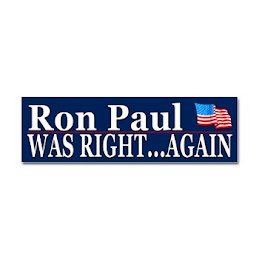
Fortunately there was one candidate who wanted to restore the Constitution. It was Ron Paul. Unfortunately, he only received little votes.
# 1: Take God away from public life. The best way to destroy America, is to force God out of our public life. This hurts us individually, but also as a nation as a whole, by abandoning much of our worldview in fighting for independence. The ideas of limited government and liberty which we cherish come from a Christian worldview. God gives us liberties, and governments protect them, not usurp them. And there is nothing unconstitutional about this. Congress shall not pass a law regarding religion, but that does not mean that there can be no religion, or that Congress shall force religion out, or even that states can have their own establishments of religion (although it would not be wise at this time and place for any state to establish a religion). But if we remove “In God We Trust” from coins, we may start trusting in men, which will give us a big utalitarian government. Let God control the weather, have final vengance, and let us in the name of God individually give to the poor, not the government who is comprised of foolish sinful men. To save America, we must trust in God, and keep Him in public life – not by force, but certainly not by force shall we remove Him, and His blessings, who has truly shed His grace on thee, America. God bless America.
So there you go. Hope you enjoyed that. Let me know what you think, agree or disagree. I’ll be happy to listen to what you have to say.
What do you think?
God bless America
Pray for our Troops
July 19, 2008
Ryan Hampton
Friday, April 18, 2008
Do American's Exploit Foreigners Through Labor?
The following is a paper I wrote for economics class this year.
Basic Economics
April 18, 2008
Ryan Hampton
Question # 7
Do American companies exploit foreign workers buy paying lower wages to them than what they pay in the U.S.? Should the U.S. Federal Government pass legislation on this “exploitation?”
Many people today believe that American businessmen are evil. They want nothing more than a profit. They could not care less about moral virtues or “fair” trade. For an example, many people criticize Wal-Mart’s success because they “underpay” their employees, and take away the small businessman’s opportunity to succeed. Many people complain to the oil companies for “price gauging” the consumers. Along with all of this, many people complain at any typical American company for their policy on hiring any foreign work.
The arguments for all of these complaints come from little understanding of economics. People want minimum wage to help the poor, when in reality, it exploits the poor from work. People want regulations on foreign trade and work to help people at home, to help the home nation’s wealth, and to “protect” over-seas workers. Often, the reversal of their goals is met. The people at home and abroad are exploited because of government regulations. Government regulations simply do not work.
It is true that foreign workers generally work for less pay than workers at home do. Many Mexicans who come to the United States get jobs that pay much less than the average American is willing to work for. Some people complain that our businessmen are hurting the foreign workers by not paying them enough. Some people complain that businessmen are hurting American’s because the foreign worker takes away the American job. However neither argument would hold up in an economic courtroom.
People easily look at the negative side of things when it comes to free market economics, and look to the positive side of things in a government regulated economy. It is natural, because the “seen” effects are noticed first, and often, the seen effect go to support a government regulated economy. But we must look at the whole picture – all groups of people, for a long amount of time, not just one group of people for a short amount of time. Consider no laws on trade – no laws saying that a businessman must pay his foreign employees the same as he pays his native employees. Sure, the foreign workers may get some of the jobs that the American’s lost. Sure, they may not make as much money at first. But American businesses can expand more rapidly by hiring people for less money – creating more jobs in the long run. Meanwhile, the foreign workers can gain job experience and find another job that pays more money.
Yet despite the common sense of economics, many in today’s political arena fail to see it that way. CNN News anchor Lou Dobbs believes in this “exporting” of jobs, and says it is a result of “corporate greed.” But is the government going to put a law against this “greed?” If the government gets to outlaw greed, then they get to decide what greed is. Often times the government calls something greed that really isn’t greed, such as simply wanting to make a profit to support a family. All this does is further invite the government into your home.
Exporting jobs also does good things for the consumer. It saves them money! If a company gets cheap labor, they have more freedom to charge lower prices for a product to knock other companies out of business, or force them to drive their prices lower. Think of who benefits: the business benefit by buying cheaper labor; the consumers benefit in buying cheaper products; and the workers benefit by getting a job. The American workers will benefit in the long run as well, by paying less for products, and finding a job at an expanded company who “exported” the jobs overseas.
The problem with much flawed economic thought comes from the fact that people look to the seen effects and utterly ignore the unseen effects, that are just as real. They look at the glass half-empty. There are no side effects to any economic plan, for the good or bad. Fact-twisting politicians spoon-feed gullible Americans into believing lies.
Without government intervention, foreign workers still get paid a market wage. It could be that their market wage for a particular job is lower than that in America, but that does not make it immoral or illegal to higher them. Making laws against hiring over-seas workers is the immoral act. Basically laws forcing businesses to pay the same amount on over-seas workers is creating an artificial minimum wage overseas, which is turning their economy into ours. Why should the government try to make another nation’s economy like our own, especially when our economy has enough problems of its own? That is immoral.
Making laws against hiring over-seas workers for lower wages would obviously make prices go up, because workers at home would have to pay more money for labor. These laws would also probably force higher taxes, because it is another law that has to be passed, and, at least theoretically, enforced. Law enforcement requires someone working to enforce the law, which is much of the purpose of taxes. Of course, this is another reason making laws would be immoral and not wise, not to mention the fact that they are unconstitutional.
So why do many people including our politicians advocate so much government intervention in overseas working? Are they misguided? Are they greedy and power hungry? Is it somewhere in between, or somewhat of both? We really can’t tell if they are just hypocritical or just honestly misguided, but nonetheless it is a mistake that they make.
Often it comes in the name of a “favorable balance of trade.” Supposedly just giving American’s the jobs would help our economy. But we have already seen that forcing this would increase prices and taxes, cut jobs from those overseas, and possibly in the long-run even take away our own jobs at home. But supposedly, this would keep more jobs at home, and therefore keep more money at home. But that again is a fallacy of economics. Even if we did bring in more money in our nation, it would not help, because it would simply cause inflation. It seems that our leaders who make or call for these stupid regulations are either hypocritical or severely misguided.
In the end, nothing good would come from passing laws against cheap labor over-seas. If a law were passed, it would be very hard to define and uphold. How could someone define what too low of a wage was? Since it is hard to define and uphold, it would require all the more taxes and intrusion into your personal life and the economy.
Our taxes would be raised, our prices would go up. Our businesses would fail to expand into bigger businesses creating bigger and better things and more jobs. Those over-seas would not get the jobs that may have had without government interference. Nothing good would come from these rules and regulations.
However we would see good come from the government getting out of business affairs and international marketing. It is the government’s job to protect our liberties, which may include protecting the border from any enemies we may have abroad. But that does not mean that they must cut off any contact with any foreign nation, or pass laws keeping the people from having contact with foreigners. Government restrictions hinder economic growth. A free market would give us economic growth, and allow fair trades to take place, at home, or abroad.
What do you think?
God bless America
Pray for our Troops
April 18, 2008
Ryan Hampton
Basic Economics
April 18, 2008
Ryan Hampton
Question # 7
Do American companies exploit foreign workers buy paying lower wages to them than what they pay in the U.S.? Should the U.S. Federal Government pass legislation on this “exploitation?”
Many people today believe that American businessmen are evil. They want nothing more than a profit. They could not care less about moral virtues or “fair” trade. For an example, many people criticize Wal-Mart’s success because they “underpay” their employees, and take away the small businessman’s opportunity to succeed. Many people complain to the oil companies for “price gauging” the consumers. Along with all of this, many people complain at any typical American company for their policy on hiring any foreign work.
The arguments for all of these complaints come from little understanding of economics. People want minimum wage to help the poor, when in reality, it exploits the poor from work. People want regulations on foreign trade and work to help people at home, to help the home nation’s wealth, and to “protect” over-seas workers. Often, the reversal of their goals is met. The people at home and abroad are exploited because of government regulations. Government regulations simply do not work.
It is true that foreign workers generally work for less pay than workers at home do. Many Mexicans who come to the United States get jobs that pay much less than the average American is willing to work for. Some people complain that our businessmen are hurting the foreign workers by not paying them enough. Some people complain that businessmen are hurting American’s because the foreign worker takes away the American job. However neither argument would hold up in an economic courtroom.
People easily look at the negative side of things when it comes to free market economics, and look to the positive side of things in a government regulated economy. It is natural, because the “seen” effects are noticed first, and often, the seen effect go to support a government regulated economy. But we must look at the whole picture – all groups of people, for a long amount of time, not just one group of people for a short amount of time. Consider no laws on trade – no laws saying that a businessman must pay his foreign employees the same as he pays his native employees. Sure, the foreign workers may get some of the jobs that the American’s lost. Sure, they may not make as much money at first. But American businesses can expand more rapidly by hiring people for less money – creating more jobs in the long run. Meanwhile, the foreign workers can gain job experience and find another job that pays more money.
Yet despite the common sense of economics, many in today’s political arena fail to see it that way. CNN News anchor Lou Dobbs believes in this “exporting” of jobs, and says it is a result of “corporate greed.” But is the government going to put a law against this “greed?” If the government gets to outlaw greed, then they get to decide what greed is. Often times the government calls something greed that really isn’t greed, such as simply wanting to make a profit to support a family. All this does is further invite the government into your home.
Exporting jobs also does good things for the consumer. It saves them money! If a company gets cheap labor, they have more freedom to charge lower prices for a product to knock other companies out of business, or force them to drive their prices lower. Think of who benefits: the business benefit by buying cheaper labor; the consumers benefit in buying cheaper products; and the workers benefit by getting a job. The American workers will benefit in the long run as well, by paying less for products, and finding a job at an expanded company who “exported” the jobs overseas.
The problem with much flawed economic thought comes from the fact that people look to the seen effects and utterly ignore the unseen effects, that are just as real. They look at the glass half-empty. There are no side effects to any economic plan, for the good or bad. Fact-twisting politicians spoon-feed gullible Americans into believing lies.
Without government intervention, foreign workers still get paid a market wage. It could be that their market wage for a particular job is lower than that in America, but that does not make it immoral or illegal to higher them. Making laws against hiring over-seas workers is the immoral act. Basically laws forcing businesses to pay the same amount on over-seas workers is creating an artificial minimum wage overseas, which is turning their economy into ours. Why should the government try to make another nation’s economy like our own, especially when our economy has enough problems of its own? That is immoral.
Making laws against hiring over-seas workers for lower wages would obviously make prices go up, because workers at home would have to pay more money for labor. These laws would also probably force higher taxes, because it is another law that has to be passed, and, at least theoretically, enforced. Law enforcement requires someone working to enforce the law, which is much of the purpose of taxes. Of course, this is another reason making laws would be immoral and not wise, not to mention the fact that they are unconstitutional.
So why do many people including our politicians advocate so much government intervention in overseas working? Are they misguided? Are they greedy and power hungry? Is it somewhere in between, or somewhat of both? We really can’t tell if they are just hypocritical or just honestly misguided, but nonetheless it is a mistake that they make.
Often it comes in the name of a “favorable balance of trade.” Supposedly just giving American’s the jobs would help our economy. But we have already seen that forcing this would increase prices and taxes, cut jobs from those overseas, and possibly in the long-run even take away our own jobs at home. But supposedly, this would keep more jobs at home, and therefore keep more money at home. But that again is a fallacy of economics. Even if we did bring in more money in our nation, it would not help, because it would simply cause inflation. It seems that our leaders who make or call for these stupid regulations are either hypocritical or severely misguided.
In the end, nothing good would come from passing laws against cheap labor over-seas. If a law were passed, it would be very hard to define and uphold. How could someone define what too low of a wage was? Since it is hard to define and uphold, it would require all the more taxes and intrusion into your personal life and the economy.
Our taxes would be raised, our prices would go up. Our businesses would fail to expand into bigger businesses creating bigger and better things and more jobs. Those over-seas would not get the jobs that may have had without government interference. Nothing good would come from these rules and regulations.
However we would see good come from the government getting out of business affairs and international marketing. It is the government’s job to protect our liberties, which may include protecting the border from any enemies we may have abroad. But that does not mean that they must cut off any contact with any foreign nation, or pass laws keeping the people from having contact with foreigners. Government restrictions hinder economic growth. A free market would give us economic growth, and allow fair trades to take place, at home, or abroad.
What do you think?
God bless America
Pray for our Troops
April 18, 2008
Ryan Hampton
Sunday, January 13, 2008
The Origin of Economics
The following is an excerpt from a greater piece I am working on. This deals with looking at economics philisophically, and with a Christian worldview. May you enjoy.
The Origin of Economics
We have talked greatly about what economics is in relativity to the world today, but we have not really failed to grasp where the origin of economics comes from. To follow the logical coherence, we force ourselves to ask where the origin of life as we know it comes from, or the origin of the basic principles of human action, inaction, and relationships comes from, given that this is essentially what economics is the study of.
I remember once my younger sister asking the question to my Father, "Why do we have money?" She argued, "Why can't we have stores where people just go get what they want?" My Father answered her asking back, "How much is too much for the people? What if I get something I do not earn?" She answered back, "I guess that the they can make you get only a certain amount." When my Father asked her who "they" would be, my sister said, "I guess the government."
Although the economics my sister brought forth and proposed to my Father were full of fallacies, and was essentially communism, I do not wish for this little section to merely criticize her. She was young, and at least she was thinking about economics. Furthermore, her basic question really spawns us into the entire origin of economics altogether. The basic principles my Father argued against her answered her question, and the question of the origin of modern-day economics altogether (economics as the course of human nature, not the modern economic thought).
A (The Fall of Man)
The origin of modern-day economics, at least according to a Christian perspective, comes in the Garden of Eden. This is where the origin of human relations and actions and inaction as we know it began. But it did not begin at creation. After creation, there was another level that came to humanity, that changed our economic laws altogether. This was the Fall of man. The Fall in a way was almost an altering of the Natural Law that existed. Due to the Fall of man, our principles on government, justice, and economics have changed.
It is interesting that Adam and Eve ate the fruit of the forbidden Tree of the Knowledge of Good and Evil, in order to become "like God." They ate the fruit to increase dominion and liberty. Even though there was an abundance of fruit, animals, and many other blessings of the world as they knew it, they wanted to increase their liberty the little more that they could. As a result, they fell into a world of pain and sorrow. The world essentially went from ever living to ever dying. Only by super human action to remodel creation could the world return to the stages of that it was in before the Fall. Even though man was in the world to remodel creation before the Fall as well, there was now much more work needed to be done. The world, in a way, needed resurrecting.
Because the world was ever dying, we entered a world of scarcity. That which Adam and Eve had was now scarce. Furthermore, it would be by the "sweat of [their] brow" that they would enjoy the fruits of the trees and all the other blessings. Now they must not only work, but they must work at the expense of giving up that which they want so that the world would be a better place, and they would be better people.
B (Our Economic Purpose)
All of this is consistent with the New Testament teachings of Paul and Jesus. Our liberty comes from our bondage to God. I have quoted 2 Corinthians 3:17 much before, stating, "Where the Spirit of the Lord is, there is liberty." Furthermore, the act of giving up something for something greater in return in also Scriptural. Christians are supposed to give their all for the sake of God's Kingdom, to enjoy in His righteousness and glory.
By this same token, the only way to decrease the scarcity of that which is on earth is to give up a portion of that which we have, in order to get it all back and more. Without sin, our economics would be different. The sinless descendents of Adam and Eve would not take the property of others. It would be immoral, and man would not be immoral creatures. But also, there would be abundance in the world, so why should we steal property in the first place? We would claim what we have, and give up much less for our rewards. Having real "money," though perhaps not being non-existent, would have less reasons for its existence.
In the grand scheme of things, we are equal partakers of the world with certain unalienable Rights (Natural Rights). This is something that did carry through over the Fall. Among these Rights is the Right to property. My sister was actually (even in her very flawed economics) getting to a good point. We are equal partakers of this world. Therefore, that which we earned, we went and got ourselves. But we did not go get it from a store. We got it from the world and claimed it.
But if it is claimed by someone else already, it is not ours. Not unless we trade. This is why we have money. We work hard for something, only to give it up to another person. But we do this to have something even better for us. We do this privately, helping ourselves, with only us as the attention. But in the grand scheme of things, we each help society in this. Ultimately, Christian economics is really the study of reclaiming what we had before the Fall of man. It is restoring the Christian way. Through this, we give up what we want, in order to have something even better. This is both personal and public.
C (The Purpose of Government)
Along with the Fall of man, we required a necessity for government. Now, government exists to protect our natural Rights, including the Right to property. This is why we punish those guilty of theft. The government, at some level, has the Right to stop of us from totally destroying the planet and defeating the purpose of restoring that which we had before the Fall. Government is force, and even my sister realized this in saying that the government would tell us when too much stuff from the store was "too much" (even though this is an unnecessary use of force, so that part of her logic is flawed). But far too often today, the government in the politically correct name of "environmentalism" defeats the purpose. They fail to understand that in order to have that which we want, we must give up that we have - even if it is scarce. Cutting down trees gives us a use for our natural recourses. Through this use, we may perhaps find something that accomplishes the same goals as cutting down trees, but does it more efficiently and economically. This enables us to restore ourselves to that day in which our economics is full of abundance and pleasure.
Fortunately, we see some of the blessings of good economic policy today (even with a big government). This is called technology. We are constantly coming up with new ways and better ways to do things, making the world less and less scarce. These things are essentially a great aspect of the American Dream, and are done mostly without government.
What do you think?
God bless America
Pray for our Troops
January 13, 2008
Ryan Hampton
The Origin of Economics
We have talked greatly about what economics is in relativity to the world today, but we have not really failed to grasp where the origin of economics comes from. To follow the logical coherence, we force ourselves to ask where the origin of life as we know it comes from, or the origin of the basic principles of human action, inaction, and relationships comes from, given that this is essentially what economics is the study of.
I remember once my younger sister asking the question to my Father, "Why do we have money?" She argued, "Why can't we have stores where people just go get what they want?" My Father answered her asking back, "How much is too much for the people? What if I get something I do not earn?" She answered back, "I guess that the they can make you get only a certain amount." When my Father asked her who "they" would be, my sister said, "I guess the government."
Although the economics my sister brought forth and proposed to my Father were full of fallacies, and was essentially communism, I do not wish for this little section to merely criticize her. She was young, and at least she was thinking about economics. Furthermore, her basic question really spawns us into the entire origin of economics altogether. The basic principles my Father argued against her answered her question, and the question of the origin of modern-day economics altogether (economics as the course of human nature, not the modern economic thought).
A (The Fall of Man)
The origin of modern-day economics, at least according to a Christian perspective, comes in the Garden of Eden. This is where the origin of human relations and actions and inaction as we know it began. But it did not begin at creation. After creation, there was another level that came to humanity, that changed our economic laws altogether. This was the Fall of man. The Fall in a way was almost an altering of the Natural Law that existed. Due to the Fall of man, our principles on government, justice, and economics have changed.
It is interesting that Adam and Eve ate the fruit of the forbidden Tree of the Knowledge of Good and Evil, in order to become "like God." They ate the fruit to increase dominion and liberty. Even though there was an abundance of fruit, animals, and many other blessings of the world as they knew it, they wanted to increase their liberty the little more that they could. As a result, they fell into a world of pain and sorrow. The world essentially went from ever living to ever dying. Only by super human action to remodel creation could the world return to the stages of that it was in before the Fall. Even though man was in the world to remodel creation before the Fall as well, there was now much more work needed to be done. The world, in a way, needed resurrecting.
Because the world was ever dying, we entered a world of scarcity. That which Adam and Eve had was now scarce. Furthermore, it would be by the "sweat of [their] brow" that they would enjoy the fruits of the trees and all the other blessings. Now they must not only work, but they must work at the expense of giving up that which they want so that the world would be a better place, and they would be better people.
B (Our Economic Purpose)
All of this is consistent with the New Testament teachings of Paul and Jesus. Our liberty comes from our bondage to God. I have quoted 2 Corinthians 3:17 much before, stating, "Where the Spirit of the Lord is, there is liberty." Furthermore, the act of giving up something for something greater in return in also Scriptural. Christians are supposed to give their all for the sake of God's Kingdom, to enjoy in His righteousness and glory.
By this same token, the only way to decrease the scarcity of that which is on earth is to give up a portion of that which we have, in order to get it all back and more. Without sin, our economics would be different. The sinless descendents of Adam and Eve would not take the property of others. It would be immoral, and man would not be immoral creatures. But also, there would be abundance in the world, so why should we steal property in the first place? We would claim what we have, and give up much less for our rewards. Having real "money," though perhaps not being non-existent, would have less reasons for its existence.
In the grand scheme of things, we are equal partakers of the world with certain unalienable Rights (Natural Rights). This is something that did carry through over the Fall. Among these Rights is the Right to property. My sister was actually (even in her very flawed economics) getting to a good point. We are equal partakers of this world. Therefore, that which we earned, we went and got ourselves. But we did not go get it from a store. We got it from the world and claimed it.
But if it is claimed by someone else already, it is not ours. Not unless we trade. This is why we have money. We work hard for something, only to give it up to another person. But we do this to have something even better for us. We do this privately, helping ourselves, with only us as the attention. But in the grand scheme of things, we each help society in this. Ultimately, Christian economics is really the study of reclaiming what we had before the Fall of man. It is restoring the Christian way. Through this, we give up what we want, in order to have something even better. This is both personal and public.
C (The Purpose of Government)
Along with the Fall of man, we required a necessity for government. Now, government exists to protect our natural Rights, including the Right to property. This is why we punish those guilty of theft. The government, at some level, has the Right to stop of us from totally destroying the planet and defeating the purpose of restoring that which we had before the Fall. Government is force, and even my sister realized this in saying that the government would tell us when too much stuff from the store was "too much" (even though this is an unnecessary use of force, so that part of her logic is flawed). But far too often today, the government in the politically correct name of "environmentalism" defeats the purpose. They fail to understand that in order to have that which we want, we must give up that we have - even if it is scarce. Cutting down trees gives us a use for our natural recourses. Through this use, we may perhaps find something that accomplishes the same goals as cutting down trees, but does it more efficiently and economically. This enables us to restore ourselves to that day in which our economics is full of abundance and pleasure.
Fortunately, we see some of the blessings of good economic policy today (even with a big government). This is called technology. We are constantly coming up with new ways and better ways to do things, making the world less and less scarce. These things are essentially a great aspect of the American Dream, and are done mostly without government.
What do you think?
God bless America
Pray for our Troops
January 13, 2008
Ryan Hampton
Thursday, January 10, 2008
Rethinking Ethics
The following is a piece on ethics, as apart of a greater piece I am working on:
ETHICS
Albeit abortion, homosexual marriage, drugs, prostitution, gun rights, etc., the government has failed in the proper handling of ethics. The notion of state's rights is obscured, and the basic means of government protecting our freedom is largely done away with.
i. Abortion
Roe vs. Wade was a Supreme Court decision in 1973 which ruled that abortion was a natural right for all women. No state could even take it away, except on a few precise measures that were spelled out by the Supreme Court. Many conservative pro-lifers consider this ruling as one in which the government fails to do what it should do, that it, the government is allowing for abortion, when it should be keeping abortions from being done. Although this is the case in many respects, we should also look at this in light of the greater cultural war that has been going on from quite some time. This cultural war, which brings forth much problem in the Central Government today, is the diminishing of state's rights, and the degrading view of the Constitution.
Let us go back to the way Jefferson viewed the Constitution. Jefferson wanted to build schools and roads, but did not see these things permitted in the Constitution. He therefore did not carry through these things. The Constitution is silent on the issue of abortion, leaving us to believe it is up to the states. If the Central Government did rule in the case of abortion, it should be done by an amendment. Furthermore, it would make since to make abortion illegal, if they did indeed rule in the case, given that it is the government's job to protect our liberties, which include life.
The question does become a question of "where does sacred life begin?" This question is scientific, religious, moral, and philosophical. Science can give us reason to believe in some sort of real human life, and when it begins. Consider this logical analysis:
Matter can not be created or destroyed.
I am matter.
I am human.
I have not always been human.
Therefore, there was a time in which my physical substance became human.
Science can answer this question, but only to a point. Science might could tell us that the right cells and DNA joined together in a place suitable for survival, making a real living being - in the case of human reproduction, a human. But as far as science is concerned, there is no real basis to defy human life as any more sacred than the life of a dog, for instance. This is where philosophy, religion, and morality come into play, all under the notion of natural law.
Some would argue that the government should not rule in deciding where sacred life begins. Supposedly, since this is a sacred question, in one respect, it would join government and religion together to have the government answer the question. But ultimately, government can not answer the question. Either life is sacred or it is not. The government is here to protect that which is sacred. If we reach a conclusion by science and natural law that sacred life begins in a human womb, then it should follow that abortion, at some level, should be illegal, so that the sanctity of human life may be preserved. Still, they do not answer the question - natural law does. Arguing that the government should not decide what life is sacred or not, is like arguing that the government should not decide if pigs could fly.
If it is concluded that abortion should be illegal, the next question is, "what level of government should make it illegal?" County government, state government, Central Government, the United Nations? The best possible solution would be that it come from the state government, as they have their own laws on murder, theft, etc. However if the Central Government did rule in the case, it should be done by a proper amendment to the Constitution to outlaw abortion. Now let us consider how Roe Vs. Wade was done. Did it pass the test?
The Central Government should be silent on the issue of abortion (Fail).
If the Central Government does rule in the case, it should make abortion illegal (Fail).
If the Central Government declares abortion a natural right, it should at least be done by a proper amendment to the Constitution (Fail).
The Supreme Court failed on all of these issues. This shows great ignorance for the Constitution and natural law on apart of the Judges in Roe Vs. Wade. This was a bad form of government.
ii. (Homosexual Marriage)
Homosexual marriage is a much heated topic in today's world, though there are little rulings to show for it. There is not infamous ruling on the issue as there is for abortion. Still the handling of the issue and the interpretation of the issue, shows great ignorance again for our Constitution and for natural law.
Fortunately, any ruling on the issue shows support for an amendment to the Constitution. The question becomes whether or not there should be that amendment. Like abortion, the Constitution is silent on the issue, leading us to believe it should be left up to the states.
Some would argue that ruling against homosexual marriages, basically outlawing them, would join the government more and more in with the church. But what we should really consider is if the government has a hand in marriage at all. Currently, the state issues marriage license for people getting married. If marriage is defined as a sacred covenental union between one man and one woman, then the government contradicts itself by issuing a legal documentation of marriage between two people of the same sex. However if the state was out of the issue entirely, not even to issue a marriage license, then two people of the same sex could live together, sleep together, and call it marriage, when in reality, it may not be marriage at all, given that it contradicts the definition of marriage. Marriage itself is sacred, and if two people have a partnership that defies the sacred definition of marriage, then it is no marriage at all.
With this said, Americans, including their politicians, seem to have a hard time understanding how government fits in to the issue of homosexual marriage, or if it even does at all. We forget that states have their rights to make the laws regarding these issues, and we forget the very nature of marriage itself. If two men want to sleep together, I would rather see the dollars I freely tithe go to help these men repent, than see my tax dollars go to having the FBI police their bedroom.
iii. The War on Drugs
The War on Drugs is another issue that is misunderstood. Many people see drugs as something that should be stopped, and they want it stopped by the Central Government. This can essentially invite the government into your home to see if you have drugs.
Do not misunderstand this to presume I make any point to morally justify drugs, or even to take away the right of a state to issue a war on drugs, although on state issues, it could even be argued that the state should be out of the drug issue.
Some illegal drugs can actually, in rare but existing circumstances, be used for beneficial medical purposes. But so long as these drugs are outlawed, law-abiding doctors and nurses will not obtain the beneficial illegal drug for the patient.
On the other hand, however, the drug-addicts will still go after drugs. They will get them from Mexico, from robbery, even from murder. A war on drugs actually increases crime. Prohibition led to more crime, so it can easily follow that prohibiting drugs, especially at the level of the Central Government, can lead to more crime. Results has shown that it has.
In saying this, an employer has every right to ask an employee or potential employee for a drug test, and deny them a job or fire them if they fail. If I was an owner of some sort of business, I would probably not want drug dealers working for me. But I would also not want the government telling me that they can't.
The drug war is like the gun war in many respects. Outlawing drugs reducing crime is about as likely (or unlikely) as outlawing guns would reduce crime. There will still be drugs out there, and the criminal will even go to the point of murder to get them.
It could be argued, and I would strongly support it, that there should be laws (at a local or state level), against the selling of drugs to minors. A six-year old may not really understand the effects of drugs, and anyone who causes this person to try the drug, except for medical purposes, shall be punished. At the same time, if drugs become rampant in one community, then it could be argued that drugs should become illegal at that local level. But they should never be outlawed on the level of the Central Government.
iv. Gun Control
Although there is no law against the possession of guns, the movement for it has become rampant. Gun control is perhaps one of the sillier of ideas. At least in Roe Vs. Wade the Judges claimed some honor for the Constitution, and even defended their ruling based on the Fourteenth Amendment (although it is a lame defense). The right to keep and bear arms is listed in (out of all places!) the Bill of Rights - even the Second Amendment. Out of all the things our Founding Fathers wanted to secure most, the right to keep and bear arms was listed just behind the freedom of the press, and denying a national religion or church. Owning guns not only protects the people against other citizens who take away life and property, but even against government that tries to take away their right to life and property, et al.
Beyond this, gun control laws do not help reduce crime. In fact, cities with the toughest gun control laws actually have higher crime. When people are free to own guns, criminals are scared. Many criminals actually say that they are scared of the people owning guns more than the government.
It could even be argued that no state shall pass a law against the owning of guns, and that the Central Government should secure this, given that it is deemed as a natural right. But at any rate, outlawing guns should certainly not come from the Central Government.
What do you think?
God Bless America
Pray for our Troops
God Bless You
January 10, 2008
Ryan Hampton
ETHICS
Albeit abortion, homosexual marriage, drugs, prostitution, gun rights, etc., the government has failed in the proper handling of ethics. The notion of state's rights is obscured, and the basic means of government protecting our freedom is largely done away with.
i. Abortion
Roe vs. Wade was a Supreme Court decision in 1973 which ruled that abortion was a natural right for all women. No state could even take it away, except on a few precise measures that were spelled out by the Supreme Court. Many conservative pro-lifers consider this ruling as one in which the government fails to do what it should do, that it, the government is allowing for abortion, when it should be keeping abortions from being done. Although this is the case in many respects, we should also look at this in light of the greater cultural war that has been going on from quite some time. This cultural war, which brings forth much problem in the Central Government today, is the diminishing of state's rights, and the degrading view of the Constitution.
Let us go back to the way Jefferson viewed the Constitution. Jefferson wanted to build schools and roads, but did not see these things permitted in the Constitution. He therefore did not carry through these things. The Constitution is silent on the issue of abortion, leaving us to believe it is up to the states. If the Central Government did rule in the case of abortion, it should be done by an amendment. Furthermore, it would make since to make abortion illegal, if they did indeed rule in the case, given that it is the government's job to protect our liberties, which include life.
The question does become a question of "where does sacred life begin?" This question is scientific, religious, moral, and philosophical. Science can give us reason to believe in some sort of real human life, and when it begins. Consider this logical analysis:
Matter can not be created or destroyed.
I am matter.
I am human.
I have not always been human.
Therefore, there was a time in which my physical substance became human.
Science can answer this question, but only to a point. Science might could tell us that the right cells and DNA joined together in a place suitable for survival, making a real living being - in the case of human reproduction, a human. But as far as science is concerned, there is no real basis to defy human life as any more sacred than the life of a dog, for instance. This is where philosophy, religion, and morality come into play, all under the notion of natural law.
Some would argue that the government should not rule in deciding where sacred life begins. Supposedly, since this is a sacred question, in one respect, it would join government and religion together to have the government answer the question. But ultimately, government can not answer the question. Either life is sacred or it is not. The government is here to protect that which is sacred. If we reach a conclusion by science and natural law that sacred life begins in a human womb, then it should follow that abortion, at some level, should be illegal, so that the sanctity of human life may be preserved. Still, they do not answer the question - natural law does. Arguing that the government should not decide what life is sacred or not, is like arguing that the government should not decide if pigs could fly.
If it is concluded that abortion should be illegal, the next question is, "what level of government should make it illegal?" County government, state government, Central Government, the United Nations? The best possible solution would be that it come from the state government, as they have their own laws on murder, theft, etc. However if the Central Government did rule in the case, it should be done by a proper amendment to the Constitution to outlaw abortion. Now let us consider how Roe Vs. Wade was done. Did it pass the test?
The Central Government should be silent on the issue of abortion (Fail).
If the Central Government does rule in the case, it should make abortion illegal (Fail).
If the Central Government declares abortion a natural right, it should at least be done by a proper amendment to the Constitution (Fail).
The Supreme Court failed on all of these issues. This shows great ignorance for the Constitution and natural law on apart of the Judges in Roe Vs. Wade. This was a bad form of government.
ii. (Homosexual Marriage)
Homosexual marriage is a much heated topic in today's world, though there are little rulings to show for it. There is not infamous ruling on the issue as there is for abortion. Still the handling of the issue and the interpretation of the issue, shows great ignorance again for our Constitution and for natural law.
Fortunately, any ruling on the issue shows support for an amendment to the Constitution. The question becomes whether or not there should be that amendment. Like abortion, the Constitution is silent on the issue, leading us to believe it should be left up to the states.
Some would argue that ruling against homosexual marriages, basically outlawing them, would join the government more and more in with the church. But what we should really consider is if the government has a hand in marriage at all. Currently, the state issues marriage license for people getting married. If marriage is defined as a sacred covenental union between one man and one woman, then the government contradicts itself by issuing a legal documentation of marriage between two people of the same sex. However if the state was out of the issue entirely, not even to issue a marriage license, then two people of the same sex could live together, sleep together, and call it marriage, when in reality, it may not be marriage at all, given that it contradicts the definition of marriage. Marriage itself is sacred, and if two people have a partnership that defies the sacred definition of marriage, then it is no marriage at all.
With this said, Americans, including their politicians, seem to have a hard time understanding how government fits in to the issue of homosexual marriage, or if it even does at all. We forget that states have their rights to make the laws regarding these issues, and we forget the very nature of marriage itself. If two men want to sleep together, I would rather see the dollars I freely tithe go to help these men repent, than see my tax dollars go to having the FBI police their bedroom.
iii. The War on Drugs
The War on Drugs is another issue that is misunderstood. Many people see drugs as something that should be stopped, and they want it stopped by the Central Government. This can essentially invite the government into your home to see if you have drugs.
Do not misunderstand this to presume I make any point to morally justify drugs, or even to take away the right of a state to issue a war on drugs, although on state issues, it could even be argued that the state should be out of the drug issue.
Some illegal drugs can actually, in rare but existing circumstances, be used for beneficial medical purposes. But so long as these drugs are outlawed, law-abiding doctors and nurses will not obtain the beneficial illegal drug for the patient.
On the other hand, however, the drug-addicts will still go after drugs. They will get them from Mexico, from robbery, even from murder. A war on drugs actually increases crime. Prohibition led to more crime, so it can easily follow that prohibiting drugs, especially at the level of the Central Government, can lead to more crime. Results has shown that it has.
In saying this, an employer has every right to ask an employee or potential employee for a drug test, and deny them a job or fire them if they fail. If I was an owner of some sort of business, I would probably not want drug dealers working for me. But I would also not want the government telling me that they can't.
The drug war is like the gun war in many respects. Outlawing drugs reducing crime is about as likely (or unlikely) as outlawing guns would reduce crime. There will still be drugs out there, and the criminal will even go to the point of murder to get them.
It could be argued, and I would strongly support it, that there should be laws (at a local or state level), against the selling of drugs to minors. A six-year old may not really understand the effects of drugs, and anyone who causes this person to try the drug, except for medical purposes, shall be punished. At the same time, if drugs become rampant in one community, then it could be argued that drugs should become illegal at that local level. But they should never be outlawed on the level of the Central Government.
iv. Gun Control
Although there is no law against the possession of guns, the movement for it has become rampant. Gun control is perhaps one of the sillier of ideas. At least in Roe Vs. Wade the Judges claimed some honor for the Constitution, and even defended their ruling based on the Fourteenth Amendment (although it is a lame defense). The right to keep and bear arms is listed in (out of all places!) the Bill of Rights - even the Second Amendment. Out of all the things our Founding Fathers wanted to secure most, the right to keep and bear arms was listed just behind the freedom of the press, and denying a national religion or church. Owning guns not only protects the people against other citizens who take away life and property, but even against government that tries to take away their right to life and property, et al.
Beyond this, gun control laws do not help reduce crime. In fact, cities with the toughest gun control laws actually have higher crime. When people are free to own guns, criminals are scared. Many criminals actually say that they are scared of the people owning guns more than the government.
It could even be argued that no state shall pass a law against the owning of guns, and that the Central Government should secure this, given that it is deemed as a natural right. But at any rate, outlawing guns should certainly not come from the Central Government.
What do you think?
God Bless America
Pray for our Troops
God Bless You
January 10, 2008
Ryan Hampton
Thursday, December 20, 2007
Lessons in American History, Part II: America's UnCivil War
One of the most misunderstood events in American history is the American "Civil War." In fact, the "Civil War" was no civil war. The classic textbook story of the case goes something like this: The South had slaves, and the North wanted to end slavery. The South rebelled and waged war with the North. But they did not really secede because secession is illegal. Abraham Lincoln saved the Union without unnecessary violence. But that is VERY far from the way the story actually goes.
We should ask ourselves what caused the war, how the war went and how it was carried through, and what the effects of the war were, or are. There is little doubt that slavery was an issue, and in fairness, it must be addressed to a degree. But let us remember that the victorious North wrote the historical accounts, making our "history" very bias.
The war was largely a cultural war. It was not a war fought only over slavery, but a war fought between two different cultures. The cultures were different in terms of religion, politics, economics, custom, philosophy, etc. Essentially, they were different in almost every way imaginable. The North and South are different today, but not nearly as much as they were then.
Slavery was an issue that had been going on for a long time. The slave trade in Africa had been going on for perhaps thousands of years. It made eventually made its way to England, and eventually to Western Civilization. It was an issue that the founders pondered on. We would think that because our founders thought so highly of natural law theory, and liberty, that they would have outlawed such an act in the nation. But we must remember that is was considered the norm at the time, and many early Americans wanted to take slaves and treat them right, perhaps even showing them the Christian Gospel.
American slavery acutally began in the North. But as the two cultures grew more and more different, slavery became more indigenous in the South. The South was largely agriculturous, and needed slaves much more than the largely industrious North. Slavery was an issue that separated the North and the South.
But it was not the only issue. New Orleans was shaping out to be a powerful American city. I was close to the Gulf of Mexico and close to the Mississippi River. It was central to both the East and West of the country. But it was a southern city. The North did not like the South becoming more geographically dominant to the once dominant North.
The South was good for producing cotton and the like. A good economic trade system was going on between England and North and South United States. But a disproportionate tariff was placed on imported goods. This hurt the South's economy because they would be forced to buy at a more expensive price, and because it forced others to buy from somewhere other than the South, given that the South would raise their prices to drown out the tax. The South saw this as unkind, unconstitutional, and unfair. They saw it as Central Aggression that benefited the North at the expense of the South.
The South was largely ridiculed due to growing in line with the romantic movement and becoming much more religious oriented. The North was more intellectually oriented as opposed to the South's emotionalism. The South was sensitive to their pride and to any outer aggression or intolerance. The South wanted a smaller government, particular the Central Government. They saw the Central Government as drifting from the Constitution.
The South could not stand Abraham Lincoln. He did not even receive a single vote in the South when he ran for President. Yet he one the election. The South saw him as a tyrant, and a hater of the South. Lincoln probably did not hate the South as much as other Northerners did, or as much as the South thought he did. But Lincoln was not quite the Saint or martyr we make him out to be.
Lincoln once supported secession, but changed his mind when the South seceded. Lincoln was not quite the saviour to the slaves as we think. Lincoln did not want the slaves in America, but he wanted the slaves sent back to Africa. Lincoln was a political flip-flopper (like politicians today perhaps!). When Lincoln was elected President, the South immediately seceded.
Secession is legal. The Constitution never addresses the matter, at least not directly, leading us to believe that the Central Government may not interfere on the issue. But the Central Government did interfere. The Central Government, under Lincoln, waged war on the seceding South.
Therefore, this was a war against two nations - the United States of America and the Confederate States of America. If this was one nation, as Lincoln often suggested, then this war would be unconstitutional, being that the Central Government of the United States waged war on a particular section of its very country! This is not only unconstitutional, but is flat out absurd! And why would or should Lincoln want to wage war on the South if he loved them so much and just wanted them happily ever after in the Union?
But Lincoln waged war on the South. Not only to punish those who own slaves, but to completely demolish the South. The North Burnt churches, houses, and killed innocent people. Slavery was used as an emotional argument to Northern Abolitionists to justify the war. But slavery was not as rampant in the South as we think. Most Southerners did not own slaves, and most of who did owned very little. Very few people in the South owned over ten slaves. And there were still some people in the North who owned slaves anyway.
A point can be made that the South should not have seceded. But it is absurd to think that the South was the "bad guys" in this war, and the North was the heroes. This was no "Civil War." This was a war for Southern Independence fought against Northern Aggression. A Civil War is a war fought between two different parts of one nation seeking the same government. But this was for Southern Independence. The South had - and wanted to keep - their own nation. They drafted a Constitution as did the founders of the United States. It was very similar, simply leading out the "general welfare" clause, and interestingly enough, outlawing the slave trade. After secession, the South should have been left alone, or mildly encouraged to join the Union.
But the North won the war, and in doing so, was able to show dominance and write history. The North began winning many votes by the emotional argument used on the slaves. The North with the help of the Central Government, made the South submit to many of their ways. Reconstruction was not just cleaning up the economy after the war, but reconstructing the South. Much terror against the South still continued. Robert E. Lee himself said that if he knew that the South would have been treated the way they were after the war, he would not have surrendered, but would have fought to the last man.
I do not attempt to claim perfection to the South. They probably should not have seceded, at least not at the time that they did. Slavery, except for rare exceptions, is wrong, and contradicts the founders view of natural law and natural rights. There were good people in the North, and good people who fought for the North, and some people in the South with bad intent. But there were many things that the South stood for that were good, and many things that the North stood for and did that were absolutely immoral. In the least, I hope this provides balance to a largely unbalanced issue.
But don't just take my word. Here are some interesting links:
http://youtube.com/watch?v=x0nCil3D1ZU
http://www.historycooperative.org/journals/jala/14.2/vorenberg.html
http://quotes.liberty-tree.ca/quote_blog/Abraham.Lincoln.Quote.C318
http://www.geocities.com/mark_willey/civlwar.html?200720
We should ask ourselves what caused the war, how the war went and how it was carried through, and what the effects of the war were, or are. There is little doubt that slavery was an issue, and in fairness, it must be addressed to a degree. But let us remember that the victorious North wrote the historical accounts, making our "history" very bias.
The war was largely a cultural war. It was not a war fought only over slavery, but a war fought between two different cultures. The cultures were different in terms of religion, politics, economics, custom, philosophy, etc. Essentially, they were different in almost every way imaginable. The North and South are different today, but not nearly as much as they were then.
Slavery was an issue that had been going on for a long time. The slave trade in Africa had been going on for perhaps thousands of years. It made eventually made its way to England, and eventually to Western Civilization. It was an issue that the founders pondered on. We would think that because our founders thought so highly of natural law theory, and liberty, that they would have outlawed such an act in the nation. But we must remember that is was considered the norm at the time, and many early Americans wanted to take slaves and treat them right, perhaps even showing them the Christian Gospel.
American slavery acutally began in the North. But as the two cultures grew more and more different, slavery became more indigenous in the South. The South was largely agriculturous, and needed slaves much more than the largely industrious North. Slavery was an issue that separated the North and the South.
But it was not the only issue. New Orleans was shaping out to be a powerful American city. I was close to the Gulf of Mexico and close to the Mississippi River. It was central to both the East and West of the country. But it was a southern city. The North did not like the South becoming more geographically dominant to the once dominant North.
The South was good for producing cotton and the like. A good economic trade system was going on between England and North and South United States. But a disproportionate tariff was placed on imported goods. This hurt the South's economy because they would be forced to buy at a more expensive price, and because it forced others to buy from somewhere other than the South, given that the South would raise their prices to drown out the tax. The South saw this as unkind, unconstitutional, and unfair. They saw it as Central Aggression that benefited the North at the expense of the South.
The South was largely ridiculed due to growing in line with the romantic movement and becoming much more religious oriented. The North was more intellectually oriented as opposed to the South's emotionalism. The South was sensitive to their pride and to any outer aggression or intolerance. The South wanted a smaller government, particular the Central Government. They saw the Central Government as drifting from the Constitution.
The South could not stand Abraham Lincoln. He did not even receive a single vote in the South when he ran for President. Yet he one the election. The South saw him as a tyrant, and a hater of the South. Lincoln probably did not hate the South as much as other Northerners did, or as much as the South thought he did. But Lincoln was not quite the Saint or martyr we make him out to be.
Lincoln once supported secession, but changed his mind when the South seceded. Lincoln was not quite the saviour to the slaves as we think. Lincoln did not want the slaves in America, but he wanted the slaves sent back to Africa. Lincoln was a political flip-flopper (like politicians today perhaps!). When Lincoln was elected President, the South immediately seceded.
Secession is legal. The Constitution never addresses the matter, at least not directly, leading us to believe that the Central Government may not interfere on the issue. But the Central Government did interfere. The Central Government, under Lincoln, waged war on the seceding South.
Therefore, this was a war against two nations - the United States of America and the Confederate States of America. If this was one nation, as Lincoln often suggested, then this war would be unconstitutional, being that the Central Government of the United States waged war on a particular section of its very country! This is not only unconstitutional, but is flat out absurd! And why would or should Lincoln want to wage war on the South if he loved them so much and just wanted them happily ever after in the Union?
But Lincoln waged war on the South. Not only to punish those who own slaves, but to completely demolish the South. The North Burnt churches, houses, and killed innocent people. Slavery was used as an emotional argument to Northern Abolitionists to justify the war. But slavery was not as rampant in the South as we think. Most Southerners did not own slaves, and most of who did owned very little. Very few people in the South owned over ten slaves. And there were still some people in the North who owned slaves anyway.
A point can be made that the South should not have seceded. But it is absurd to think that the South was the "bad guys" in this war, and the North was the heroes. This was no "Civil War." This was a war for Southern Independence fought against Northern Aggression. A Civil War is a war fought between two different parts of one nation seeking the same government. But this was for Southern Independence. The South had - and wanted to keep - their own nation. They drafted a Constitution as did the founders of the United States. It was very similar, simply leading out the "general welfare" clause, and interestingly enough, outlawing the slave trade. After secession, the South should have been left alone, or mildly encouraged to join the Union.
But the North won the war, and in doing so, was able to show dominance and write history. The North began winning many votes by the emotional argument used on the slaves. The North with the help of the Central Government, made the South submit to many of their ways. Reconstruction was not just cleaning up the economy after the war, but reconstructing the South. Much terror against the South still continued. Robert E. Lee himself said that if he knew that the South would have been treated the way they were after the war, he would not have surrendered, but would have fought to the last man.
I do not attempt to claim perfection to the South. They probably should not have seceded, at least not at the time that they did. Slavery, except for rare exceptions, is wrong, and contradicts the founders view of natural law and natural rights. There were good people in the North, and good people who fought for the North, and some people in the South with bad intent. But there were many things that the South stood for that were good, and many things that the North stood for and did that were absolutely immoral. In the least, I hope this provides balance to a largely unbalanced issue.
But don't just take my word. Here are some interesting links:
http://youtube.com/watch?v=x0nCil3D1ZU
http://www.historycooperative.org/journals/jala/14.2/vorenberg.html
http://quotes.liberty-tree.ca/quote_blog/Abraham.Lincoln.Quote.C318
http://www.geocities.com/mark_willey/civlwar.html?200720
Friday, December 14, 2007
Lessons in Economics, Part II: The Hypocrisy of Minimun Wage
After much talk of it, the minimum wage has recently gone up. This "Fair Minimum Wage Act," as they call it, has increased the minimum wage to $5.85 per hour (p/h), and it will continue to rise to $7.25 p/h through 2009. Most people assume this is a fair way to help the lower and middle class by allowing them to make more money for their job. The previous minimum wage of $5.15 p/h, is pretty low in terms of raising a family.
But one great lesson to be learned in economics is this: What sounds good on the surface is not always the best thing. So before assuming that this minimum wage increase is actually helpful to the poor and the economy as it may so appear, let's take a deeper look at this. As always in studying economics, we should begin by understanding the basic principles of what economics is.
As was mentioned in my last blog, economics is a form of trade. One person trades off something they own (money, time, material, etc), in order for something else, that they see is better for them. When a person goes really fast down the interstate, they are taking the chance at having a wreck or getting a speeding ticket for the sake of saving a few minutes of time. By the same token, when a person sells an automobile, they would rather have the money than the automobile.
But let us now turn this to the work field. If someone works thirty hours a week for $200, they have made an economics choice, as has the person who hired them. The worker wants to do something with those thirty hours of the week besides sitting at home and...well...probably writing blogs like me! The worker figures that he might as well make money in those thirty hours. He sees $200 as worth it for him (averaging about $6.67 p/h). The employee highering this person would rather have this worker for thirty hours a week, than the extra $200 a week. Or on a different scale, this worker for one hour than the $6.67 p/h. Both have made an economics choice.
This person working thirty hours for $200 could very possibly be an eighteen year old working a summer job, who has already had a little past experience working. The full time working man trying to support a family will probably be making more money and working more hours. But the fifteen or sixteen year old, the hard working legal (at least hopefully legal!) immigrant, or perhaps the sweet widowed lady, will perhaps have fewer hours, and most likely less pay for the hour. They may not be as experienced or equipped for the job. They may have less hard of jobs. The employee may not be willing to pay a sixteen year old almost $7 p/h, but may be willing to pay the eighteen year old that much. This is not sinful, this is just economics 101. Either end of the deal can walk out on the deal. Anybody can be fired for any reason without the reason even making sense. Anybody can leave the job just because they are lazy. But more times than not, a good worker at a reasonable pay will not be fired, and a worker will not walk out of a job with good pay and good benefits.
So what does a minimum wage do? It hurts the poor more than it helps them! The sixteen year old high school student, perhaps making $5.00 p/h, will be out of a job when the minimum wage increases to $7.00 p/h. The employer will higher someone of more experience and more qualifications to fulfill that $7.00 p/h. It will be much harder for a poor person, a young person, a widow, or a hard-working immigrant to find a job. People complain about how immigrants take away our jobs because they have low wages. If this was the case, then so would poor people, widowes, young high schoolers, etc - but we want the minimum wage to help these poor people, widowes, and young people, and hurt the immigrants. Something has to give! A free market would allow immigrants, young people, and widows, to be hired at low pay, so that the business can higher more people and/or increase their business to higher standards offering more jobs in the long run (i.e. Wal-Mart). A free market does not include a minimum wage. A minimum wage is a government institution in the market world. It is unconstitutional, and there is a reason why. The market sets the wage better than the government. The government has to guess. The market's competion forces the right medium. The argument for a minimum wage is hypocritical, and self-refuting. However many Americans do not see things this way. Americans look only to the seen effects, namely in minimum wage, a person receiving a higher pay. The unseen effects, however, are worse. In the case of a higher minimum wage, it would be these people losing their jobs six weeks later, and less jobs for sixteen year-olds in the future. The right solution would be to abolish the minimum wage. More jobs will be created, and the market will be fair, simple, balanced, and best of all, free.
What do you think?
God Bless America
God bless our Troops
December 14, 2007
Ryan Hampton
But one great lesson to be learned in economics is this: What sounds good on the surface is not always the best thing. So before assuming that this minimum wage increase is actually helpful to the poor and the economy as it may so appear, let's take a deeper look at this. As always in studying economics, we should begin by understanding the basic principles of what economics is.
As was mentioned in my last blog, economics is a form of trade. One person trades off something they own (money, time, material, etc), in order for something else, that they see is better for them. When a person goes really fast down the interstate, they are taking the chance at having a wreck or getting a speeding ticket for the sake of saving a few minutes of time. By the same token, when a person sells an automobile, they would rather have the money than the automobile.
But let us now turn this to the work field. If someone works thirty hours a week for $200, they have made an economics choice, as has the person who hired them. The worker wants to do something with those thirty hours of the week besides sitting at home and...well...probably writing blogs like me! The worker figures that he might as well make money in those thirty hours. He sees $200 as worth it for him (averaging about $6.67 p/h). The employee highering this person would rather have this worker for thirty hours a week, than the extra $200 a week. Or on a different scale, this worker for one hour than the $6.67 p/h. Both have made an economics choice.
This person working thirty hours for $200 could very possibly be an eighteen year old working a summer job, who has already had a little past experience working. The full time working man trying to support a family will probably be making more money and working more hours. But the fifteen or sixteen year old, the hard working legal (at least hopefully legal!) immigrant, or perhaps the sweet widowed lady, will perhaps have fewer hours, and most likely less pay for the hour. They may not be as experienced or equipped for the job. They may have less hard of jobs. The employee may not be willing to pay a sixteen year old almost $7 p/h, but may be willing to pay the eighteen year old that much. This is not sinful, this is just economics 101. Either end of the deal can walk out on the deal. Anybody can be fired for any reason without the reason even making sense. Anybody can leave the job just because they are lazy. But more times than not, a good worker at a reasonable pay will not be fired, and a worker will not walk out of a job with good pay and good benefits.
So what does a minimum wage do? It hurts the poor more than it helps them! The sixteen year old high school student, perhaps making $5.00 p/h, will be out of a job when the minimum wage increases to $7.00 p/h. The employer will higher someone of more experience and more qualifications to fulfill that $7.00 p/h. It will be much harder for a poor person, a young person, a widow, or a hard-working immigrant to find a job. People complain about how immigrants take away our jobs because they have low wages. If this was the case, then so would poor people, widowes, young high schoolers, etc - but we want the minimum wage to help these poor people, widowes, and young people, and hurt the immigrants. Something has to give! A free market would allow immigrants, young people, and widows, to be hired at low pay, so that the business can higher more people and/or increase their business to higher standards offering more jobs in the long run (i.e. Wal-Mart). A free market does not include a minimum wage. A minimum wage is a government institution in the market world. It is unconstitutional, and there is a reason why. The market sets the wage better than the government. The government has to guess. The market's competion forces the right medium. The argument for a minimum wage is hypocritical, and self-refuting. However many Americans do not see things this way. Americans look only to the seen effects, namely in minimum wage, a person receiving a higher pay. The unseen effects, however, are worse. In the case of a higher minimum wage, it would be these people losing their jobs six weeks later, and less jobs for sixteen year-olds in the future. The right solution would be to abolish the minimum wage. More jobs will be created, and the market will be fair, simple, balanced, and best of all, free.
What do you think?
God Bless America
God bless our Troops
December 14, 2007
Ryan Hampton
Thursday, October 18, 2007
The Forgotton Purpose of America's Constitution
This is a paper I wrote for a school class (Government and Economics) concerning the purpose of a Constitutional Government in America.
Why a Constitutional Government?
Perhaps the most important, but yet most overlooked document in America today, is the Constitution. Many government officials take an oath on the very Bible to uphold the Constitution, only to break it severely. But it is the Americans that elect these people into office, only to believe lies not permitted by the Constitution. How could both every-day Americans and our leaders be so blind? And what is the purpose of a Constitutional government, anyway?
There are many angles one could take as to why we have a Constitutional form of government. But it is probably best to begin by having a basic understanding of what government is. First, both the idea of government and the idea of limited government are theistic ideas. We have government to secure the self-evident rights we have, most commonly referred to as life, liberty, property, and the pursuit of happiness. These rights are self-evident and logical. However to an atheist, there is no ground to justify morality on pure logic. Therefore, having a government to use force against citizens using force to damage the self-evident rights of others is only consistent in a theistic worldview.
However the very idea of a limited government is also theistic. In an atheistic worldview, the only purpose of government would be for it to become their "God." The government would then become the moral police of the world, and essentially become communistic in the economy. But the people who comprise the government are sinful people, and it would be dangerous to give them too much power. The idea of a limited but yet strong government gives rise to people living their own lives, pursuing their own dreams, having their own religious beliefs- all without taking away these rights of other people. This is made so clear in the Declaration of Independence, in saying, "We hold these truths to be self-evident, that all men are created equal, and that they are endowed by their creator with certain unalienable rights, that among these are life, liberty, and the pursuit of happiness. That to secure these rights, government are instituted amongst men…"
The essential purpose of government is to guard the land in which it governs, and protect the rights of its inhabitants. The government should be strong, and the government should be limited. Essentially, government is force. This is essentially what governments exist for. However there is some variation of different bodies of government relative to the time, the government jurisdiction, and related bodies of government near it. There is not one absolute "method," to anything that government is, should do, or should not do. Therefore, it becomes essential to look at the United States today and in the day it was founded, as to why it holds a written Constitution.
The government of the United States is complex and sophisticated. The government was founded by the common causes of the colonies who were dissolving their allegiances to the British government. Originally, all colonies were very skeptical of having any sort of general government around them. However each colony wanted to be stronger in itself. For this reason, the colonies compromised some of its powers to a central government. The founders wanted to make this government a government that would make the colonies stronger, but also keep as much power in the colonies as possible. Before drafting the Constitution, the founders originally drafted the Articles of Confederation.
The founders created a sort of mixed government. It is hard to use just one word or phrase to describe the government in America. Contrary to popular belief, America is not a Democracy, although there are some democratic principles that make up what American government is. But if there is one phrase to describe American government after the drafting of the Constitution, it would be as a constitutional federated republic. To study why the term "Constitutional" is used, we should first study the term republic, moving our way to "Constitutional."
A Republic is a government whose general power rests in the hands of the people, but whose people elect officials and representatives in order to enforce laws and secure the peace. This is basic American government. But American government is still unique. As noted above, America is a mixed government. But not just that, America is a federal system of government. What does this mean?
The American government is composed of a Federal, or perhaps better put, "Central" Government. But within this central government, there are several states with their governments exercised through a similar method of mixed government. There was a federal, or "covenantal" relationship between the state governments and the central government. The states give up a portion of their just powers to the central government for national defense, common trade, and the like. However the central government was limited perhaps more than the states. Knowing exactly where to draw the lines for the duty of the central government as opposed to the state governments was hard. What would the founders do now in order to secure this order?
This is where they envisioned a Constitution. A written word and document does better than mere ideas. Not just this, but they were inspired by the Judeo-Christian idea of a written word- as is done with the Bible- as well as the many documents in their colonial history. The American founders believed strongly in holding to a binding agreement- especially if it is written. Now the leaders can take oath not just to mere flexible ideas, but to a written word.
The Constitution was written as a binding agreement on apart of the states in the Union, and the Central Government over the states. At the time, there had been argument as to the superiority, or lack thereof, of government and the people. Furthermore, there was argument as to what level of government- the states or the Central Government- was superior to each other. Some people believed that the Central Government was, or at least should be, the dominant and superior government over the states and the people. Others believed that the states were superior to the people of their respective states, and to the Central Government. Others believed that the people were the overall and superior power and that governments exist only to secure this superiority. The Constitution used all of these ideas to explain what rights each level of government has. The people are sovereign to their own wills as long as they do not offend the sovereign rights of others. Yet the people must submit to governmental authority. But the Constitution went further by designating who has the rights to pass and enforce laws regarding what constitutes as offending the sovereign rights of others. If a law should be passed, who should pass the law? Is it the states or the Central Government?
Once again, the Constitution answered these questions in written form. The founders also formed three branches of government: the judicial branch, the legislative branch, and the executive branch. There was still common law, that is, unwritten law. But this must show sovereignty to statutory law, or written law. The chief and sovereign form of this statutory law is the Constitution.
Moreover, the Constitution gave defined improvement in the nation’s government from the Articles of Confederation. A Confederation often seems to either fall apart in time, or be dominated by the largest state. The Constitution was more than just different bodies of government working for some common cause. The Constitution gave this cause a general government, and in written word would resolve any conflict left by an unstable Confederation. The Constitution did not give this general government a lot more power than it could have vested from the Articles of Confederation, but it did establish real stability that the Articles of Confederation did not. Most of the people who were for the Constitution did fear the government, particularly the Central Government, gaining too much power. Therefore, it would be unreasonable to suppose that the founders did not heavily ponder on the roles of each government and just immaturely and hastily draft a Constitution. The thought and fear that went into the drafters of the Constitution is missing in many politicians in America today.
This was the reasoning that went into the drafting of the Constitution. Essentially, a written document was something the founders had much respect for. It was seen in the Bible, and in many documents drafted by the colonies before the American Revolution. What better way to secure the rights of people than to have a written word that, in much detail, prescribes the roles of government, limiting them to essentially defending the rights of the people? Thomas Jefferson said that the natural tendency in government is for a government to gain power. He was right, as is evident in comparing America today with the America at the time of the founders. But the problem with the political America today is perhaps not that we have a
Constitution, but that our leaders forget about it.
What do you think?
God bless America
Support our Troops
October 18, 2007
Ryan Hampton
Why a Constitutional Government?
Perhaps the most important, but yet most overlooked document in America today, is the Constitution. Many government officials take an oath on the very Bible to uphold the Constitution, only to break it severely. But it is the Americans that elect these people into office, only to believe lies not permitted by the Constitution. How could both every-day Americans and our leaders be so blind? And what is the purpose of a Constitutional government, anyway?
There are many angles one could take as to why we have a Constitutional form of government. But it is probably best to begin by having a basic understanding of what government is. First, both the idea of government and the idea of limited government are theistic ideas. We have government to secure the self-evident rights we have, most commonly referred to as life, liberty, property, and the pursuit of happiness. These rights are self-evident and logical. However to an atheist, there is no ground to justify morality on pure logic. Therefore, having a government to use force against citizens using force to damage the self-evident rights of others is only consistent in a theistic worldview.
However the very idea of a limited government is also theistic. In an atheistic worldview, the only purpose of government would be for it to become their "God." The government would then become the moral police of the world, and essentially become communistic in the economy. But the people who comprise the government are sinful people, and it would be dangerous to give them too much power. The idea of a limited but yet strong government gives rise to people living their own lives, pursuing their own dreams, having their own religious beliefs- all without taking away these rights of other people. This is made so clear in the Declaration of Independence, in saying, "We hold these truths to be self-evident, that all men are created equal, and that they are endowed by their creator with certain unalienable rights, that among these are life, liberty, and the pursuit of happiness. That to secure these rights, government are instituted amongst men…"
The essential purpose of government is to guard the land in which it governs, and protect the rights of its inhabitants. The government should be strong, and the government should be limited. Essentially, government is force. This is essentially what governments exist for. However there is some variation of different bodies of government relative to the time, the government jurisdiction, and related bodies of government near it. There is not one absolute "method," to anything that government is, should do, or should not do. Therefore, it becomes essential to look at the United States today and in the day it was founded, as to why it holds a written Constitution.
The government of the United States is complex and sophisticated. The government was founded by the common causes of the colonies who were dissolving their allegiances to the British government. Originally, all colonies were very skeptical of having any sort of general government around them. However each colony wanted to be stronger in itself. For this reason, the colonies compromised some of its powers to a central government. The founders wanted to make this government a government that would make the colonies stronger, but also keep as much power in the colonies as possible. Before drafting the Constitution, the founders originally drafted the Articles of Confederation.
The founders created a sort of mixed government. It is hard to use just one word or phrase to describe the government in America. Contrary to popular belief, America is not a Democracy, although there are some democratic principles that make up what American government is. But if there is one phrase to describe American government after the drafting of the Constitution, it would be as a constitutional federated republic. To study why the term "Constitutional" is used, we should first study the term republic, moving our way to "Constitutional."
A Republic is a government whose general power rests in the hands of the people, but whose people elect officials and representatives in order to enforce laws and secure the peace. This is basic American government. But American government is still unique. As noted above, America is a mixed government. But not just that, America is a federal system of government. What does this mean?
The American government is composed of a Federal, or perhaps better put, "Central" Government. But within this central government, there are several states with their governments exercised through a similar method of mixed government. There was a federal, or "covenantal" relationship between the state governments and the central government. The states give up a portion of their just powers to the central government for national defense, common trade, and the like. However the central government was limited perhaps more than the states. Knowing exactly where to draw the lines for the duty of the central government as opposed to the state governments was hard. What would the founders do now in order to secure this order?
This is where they envisioned a Constitution. A written word and document does better than mere ideas. Not just this, but they were inspired by the Judeo-Christian idea of a written word- as is done with the Bible- as well as the many documents in their colonial history. The American founders believed strongly in holding to a binding agreement- especially if it is written. Now the leaders can take oath not just to mere flexible ideas, but to a written word.
The Constitution was written as a binding agreement on apart of the states in the Union, and the Central Government over the states. At the time, there had been argument as to the superiority, or lack thereof, of government and the people. Furthermore, there was argument as to what level of government- the states or the Central Government- was superior to each other. Some people believed that the Central Government was, or at least should be, the dominant and superior government over the states and the people. Others believed that the states were superior to the people of their respective states, and to the Central Government. Others believed that the people were the overall and superior power and that governments exist only to secure this superiority. The Constitution used all of these ideas to explain what rights each level of government has. The people are sovereign to their own wills as long as they do not offend the sovereign rights of others. Yet the people must submit to governmental authority. But the Constitution went further by designating who has the rights to pass and enforce laws regarding what constitutes as offending the sovereign rights of others. If a law should be passed, who should pass the law? Is it the states or the Central Government?
Once again, the Constitution answered these questions in written form. The founders also formed three branches of government: the judicial branch, the legislative branch, and the executive branch. There was still common law, that is, unwritten law. But this must show sovereignty to statutory law, or written law. The chief and sovereign form of this statutory law is the Constitution.
Moreover, the Constitution gave defined improvement in the nation’s government from the Articles of Confederation. A Confederation often seems to either fall apart in time, or be dominated by the largest state. The Constitution was more than just different bodies of government working for some common cause. The Constitution gave this cause a general government, and in written word would resolve any conflict left by an unstable Confederation. The Constitution did not give this general government a lot more power than it could have vested from the Articles of Confederation, but it did establish real stability that the Articles of Confederation did not. Most of the people who were for the Constitution did fear the government, particularly the Central Government, gaining too much power. Therefore, it would be unreasonable to suppose that the founders did not heavily ponder on the roles of each government and just immaturely and hastily draft a Constitution. The thought and fear that went into the drafters of the Constitution is missing in many politicians in America today.
This was the reasoning that went into the drafting of the Constitution. Essentially, a written document was something the founders had much respect for. It was seen in the Bible, and in many documents drafted by the colonies before the American Revolution. What better way to secure the rights of people than to have a written word that, in much detail, prescribes the roles of government, limiting them to essentially defending the rights of the people? Thomas Jefferson said that the natural tendency in government is for a government to gain power. He was right, as is evident in comparing America today with the America at the time of the founders. But the problem with the political America today is perhaps not that we have a
Constitution, but that our leaders forget about it.
What do you think?
God bless America
Support our Troops
October 18, 2007
Ryan Hampton
Tuesday, October 9, 2007
Politically Correct Interpretation of Law
This past Friday night I saw a few minutes of ABC’s 20/20. In one section, John Stossel told the story of two young boys who were accused of being sexual predators. The young boys went through several months of trials, were put in jail for about six days, and were finally, after a long time, acquitted of the charges. These boys were accused of this because they would go slap some of their female classmates on their butts, and would jump up next to them in a matter that was called "dry humping."
The boys were just twelve and thirteen. The girls were just thirteen. The boys were charged with five counts of felony sex abuse in the first degree. The girls laugh about it now, and do not consider themselves victims. Both the boys and the girls claim it was something that would go around at the school with the kids in that grade. In fact, Friday at their school, was considered "Smack Butt Day." There was no sexual activity involved- just a bunch of silly immature ‘spanking.’
What really got me about this, was that people worry far more about this than the do the real sexual predators today. There are sexual predators who are running scot-free today. The "justice" system of today seems far more worried about convicting eleven year-olds who partake in silly immature games than they seem to worry about thirty year old men who rape thirteen year old girls. If I had my way with the idiots who molest, rape, and perhaps kill innocent people, I’d give them harsh punishment to the fullest extent of the law. Whether it be life in prison, or just some short tough rope and a big tree, I’d show them their guilt, and let them take the rest up with the Almighty.
But instead, we leave this way of thinking into the way of seeing how many nit-picky arrests we can make. This little spanking game that these boys would do is silly and childish. But they did them because are silly children. What do you expect? I would not go slap a random girl on the butt- I would probably get smacked on the face, and rightfully so. But I’m seventeen and more mature than that now.
This is just one example. The law is becoming technical about your every move- and the way we interpret the law has become worse. The way you buy groceries, the way you educate children, the way private organizations pick their members, etc. is being bombarded by technical rules. It takes away your freedom. But so does letting guilty people get off scot-free. When a murder happens, it is about as reasonable today to sew the manufacturers of the gun, other than the killer himself. Or perhaps, if that idea does not work, you could sew the people who made the killer’s favorite video game as a kid. You know, most of these games are about killing someone, or keeping yourself from being killed. And while we’re at it, we might as well make sure no school allows children to play cops and robbers, because it promotes running from the law. Let’s just do anything we can to keep this murderer, rapist, or whatever he or she is, out of jail or capital punishment.
It is time we move away from these ways to the way it is supposed to be. Instead of worrying about the little things that don’t matter, focus on what really matters- our freedom and safety. Instead of going through months on end of trials, let’s get it over with quickly. Not that we rush to conclusions too quickly, but that we get what needs to be done in a timely manner. If the party is not guilty, they do not deserve to go through the stress of months of legal trials. If the party is guilty, they should quickly get their punishment.
But instead, in America we do not see this. It is not as if the law I was not made good enough. It’s that the judges who interpret the law do so in a politically correct way. We don’t see quick and accurate trials to bring justice to the guilty or to protect the innocent. We see a politically correct interpretation of law.
What do you think?
God bless America
Support our Troops
October 9, 2007
Ryan Hampton
The boys were just twelve and thirteen. The girls were just thirteen. The boys were charged with five counts of felony sex abuse in the first degree. The girls laugh about it now, and do not consider themselves victims. Both the boys and the girls claim it was something that would go around at the school with the kids in that grade. In fact, Friday at their school, was considered "Smack Butt Day." There was no sexual activity involved- just a bunch of silly immature ‘spanking.’
What really got me about this, was that people worry far more about this than the do the real sexual predators today. There are sexual predators who are running scot-free today. The "justice" system of today seems far more worried about convicting eleven year-olds who partake in silly immature games than they seem to worry about thirty year old men who rape thirteen year old girls. If I had my way with the idiots who molest, rape, and perhaps kill innocent people, I’d give them harsh punishment to the fullest extent of the law. Whether it be life in prison, or just some short tough rope and a big tree, I’d show them their guilt, and let them take the rest up with the Almighty.
But instead, we leave this way of thinking into the way of seeing how many nit-picky arrests we can make. This little spanking game that these boys would do is silly and childish. But they did them because are silly children. What do you expect? I would not go slap a random girl on the butt- I would probably get smacked on the face, and rightfully so. But I’m seventeen and more mature than that now.
This is just one example. The law is becoming technical about your every move- and the way we interpret the law has become worse. The way you buy groceries, the way you educate children, the way private organizations pick their members, etc. is being bombarded by technical rules. It takes away your freedom. But so does letting guilty people get off scot-free. When a murder happens, it is about as reasonable today to sew the manufacturers of the gun, other than the killer himself. Or perhaps, if that idea does not work, you could sew the people who made the killer’s favorite video game as a kid. You know, most of these games are about killing someone, or keeping yourself from being killed. And while we’re at it, we might as well make sure no school allows children to play cops and robbers, because it promotes running from the law. Let’s just do anything we can to keep this murderer, rapist, or whatever he or she is, out of jail or capital punishment.
It is time we move away from these ways to the way it is supposed to be. Instead of worrying about the little things that don’t matter, focus on what really matters- our freedom and safety. Instead of going through months on end of trials, let’s get it over with quickly. Not that we rush to conclusions too quickly, but that we get what needs to be done in a timely manner. If the party is not guilty, they do not deserve to go through the stress of months of legal trials. If the party is guilty, they should quickly get their punishment.
But instead, in America we do not see this. It is not as if the law I was not made good enough. It’s that the judges who interpret the law do so in a politically correct way. We don’t see quick and accurate trials to bring justice to the guilty or to protect the innocent. We see a politically correct interpretation of law.
What do you think?
God bless America
Support our Troops
October 9, 2007
Ryan Hampton
Subscribe to:
Posts (Atom)