(this blog is similar and inspired from John Stossel's blog, The Double 'Thank-You' Movement."It is, however, written from the words of author, Ryan Hampton).
Have you ever bought something from somebody, said "Thank you," and then heard they seller say "No, thank you" to you? For one, it is common courtesy, especially for the person selling the item(s) bought, but it also shows happiness on the part of both of you, that you are now happier. You want the item more than the money. The owner wants the money more than the item. The worker wants the job so that they get a portion of the money in return.
But what if some outside force kept you from making the deal? You would not be so happy. What if they made a control on the item, that it may not sell for any more than a certain amount, or for any less than a certain amount? What if they told you that you could only buy a certain amount at one time, or told the seller that they could only make so much profit? Or what if they took money that you had earned and spent it on you the way they wanted to, without your consent?
Needless to say you’d be ticked. For economist, it is needless to say what force I am referring to. The Government. Yes, the Government, even the government of ‘capitalist’ America.
You may not realize that the government does all of this, but they do things very similar. You don’t realize it. Children think it is bad when their parents (with legal and moral authority on the children) give them advice, or tell them which paths to take. However, people are relying on the government too much. Children don’t take everything their parents tell them as true. But it is probably a lot more true than what the government teaches us. Children don’t think that their parents advice for saving money is good. However it is better than the government force in our pocketbooks.
How does the government influence our personal economics? A few examples are minimum wage, public education, and price caps. Minimum wage takes away from a free market because the government uses force on the economy, making it not free, but forced. Although it seems as if minimum wage helps the little guy, a closer look shows it hurts the little guy (I do not have time for all the reasons why on this blog, but you can look at other blogs I will have listed below).
Public education is another way the government influences our economy, as well as our personal lives. The idea that America has a free educational system is farther from the truth than what the earth is from the sun. The government takes your money through taxes, and then uses a portion of that (a very large amount) on education. In fact, this amount is larger per child than what the average private school costs. The government takes your money and spends it on something that they see fit for you. Sure, education is important, but do you want it to come from the government? (Again, I don’t have the time to post all on this topic on this blog, but look at the other blogs listed below).
Price caps are dangerous as well. It keeps people from taking risks on business, knowing that there is a forced limit to their pricing. The less risks people take on business, the less business we have, and thus the less competition to keep prices low in the first place. Also, these business will probably not have all the effects that the business make who do take large risks for business. Price caps drive away profit, business, and products. If the product is not worth it, then don’t buy it!
These are just a few ways the government influences the economy, and to these reasons and most all of the others, I say "No thank you." I will show thanks for the free market when making a purchase or selling an item, but will not ask for the government’s help (or lack thereof). John Stossel said, "I get scared when I hear politicians say things like(see link at bottom) ‘I am for free trade but also fair trade.’" The truth is, free trade is most always more fair than government forced trade, or lack of trade. We don’t really need the government for as many reasons as we may think, and in reality, the government probably need the people more than the people needs the government. We don’t need the government telling us how much something is worth, or how much is too much. We do that on our own. If we make mistakes that is our own fault. We should not have the government taking money from the economically wise to promote the general good of the economically illiterate and stupid. That just encourages us to be glutton pigs instead of hard working humans. That is basic communism, not a basic free market society. So to the government, no thank you, and to the person at Wal-Mart who sold me the Fathers Day card and birthday card for my cousin, "Thank you; ‘No, thank you!’"
See blogs, "The Double 'Thank-You' Movement" by John Stossel, http://www.realclearpolitics.com/articles/2007/05/the_double_thankyou_moment.html
"Competition Works. Let It Help The Schools." by John Stossel, http://www.realclearpolitics.com/articles/2006/03/competition_works_let_it_help.html
"The Ignorence of a Minimum Wage Argument" by Ryan Hampton, http://ryanhampton.blogspot.com/2007/01/ignorence-of-minimum-wage-argument.html
"My Thoughts on School Vouchers" by Ryan Hampton, http://ryanhampton.blogspot.com/2007/01/my-thoughts-on-school-vouchers.html
"Problems With Education" by Ryan Hampton, http://blog.myspace.com/index.cfm?fuseaction=blog.view&friendID=77069405&blogID=153516180
"Taxes and Government" by Ryan Hampton, http://blog.myspace.com/index.cfm?fuseaction=blog.view&friendID=77069405&blogID=135528600
"The Hypocrice of Minimum Wage" by Josh Rutledge, http://daygrind.blogspot.com/2006/07/hypocrisy-of-minimum-wage.html
See Presidential Candidate Mike Huckabee's page to see him talk about 'Free but fair' trade ==> http://www.explorehuckabee.com/index.cfm?FuseAction=Issues.View&Issue_ID=5
Friday, June 15, 2007


Monday, June 11, 2007
Disagreements Within the Church
The Christian church today is separated by so many denominations, and it is important that the church seeks to grow in unity, apart from this separation. Thus, on the personal levels, local levels, and also the worldwide level, Christians should learn to strive to come closer together. Of course, theoretically, one way of doing this is for all Christians to agree on every single issue. Obviously, however, that will not happen any time soon, if ever. Therefore, we should strive to unite even with our theological differences. The question is, though, how.
Are non-denominational churches the answer? Should Christians simply just go to non-denominational churches and keep unity in that way. The answer is probably not so black and white. We should strive for unity, and sometimes non-denominational churches have good answers. They will often focus on your relationship with God, and how that flows into corporate fellowship with others.
But at the same time, these churches often tend to focus more on the personal side to things, as opposed to the corporate side of things. This is not really all that good. Corporate worship is not just about a "nice emotion" but rather Christians coming together in a covenant renewal service with God. Private prayer and family prayer is important, but church worship requires church prayer, and that, perhaps, can be the most precious, and effective form of prayer- when all God’s people are praying a common prayer to God on High.
Denominational churches may can help bring unity through the fact that most the people have common agreement on different theological issues, such as church worship. In this day of time, even though denominations seem to divide the church, having denominations may be the best long term answer, because it gives churches opportunity to make their conclusions, and the churches with best conclusions, and as churches grow with better conclusions, we may, in the long run, come to common agreement on the issues. However this is only done through certain measures.
The first, as strange as this may seem to you, is to find the line between church acceptance and church rejection. This sounds like it defeats the purpose of unity. If done wrongly, it probably does. If done rightly, it shows where common ground lies, and gives us a good starting point for the next step (see as you read below). Homosexuality, extreme liberal Christianity, and evolutionary ideas are all issues that should be addressed at some level, as to what is accepted and what is rejected. I personally do not feel as if homosexuality, for example, is favored, or even really tolerated by God. I believe it is a very bad sin. However, for the church to say that every homosexual is absolutely not a Christian, the church is making a strong statement, and the issues, even to a ‘conservative’ Christian as myself would no longer be so black and white. If a homosexual claimed that Jesus has saved him, do you use the ‘hate the sin love the sinner’ approach and try to help him with his sin? Do you accept him for what he is, and not delve into his personal life? Or do you totally reject him from the church altogether? If you do the latter, is this done by the local church or the church as a whole? I do not claim to have all the answers, but sometimes raising the right questions, not having all the right answers, is the best help. I hope that the church can find a way to find unity on answering these questions.
The second action we should take, at a personal level, and a local church level, and ultimately through the whole church, is kind of the coming out of the first action. It is to find common ground. Both of these really go together. What is something every Christian agrees on? That question is a good starting point, at least, to this issue. Christians believe in God the Father, Son, and Holy Spirit. A Christian believes that these are three persons of one God. A Christian believes that Jesus Christ is God in the flesh, and died on the cross to save us, mankind, who are all fallen sinners, who are, in and of ourselves, short of the glory of God. A Christian also believes that God in this day, reveals Himself to the world through His word, the Holy Bible. These are what I call the "Christian absolutes." They are absolutely true to all Christians.
Therefore as Christians, we should strive to remain catholic to these believes. I do not mean ‘catholic’ as in Roman Catholic, but as in universal. We should keep our unity, above all else and if nothing else, on these facts, as one Holy catholic and apostolic church. We are one, universal, and God-serving. From these common grounds, we can usually find some other common ground somewhere. Even two Christians who have many disagreements, probably have a lot that they agree on as well.
Another measure, and what I would consider next, is that different churches, both of the same and of different denominations, should have fellowship with each other. There is nothing greater than God’s people being together, whether for corporate worship in a sanctuary, or worshiping God through fellowship i.e. mercy ministries, feasting, or just being together as Christian friends. Going to different churches will not only allow Christians to have good time, not only give glory to God through Christian community, but also help ease burden of differences between churches, by not only finding common ground, but acting upon it in events of fellowship.
The fourth action I feel the church should take is to fund the church worldwide. Christians (at least in the general traditional order), should give 10% of their income to the work of the church, particularly their local church. However, most of the money, and not out of bad intentions and I don’t feel out of bad results, simply go to funding the Pastor, and funding the bills to pay on the church building and property. However, a portion of that money should go to funding local mercy ministries, as well as worldwide organizations and missionaries. Giving privately beyond the basic 10% to organizations and missionaries is also good. God Himself does not need money because He is all powerful. However, God does use human measures to support the work of His kingdom, such as money. It is our job to do our job, and God will take care of the rest. What better way to spend our money than on the strengthening and prospering of God’s kingdom?!
The next action to take, is to take part in friendly debate. I am not against debate if it is in good meaning and good action. The debate should be kept in the mindset of the above actions such as finding common ground. Good, fair, open, and above all, God-centered debate can be very good. Each side may wind up learning something from the other side.
Above all, the last but certainly not least action for the church to take, at a personal, local, especially universal level, is to worship. The gathering of multiple saints of God is such a glorious and Holy experience, probably far more so than a personal time which is very important in itself. We should find our common ground, and then worship. Glory to God, Holy Holy Holy, and Christ is risen, should be our theme. We should worship in spirit and in truth; in our service to God, and in expecting Him to make us whole, complete, forgiven, and joyful. The worship of the church, perhaps, is the best way to cure disagreements and any hard feelings within the universal, holy catholic and apostolic Christian church. Although I said toward the beginning of this post, that it may be best in this day to have different denominations in our differences, this should only happen under the ultimate goal that one day we will be united, not by an over ruling dictator to the whole church, infringing on personal life, but in unity in worship, doctrine, and fellowship.
Of course, worship like prayer is to be done in the right way. There are no absolute rules to worship or prayer, other than to worship. But what is corporate worship, and how do we obtain a full experience, with both emotional revivalism, and rationalistic doctrine? For a good blog on this, you may can look at the blog Rationalism and Revivalism by Jerry Hampton. Just click on the following link below: http://thehampster.blogspot.com/2007/02/rationalism-and-revivalism.html
Another good link to go to is the blog, Debating Doctrine by Cliff Prosser. Just go to the link below:
http://blog.myspace.com/index.cfm?fuseaction=blog.view&friendID=130099894&blogID=203363138&MyToken=1c058778-8d90-425c-82ba-5279afc49de8
I will also try to write on the issue soon, possibly very soon, and possibly still a while, depending on my time and so forth. Thank you, and God bless the work of the church.
Are non-denominational churches the answer? Should Christians simply just go to non-denominational churches and keep unity in that way. The answer is probably not so black and white. We should strive for unity, and sometimes non-denominational churches have good answers. They will often focus on your relationship with God, and how that flows into corporate fellowship with others.
But at the same time, these churches often tend to focus more on the personal side to things, as opposed to the corporate side of things. This is not really all that good. Corporate worship is not just about a "nice emotion" but rather Christians coming together in a covenant renewal service with God. Private prayer and family prayer is important, but church worship requires church prayer, and that, perhaps, can be the most precious, and effective form of prayer- when all God’s people are praying a common prayer to God on High.
Denominational churches may can help bring unity through the fact that most the people have common agreement on different theological issues, such as church worship. In this day of time, even though denominations seem to divide the church, having denominations may be the best long term answer, because it gives churches opportunity to make their conclusions, and the churches with best conclusions, and as churches grow with better conclusions, we may, in the long run, come to common agreement on the issues. However this is only done through certain measures.
The first, as strange as this may seem to you, is to find the line between church acceptance and church rejection. This sounds like it defeats the purpose of unity. If done wrongly, it probably does. If done rightly, it shows where common ground lies, and gives us a good starting point for the next step (see as you read below). Homosexuality, extreme liberal Christianity, and evolutionary ideas are all issues that should be addressed at some level, as to what is accepted and what is rejected. I personally do not feel as if homosexuality, for example, is favored, or even really tolerated by God. I believe it is a very bad sin. However, for the church to say that every homosexual is absolutely not a Christian, the church is making a strong statement, and the issues, even to a ‘conservative’ Christian as myself would no longer be so black and white. If a homosexual claimed that Jesus has saved him, do you use the ‘hate the sin love the sinner’ approach and try to help him with his sin? Do you accept him for what he is, and not delve into his personal life? Or do you totally reject him from the church altogether? If you do the latter, is this done by the local church or the church as a whole? I do not claim to have all the answers, but sometimes raising the right questions, not having all the right answers, is the best help. I hope that the church can find a way to find unity on answering these questions.
The second action we should take, at a personal level, and a local church level, and ultimately through the whole church, is kind of the coming out of the first action. It is to find common ground. Both of these really go together. What is something every Christian agrees on? That question is a good starting point, at least, to this issue. Christians believe in God the Father, Son, and Holy Spirit. A Christian believes that these are three persons of one God. A Christian believes that Jesus Christ is God in the flesh, and died on the cross to save us, mankind, who are all fallen sinners, who are, in and of ourselves, short of the glory of God. A Christian also believes that God in this day, reveals Himself to the world through His word, the Holy Bible. These are what I call the "Christian absolutes." They are absolutely true to all Christians.
Therefore as Christians, we should strive to remain catholic to these believes. I do not mean ‘catholic’ as in Roman Catholic, but as in universal. We should keep our unity, above all else and if nothing else, on these facts, as one Holy catholic and apostolic church. We are one, universal, and God-serving. From these common grounds, we can usually find some other common ground somewhere. Even two Christians who have many disagreements, probably have a lot that they agree on as well.
Another measure, and what I would consider next, is that different churches, both of the same and of different denominations, should have fellowship with each other. There is nothing greater than God’s people being together, whether for corporate worship in a sanctuary, or worshiping God through fellowship i.e. mercy ministries, feasting, or just being together as Christian friends. Going to different churches will not only allow Christians to have good time, not only give glory to God through Christian community, but also help ease burden of differences between churches, by not only finding common ground, but acting upon it in events of fellowship.
The fourth action I feel the church should take is to fund the church worldwide. Christians (at least in the general traditional order), should give 10% of their income to the work of the church, particularly their local church. However, most of the money, and not out of bad intentions and I don’t feel out of bad results, simply go to funding the Pastor, and funding the bills to pay on the church building and property. However, a portion of that money should go to funding local mercy ministries, as well as worldwide organizations and missionaries. Giving privately beyond the basic 10% to organizations and missionaries is also good. God Himself does not need money because He is all powerful. However, God does use human measures to support the work of His kingdom, such as money. It is our job to do our job, and God will take care of the rest. What better way to spend our money than on the strengthening and prospering of God’s kingdom?!
The next action to take, is to take part in friendly debate. I am not against debate if it is in good meaning and good action. The debate should be kept in the mindset of the above actions such as finding common ground. Good, fair, open, and above all, God-centered debate can be very good. Each side may wind up learning something from the other side.
Above all, the last but certainly not least action for the church to take, at a personal, local, especially universal level, is to worship. The gathering of multiple saints of God is such a glorious and Holy experience, probably far more so than a personal time which is very important in itself. We should find our common ground, and then worship. Glory to God, Holy Holy Holy, and Christ is risen, should be our theme. We should worship in spirit and in truth; in our service to God, and in expecting Him to make us whole, complete, forgiven, and joyful. The worship of the church, perhaps, is the best way to cure disagreements and any hard feelings within the universal, holy catholic and apostolic Christian church. Although I said toward the beginning of this post, that it may be best in this day to have different denominations in our differences, this should only happen under the ultimate goal that one day we will be united, not by an over ruling dictator to the whole church, infringing on personal life, but in unity in worship, doctrine, and fellowship.
Of course, worship like prayer is to be done in the right way. There are no absolute rules to worship or prayer, other than to worship. But what is corporate worship, and how do we obtain a full experience, with both emotional revivalism, and rationalistic doctrine? For a good blog on this, you may can look at the blog Rationalism and Revivalism by Jerry Hampton. Just click on the following link below: http://thehampster.blogspot.com/2007/02/rationalism-and-revivalism.html
Another good link to go to is the blog, Debating Doctrine by Cliff Prosser. Just go to the link below:
http://blog.myspace.com/index.cfm?fuseaction=blog.view&friendID=130099894&blogID=203363138&MyToken=1c058778-8d90-425c-82ba-5279afc49de8
I will also try to write on the issue soon, possibly very soon, and possibly still a while, depending on my time and so forth. Thank you, and God bless the work of the church.
Tuesday, June 5, 2007
Who I'm Voting For
Currently, to the right, you should see several candidates for President. In my last blog, I wrote that soon this blog, "From the Mind of Ryan Hampton" will be issuing their official support for a candidate. The list to the right, in no particular order, is a list of potential candidates to win my official support. You may realize, that they are all Republicans, and that none of them are really considered the "front runners" in the election. For a while I had the picture of Ron Paul as the only candidate up there, because he was in the "lead" to win for the support. But I have not yet come out with official support, so I would rather leave the choices open, and when I decide to place my support for a candidate, I will make it known, and perhaps leave his picture as the only one left. You may leave comments to see who you think would make the best President, your reasons why, so that I may carefully consider the readers opinions. Thanks again,
Ryan
Ryan
Monday, June 4, 2007
The Race for 2008
It seems like just two days ago we were wondering if Bush stole the election from Al Gore, and it seems just one day ago we were wondering if John Kerry could defeat George Bush, and now, we are in to a crowded and heated race for the 2008 elections for President of the United States of America. Two years from now, our President will not be George Bush, and less than a year and a half from now, we will know who our new President will be. Time marches on the world of politics.
Two years ago, Hillary Clinton was the sure favorite, at least for the Democratic Party. It was a strategic move on her part to wait until 2008 so that she could have an "easier" run. However now, she has her work cut out for her. It will be hard enough just getting through the primaries. Tough Hillary will have to face a slick Barack Obama, and a slick John Edwards, as well as all of the other Democratic Presidential hopefuls, just in the primaries.
She will then have to get past the Republican nominee, whoever that is. Obviously, the front-runners on the Republican ticket are John McCain, Rudy Giuliani, and Mitt Romney. But whereas just two years ago McCain and Giuliani were thought to be the only two with a chance, unless Condalisa Rice decided to run, it now appears that the Republican race is tighter than what many thought it would be, just as the Democratic race is. Any of the three big Republicans could pull away and carry momentum into the primaries, and easily win, but they could also all cancel each other out, giving rise to a Fred Thompson, Tommy Thompson, Ron Paul, Mike Huckabee, Sam Brownback, and any others. We really don’t know, and it is still fair game, even to some of the "lesser" candidates, on both the Republican and Democratic sides.
Still, I think Hillary is one of the favorites, possibly the favorite, to win. She has a name. She has been First Lady, as well as Senator of one of the most populated states in America, New York. She has a way to both be a good and slick debater, but still come across as tough woman. As for me, personally, I don’t want her to win, and fortunately she does have her work cut out for her. However, I do think that she has a good chance. There are not many Republicans, in my opinion, who can beat her in the general election.
Barack Obama is slick, but still young. I know people think that because he stands such a good chance at winning, he will stick around until the end. However, I think that there is a chance, maybe not big, but a reasonable chance, that Obama could drop himself out, possibly even before the primaries. If he did this, he would be considered by some people to have more class, and it would not be considered as much of a defeat as it would if he would if he lost sticking it out. It may set him up for four years or eight years later where although he is still young, he will be experienced, and will have a good name. Then, he may be hard to beat. Of course, a smaller candidate could really come on and become another "Obama" four or eight years from now, making Obama like Clinton- what was thought to be a sure win may become a hard struggle.
Of course, if Clinton and Obama get into heated debates, then Clinton may make Obama look unprepared for the office, and Obama may make Clinton look like a bully. This could open the door for a heard-of, popular, and slick John Edwards. John Edwards is perhaps the next in line behind Obama and Clinton on the Democratic side. If he does not mess himself up, and if he stays in the race, then he has a very good chance of making a run and bringing momentum into the primaries, and possibly winning the primaries. However, if they all three cancel each other out, it could make room for someone like Joe Biden, Wes Clark, Bill Richardson, and any others to make a surprise run.
The Republican side is similar. You have a tough Rudy Giuliani who could probably beat about anybody on the Democratic side. You also have John McCain. McCain is interesting, in that he is not really tough or slick, but he is experienced and has a name. Neither McCain nor Giuliani have been loved by typical conservative Christians, but yet they seem to still be the leader in the polls. Most conservatives know that Giuliani is pro-choice. If conservatives had a choice between McCain and Giuliani on such ethical issues as abortion and homosexual marriage, they would choose McCain, but Giuliani seems to be considered a better leader than McCain, and is given a better chance to beat Hillary Clinton. One reason is because he is from New York, another reason is because of his moderate-at-best views, but yet another reason, is that he probably just has more debt and money to win the general election than the other Republican candidates, even including McCain.
However, if McCain and Giuliani knocked each other out in the same hypothetical way presented between Clinton and Obama, Mitt Romney would be at hand to come in and win the primaries, similary to how Edwards could, and how Kerry did it in 2004, when all of the leading candidates seemed to knock each other out. But Romney has enough popularity that he could get knocked out as well. Many Christians, who make up a large but not full portion of the Republican voters, would not vote for Romney on account of him being Morman, not Christian. Giuliani is Roman Catholic, and McCain is Episcopalian.
If all three of these knock each other out, who could that leave? I think that Sam Brownback would probably be next in line, followed by Ron Paul, Mike Huckabee, Tommy Thompson, or Fred Thompson if he indeed runs. Brownback and Huckabee, in my opinion, is a lot of what would be considered modern-day traditional conservatives. I know it sounds oxymoron, but what I mean is that when you hear the word "conservative" outside of the main stream media and the Democrats, you think of people like Brownback and Huckabee. When the media and the Democratic Party become in the mix, conservatism is thought along the lines of a McCain or Mitt Romney. Both Huckabee and Brownback seem to lean to traditional values, and a government kept in check in power. In fact, Huckabee was a Baptist Minister. In saying this, however, Huckabee does seem to look to government a little more than many of the "modern-day traditional conservatives" would, just not as much as a raving liberal.
An interesting candidate is Ron Paul. He is like the Joe Liberman or Zel Miller of the Republican Party. Many of his views are not what would be considered conservative, but yet he claims to be the "true Republican" running. He would be more of a traditional conservative if you went back a generation or two. Where Liberman is a Democrat for the war, Ron Paul is a Republican strongly against the war. Ron Paul is not for a Federal law against abortion or homosexual marriage, and he is not for a Federal drug war. These things would turn many conservatives off.
Yet there are still some things that would make Ron Paul attractive to the conservatives, if the conservatives would just open-mindedly hear him out. Ron Paul is a proclaimed Christian, and although he is not for a Federal law against abortion or homosexual marriage, he is for states rights on those issues, giving conservatives improvement from the Roe Vs. Wade court decision. He even identifies himself as pro-life. Ron Paul is for tougher immigration laws. Ron Paul has been one of the more consistent politicians running for President in terms of voting and not flip-flopping. He is a strict constructionist in viewing the Constitution, and is for low taxes.
But being anti-war, not for a Federal law banning abortion, and having other libertarian ideas held by Paul, could hold him from gaining conservative votes. He has gained attention lately, which is good, except the attention is not for good things. It is about his remarks to America having the 9/11 attacks coming, with, according to Paul, "fifty years of bad foreign affairs policies." Paul may have some good points, but he is probably taking it too far. What Paul should say in response to this, is that he does not blame America first for this, but the terrorist who issued the attacks. Blaming bad foreign policy comes second. Paul probably meant well, but it may not all go well for him. If Paul comes through with an emotional speech about catching the terrorists, and making America safer in the future, then he may have both attention and popularity he needs to make a run in the primaries.
So conservatives and Republicans are in a bind as much or more than the Democrats. They must strategize as to who can beat someone like Clinton or Obama, as well as voting their feelings. As a first time voter, and wanting to make the right choice, I find myself battling as to how I should strategize in voting; to vote someone who could win, give the little guy a chance, or if I should throw both strategies out the window, and just vote who I think would be the best President of the United States of America, regardless of what kinds of chances they have at winning. Figuring out who would make the best President, though, is hard just in itself.
My blog, From the Mind of Ryan Hampton, will soon be issuing their official support for a candidate down the campaign trail. After the primaries, if the supported candidate is eliminated, we will issue our support for a new candidate for the general election. The race is heating up, but there is still much to happen, both for Democrats, Republicans, and any third party candidate or write in. One of these third party candidates or wtie-in candidates could help decide an election. Even if they don’t win, they could be the ones holding the votes that could swing a state, and that state could be the state to swing the election.
If people took the general "strategies" out the window, and simply voted for who they think would make the best President, then the "little guys" would probably win plenty of votes. The more votes they have, the more popularity they bring, and thus, the more money and media attention they would bring, until one day, perhaps, even a third party candidate could win a state, or maybe even the whole general election. But I think that both Democrats and Republicans would strategize and join forces to stop a third party candidate such as one from the Libertarian Party or the Constitutionalist Party. However, perhaps as many politicians themselves would say, it is the people voting that make the difference. This could, depending on our votes, be the election that a third party candidate makes a run, or a lesser heard of Democrat or Republican wins the race, and becomes the next President of the United States of America.
Two years ago, Hillary Clinton was the sure favorite, at least for the Democratic Party. It was a strategic move on her part to wait until 2008 so that she could have an "easier" run. However now, she has her work cut out for her. It will be hard enough just getting through the primaries. Tough Hillary will have to face a slick Barack Obama, and a slick John Edwards, as well as all of the other Democratic Presidential hopefuls, just in the primaries.
She will then have to get past the Republican nominee, whoever that is. Obviously, the front-runners on the Republican ticket are John McCain, Rudy Giuliani, and Mitt Romney. But whereas just two years ago McCain and Giuliani were thought to be the only two with a chance, unless Condalisa Rice decided to run, it now appears that the Republican race is tighter than what many thought it would be, just as the Democratic race is. Any of the three big Republicans could pull away and carry momentum into the primaries, and easily win, but they could also all cancel each other out, giving rise to a Fred Thompson, Tommy Thompson, Ron Paul, Mike Huckabee, Sam Brownback, and any others. We really don’t know, and it is still fair game, even to some of the "lesser" candidates, on both the Republican and Democratic sides.
Still, I think Hillary is one of the favorites, possibly the favorite, to win. She has a name. She has been First Lady, as well as Senator of one of the most populated states in America, New York. She has a way to both be a good and slick debater, but still come across as tough woman. As for me, personally, I don’t want her to win, and fortunately she does have her work cut out for her. However, I do think that she has a good chance. There are not many Republicans, in my opinion, who can beat her in the general election.
Barack Obama is slick, but still young. I know people think that because he stands such a good chance at winning, he will stick around until the end. However, I think that there is a chance, maybe not big, but a reasonable chance, that Obama could drop himself out, possibly even before the primaries. If he did this, he would be considered by some people to have more class, and it would not be considered as much of a defeat as it would if he would if he lost sticking it out. It may set him up for four years or eight years later where although he is still young, he will be experienced, and will have a good name. Then, he may be hard to beat. Of course, a smaller candidate could really come on and become another "Obama" four or eight years from now, making Obama like Clinton- what was thought to be a sure win may become a hard struggle.
Of course, if Clinton and Obama get into heated debates, then Clinton may make Obama look unprepared for the office, and Obama may make Clinton look like a bully. This could open the door for a heard-of, popular, and slick John Edwards. John Edwards is perhaps the next in line behind Obama and Clinton on the Democratic side. If he does not mess himself up, and if he stays in the race, then he has a very good chance of making a run and bringing momentum into the primaries, and possibly winning the primaries. However, if they all three cancel each other out, it could make room for someone like Joe Biden, Wes Clark, Bill Richardson, and any others to make a surprise run.
The Republican side is similar. You have a tough Rudy Giuliani who could probably beat about anybody on the Democratic side. You also have John McCain. McCain is interesting, in that he is not really tough or slick, but he is experienced and has a name. Neither McCain nor Giuliani have been loved by typical conservative Christians, but yet they seem to still be the leader in the polls. Most conservatives know that Giuliani is pro-choice. If conservatives had a choice between McCain and Giuliani on such ethical issues as abortion and homosexual marriage, they would choose McCain, but Giuliani seems to be considered a better leader than McCain, and is given a better chance to beat Hillary Clinton. One reason is because he is from New York, another reason is because of his moderate-at-best views, but yet another reason, is that he probably just has more debt and money to win the general election than the other Republican candidates, even including McCain.
However, if McCain and Giuliani knocked each other out in the same hypothetical way presented between Clinton and Obama, Mitt Romney would be at hand to come in and win the primaries, similary to how Edwards could, and how Kerry did it in 2004, when all of the leading candidates seemed to knock each other out. But Romney has enough popularity that he could get knocked out as well. Many Christians, who make up a large but not full portion of the Republican voters, would not vote for Romney on account of him being Morman, not Christian. Giuliani is Roman Catholic, and McCain is Episcopalian.
If all three of these knock each other out, who could that leave? I think that Sam Brownback would probably be next in line, followed by Ron Paul, Mike Huckabee, Tommy Thompson, or Fred Thompson if he indeed runs. Brownback and Huckabee, in my opinion, is a lot of what would be considered modern-day traditional conservatives. I know it sounds oxymoron, but what I mean is that when you hear the word "conservative" outside of the main stream media and the Democrats, you think of people like Brownback and Huckabee. When the media and the Democratic Party become in the mix, conservatism is thought along the lines of a McCain or Mitt Romney. Both Huckabee and Brownback seem to lean to traditional values, and a government kept in check in power. In fact, Huckabee was a Baptist Minister. In saying this, however, Huckabee does seem to look to government a little more than many of the "modern-day traditional conservatives" would, just not as much as a raving liberal.
An interesting candidate is Ron Paul. He is like the Joe Liberman or Zel Miller of the Republican Party. Many of his views are not what would be considered conservative, but yet he claims to be the "true Republican" running. He would be more of a traditional conservative if you went back a generation or two. Where Liberman is a Democrat for the war, Ron Paul is a Republican strongly against the war. Ron Paul is not for a Federal law against abortion or homosexual marriage, and he is not for a Federal drug war. These things would turn many conservatives off.
Yet there are still some things that would make Ron Paul attractive to the conservatives, if the conservatives would just open-mindedly hear him out. Ron Paul is a proclaimed Christian, and although he is not for a Federal law against abortion or homosexual marriage, he is for states rights on those issues, giving conservatives improvement from the Roe Vs. Wade court decision. He even identifies himself as pro-life. Ron Paul is for tougher immigration laws. Ron Paul has been one of the more consistent politicians running for President in terms of voting and not flip-flopping. He is a strict constructionist in viewing the Constitution, and is for low taxes.
But being anti-war, not for a Federal law banning abortion, and having other libertarian ideas held by Paul, could hold him from gaining conservative votes. He has gained attention lately, which is good, except the attention is not for good things. It is about his remarks to America having the 9/11 attacks coming, with, according to Paul, "fifty years of bad foreign affairs policies." Paul may have some good points, but he is probably taking it too far. What Paul should say in response to this, is that he does not blame America first for this, but the terrorist who issued the attacks. Blaming bad foreign policy comes second. Paul probably meant well, but it may not all go well for him. If Paul comes through with an emotional speech about catching the terrorists, and making America safer in the future, then he may have both attention and popularity he needs to make a run in the primaries.
So conservatives and Republicans are in a bind as much or more than the Democrats. They must strategize as to who can beat someone like Clinton or Obama, as well as voting their feelings. As a first time voter, and wanting to make the right choice, I find myself battling as to how I should strategize in voting; to vote someone who could win, give the little guy a chance, or if I should throw both strategies out the window, and just vote who I think would be the best President of the United States of America, regardless of what kinds of chances they have at winning. Figuring out who would make the best President, though, is hard just in itself.
My blog, From the Mind of Ryan Hampton, will soon be issuing their official support for a candidate down the campaign trail. After the primaries, if the supported candidate is eliminated, we will issue our support for a new candidate for the general election. The race is heating up, but there is still much to happen, both for Democrats, Republicans, and any third party candidate or write in. One of these third party candidates or wtie-in candidates could help decide an election. Even if they don’t win, they could be the ones holding the votes that could swing a state, and that state could be the state to swing the election.
If people took the general "strategies" out the window, and simply voted for who they think would make the best President, then the "little guys" would probably win plenty of votes. The more votes they have, the more popularity they bring, and thus, the more money and media attention they would bring, until one day, perhaps, even a third party candidate could win a state, or maybe even the whole general election. But I think that both Democrats and Republicans would strategize and join forces to stop a third party candidate such as one from the Libertarian Party or the Constitutionalist Party. However, perhaps as many politicians themselves would say, it is the people voting that make the difference. This could, depending on our votes, be the election that a third party candidate makes a run, or a lesser heard of Democrat or Republican wins the race, and becomes the next President of the United States of America.
Tuesday, May 29, 2007
Do You Remember?

This may be a day late to write this. I was at the lake until today. But I want to write somewhat of a 'patriotic' note. Most people on facebook, blogspot, or myspace will not remember the Pearl Harbor attacks, and obviously no one on here was alive for the 'Civil War' (whatever you call that war), and the Revolutionary War. But we know that they happened and we know that they are part of America history, whether good or bad, and somehow affect us today.But most people on these different blog sites over the web do recall the 9/11/01 attacks real well. What happened on that Tuesday morning affect us today. It affects foreign relations with us and otehr nations; it affects the way we vote at the polls; and it has resulted in the loss of many lives.But even at this Memorial Day season, much less any other time of the year, we seem not to remember the day, or any other important day, for good or for bad, in our nations history. There are people, some very close to me and/or my friends who are fighting now for this nation. This is not to make a pro or an anti-war statement, but a pro-America statement. I do believe however that if we gather up what should be our feelings of our nation, and of what happened on 9/11/01, then our feelings on the war would be more uniform through the nation, and probably closer to being right. On September 11, 2001, grown men with families to take care of wanted to go into other nations and kick some butt. There was emotion, but true emotion, while there also being class, faith, and common sense. We would work together to destroy the enemy. Now, we are trying to be politically correct about war, terrorism, etc. that we lose sight of what is really important. Once again, this is not making a pro-war statement. I do feel that in looking on that day the way we should we would know that there is an enemy to be destroyed. The way about doing that can still be in debate.So in closing, do you remember that day? The day when grown men cried; the day when we read our Bibles instead of porno's; the day when church was also held on Tuesday night, instead of just Sunday and Wednesday; the day when more people bought guns than people complaining about the dangers of guns; the day when 'liberal' and 'conservative' was not mentioned; the day when proffesional musicians would write write a song about America off of instinct, instead of buying the rights to a recent song; the day when the President could talk about his personal faith, and how it affects his term in office, and people would apploud; the day when Christian united together, and atheists had no form of community, and no one would run to atheist hotlines for help, but to God; and to sum it all up, the day when we were truly united as one nation under God. It was as if we had come so close to hell while also coming as close to heaven as we have ever been in a while. I was only eleven then, and I didn't realize the affects of that day then, but I am starting to more and more. However for most people it is opposite. They realized what happened then, but began to forget. But we should not forget. No politician, and no normal, every-day citizen either.God bless our troops, and God bless America. I hope this helps you remember what happened that Tuesday in September of 2001. God bless this great nation.
Monday, May 14, 2007
Are You Buying Gas Tomorrow?
You may be familiar with the "Don’t buy gas May 15th" e-mails, notifications, and so forth. You see it on any sort of advertisements from events or groups on facebook.com, to random e-mails, and plenty of other sources. The plan is simple: for everyone and his brother to boycott gasoline on May 15th, 2007. The idea is that gasoline companies, having no business on one day in particular, would be forced by the laws of economics to lower their prices. Sound good? Well let’s take a look!Statistics are a good way to help us learn about economics. But statistics can be overrated. Statistics back up the facts. Statistics show what did happen, and give a good idea of what will happen. If two big dogs have another big dog, there is a chance that there is a sort of pattern or relationship between two big dogs having a big dog. But statistics are not always accurate either. They do not lie, but those who live by statistics can deceive themselves.
You may be familiar with the quote "A broken clock is right twice a day." Sometimes, "A" may cause "B" but "A" may not always cause "B." So you ask, what does this have to do with whether or not we pump gas on May 15th 2007? Well it does because it shows us that we can not always use statistics. Statistics can attest to the pure absolute laws of the universe, and to common sense. Neither true laws, nor common sense lie. Unfortunately, common sense is not too common.
Therefore, I desire to present my opinion on this case with common sense approach, with common sense more in mind than statistics. It gives us better results. Common sense is universal. Statistics are particular. Statistics can often help defend what common sense tells us. Some statistics, relating to what has happened, are factual. However making statistics direct our future is only relative. Past experiences may or may not happen in the same way. Having said that, I do not know all the statistics. Both sides of this argument (to boycott or not to boycott gasoline on May 15th) seem to tell me that statistics are in their favor. Once again, either side can take statistics from different times in totally different situations, to help make their case show truth. People would rather hear "We tried this before, and (fill in the blank) happened," than they would "Okay class, now we begin Economics 101. According to Adam Smith…"
But economics 101 probably tells more and has more accuracy than what you would hear from the media reporting about what happened twenty years ago. We need pure laws of economics, and pure laws of common sense to tell us what will probably happen. From economics 101, I see two ways of looking at this.
One way would be to say that sense the people control the free market, then what would be wrong with the people at least trying some way to lower the price of gasoline. Keep in mind, that this way of looking at this, theoretically only shows two things: that the government should not interfere with the situation on either end (promoting/forcing the idea, or forcing the idea not to take effect, perhaps by forcing you to buy gasoline on May 15th), and that this is merely for now, only an idea, not a given fact that it would affect the price of gasoline or not. Whether or not it will is still in question.
But the other way of looking at this, takes it one step farther: whether or not the proposed idea would work. When I look at the issue on this standpoint, I do not believe that it would work. Suppose that someone owes somebody twenty-one dollars a week, and can pay it in any form that they wish, so long as on Sunday, the person who owes money has paid twenty-one dollars to the person is owed the money. Suppose that the person who owes money pays three dollars a day (three times seven is twenty-one). Now suppose that the person is angry with loosing three dollars every day, and decides not to pay anything Sunday through Saturday, leaving only the next Sunday to pay twenty-one dollars. The person who is owed the money is going to still charge twenty-one dollars. He would not get discouraged and lower the price.
It is true that someone may lower their prices in order to keep with competition, or to earn business in a less necessary field. For instance, yardwork (what I do), is not as highly demanded as other jobs. Most people do their own yardwork. If no one hires me, I may lower my prices to try to drum up some business.
But gasoline is different than yardwork. Your normal every-day citizens are not going to go into places of the world they’ve never been, dig a trench, dig up oil, and then convert it into gasoline, all just to drive a car. They’ll pay people to do that. Division of labor, and competing oil companies help make this worth it. Obviously, you will not walk everywhere, or convert to horse-and-buggies. If you do not buy gasoline on one day, you will need the gasoline on other days. If you need to fill up your tank either the 14th, 15th, or 16th, then if you don’t do it on the 15th, then you will either the 14th or the 16th. This, perhaps, is the best simple and straight-forward approach to the issue. You will need to buy just as much gas, so long as you burn the same amount of gas (depending on you gas mileage, and miles driven). Both of these will theoretically be the same.
Economics 101 tells us that supply and demand affect the price of materials. The demand for gas is high. If the whole world suddenly ran out of oil and gas, we would be much worse off than we are now. Do you really want to walk across town, or whip horses and ride in a buggy across town? Of course not! As far as the high prices, don’t freak about it. It does not help. For those who do love statistics, consider this: when adjusted for inflation, gasoline is not really as high as it was during much time in the 1970’s, 1980’s, or even part of the 1990’s. These statistics are factual statistics, not relative statistics. To suggest that this means that gas prices will drop due to inflation would be relative, not statistic, because we have not seen the future gas prices, and we do not know what they will be.
If you are worried about the price, what can you do? You could try to decrease the amount of gas you use. However, that would be hard. You may have to give up something you would not like to such as church, scouts, ceramics, or any other optional even you go to. You could try to drive a better fuel-efficient vehicle. You could do this, but you may have to buy a new vehicle. But perhaps the best way to help the cause for lower prices, is to not complain. When you complain, the government is "there to help." But economics 101 with statistics and the past to back it up, show that when the government is "there to help" is often in reality making the situation worse. For that, I would rather a boycott, then a price cap, although neither one would really work.
Yet people still want to give it a try, and I say, let them go for it. If they find happiness in a worthless cause, then so let them. I hope that anyone who thought this would work would see the other side to the situation- the common sense, and basic economics behind it all. People claim that we should be optimistic toward the situation, as if that giving it a try would not hurt. It may not hurt, but the rationality is that it does not help. Supply and demand affect the price, not our optimistic attitude. Perhaps we should be more optimistic that the price will go down due to competition. It may or may not, but this is a better place to be optimistic than a worthless cause is. The only way optimism and pessimism takes effect tomorrow is depending on whether you look at your tank half full or half empty.
You may be familiar with the quote "A broken clock is right twice a day." Sometimes, "A" may cause "B" but "A" may not always cause "B." So you ask, what does this have to do with whether or not we pump gas on May 15th 2007? Well it does because it shows us that we can not always use statistics. Statistics can attest to the pure absolute laws of the universe, and to common sense. Neither true laws, nor common sense lie. Unfortunately, common sense is not too common.
Therefore, I desire to present my opinion on this case with common sense approach, with common sense more in mind than statistics. It gives us better results. Common sense is universal. Statistics are particular. Statistics can often help defend what common sense tells us. Some statistics, relating to what has happened, are factual. However making statistics direct our future is only relative. Past experiences may or may not happen in the same way. Having said that, I do not know all the statistics. Both sides of this argument (to boycott or not to boycott gasoline on May 15th) seem to tell me that statistics are in their favor. Once again, either side can take statistics from different times in totally different situations, to help make their case show truth. People would rather hear "We tried this before, and (fill in the blank) happened," than they would "Okay class, now we begin Economics 101. According to Adam Smith…"
But economics 101 probably tells more and has more accuracy than what you would hear from the media reporting about what happened twenty years ago. We need pure laws of economics, and pure laws of common sense to tell us what will probably happen. From economics 101, I see two ways of looking at this.
One way would be to say that sense the people control the free market, then what would be wrong with the people at least trying some way to lower the price of gasoline. Keep in mind, that this way of looking at this, theoretically only shows two things: that the government should not interfere with the situation on either end (promoting/forcing the idea, or forcing the idea not to take effect, perhaps by forcing you to buy gasoline on May 15th), and that this is merely for now, only an idea, not a given fact that it would affect the price of gasoline or not. Whether or not it will is still in question.
But the other way of looking at this, takes it one step farther: whether or not the proposed idea would work. When I look at the issue on this standpoint, I do not believe that it would work. Suppose that someone owes somebody twenty-one dollars a week, and can pay it in any form that they wish, so long as on Sunday, the person who owes money has paid twenty-one dollars to the person is owed the money. Suppose that the person who owes money pays three dollars a day (three times seven is twenty-one). Now suppose that the person is angry with loosing three dollars every day, and decides not to pay anything Sunday through Saturday, leaving only the next Sunday to pay twenty-one dollars. The person who is owed the money is going to still charge twenty-one dollars. He would not get discouraged and lower the price.
It is true that someone may lower their prices in order to keep with competition, or to earn business in a less necessary field. For instance, yardwork (what I do), is not as highly demanded as other jobs. Most people do their own yardwork. If no one hires me, I may lower my prices to try to drum up some business.
But gasoline is different than yardwork. Your normal every-day citizens are not going to go into places of the world they’ve never been, dig a trench, dig up oil, and then convert it into gasoline, all just to drive a car. They’ll pay people to do that. Division of labor, and competing oil companies help make this worth it. Obviously, you will not walk everywhere, or convert to horse-and-buggies. If you do not buy gasoline on one day, you will need the gasoline on other days. If you need to fill up your tank either the 14th, 15th, or 16th, then if you don’t do it on the 15th, then you will either the 14th or the 16th. This, perhaps, is the best simple and straight-forward approach to the issue. You will need to buy just as much gas, so long as you burn the same amount of gas (depending on you gas mileage, and miles driven). Both of these will theoretically be the same.
Economics 101 tells us that supply and demand affect the price of materials. The demand for gas is high. If the whole world suddenly ran out of oil and gas, we would be much worse off than we are now. Do you really want to walk across town, or whip horses and ride in a buggy across town? Of course not! As far as the high prices, don’t freak about it. It does not help. For those who do love statistics, consider this: when adjusted for inflation, gasoline is not really as high as it was during much time in the 1970’s, 1980’s, or even part of the 1990’s. These statistics are factual statistics, not relative statistics. To suggest that this means that gas prices will drop due to inflation would be relative, not statistic, because we have not seen the future gas prices, and we do not know what they will be.
If you are worried about the price, what can you do? You could try to decrease the amount of gas you use. However, that would be hard. You may have to give up something you would not like to such as church, scouts, ceramics, or any other optional even you go to. You could try to drive a better fuel-efficient vehicle. You could do this, but you may have to buy a new vehicle. But perhaps the best way to help the cause for lower prices, is to not complain. When you complain, the government is "there to help." But economics 101 with statistics and the past to back it up, show that when the government is "there to help" is often in reality making the situation worse. For that, I would rather a boycott, then a price cap, although neither one would really work.
Yet people still want to give it a try, and I say, let them go for it. If they find happiness in a worthless cause, then so let them. I hope that anyone who thought this would work would see the other side to the situation- the common sense, and basic economics behind it all. People claim that we should be optimistic toward the situation, as if that giving it a try would not hurt. It may not hurt, but the rationality is that it does not help. Supply and demand affect the price, not our optimistic attitude. Perhaps we should be more optimistic that the price will go down due to competition. It may or may not, but this is a better place to be optimistic than a worthless cause is. The only way optimism and pessimism takes effect tomorrow is depending on whether you look at your tank half full or half empty.
Sunday, May 13, 2007
Reminiscing on the Present
Okay, we always seem to look back to the '90's reminiscing on all the things about back then. But do we ever think about the future and us reminiscing back on now. I will put together some things we may wind up reminiscing on in just a few years or so.
The ‘00s:
Remember when American Idol was so cool, and Simon was so mean?
Remember the famous words: "Open the case" and "Deal or No Deal?"
W the President
Git r Dun!!!!
Back when you had to punch in the numbers on your cell phone to call someone.
When razor cell phones were considered the best and the smallest.
Before bands like RHI and When We Were New were popular.
T.V.’s were only two dimensional.
Fear the Thumb!!!
We got Nick Saban!!!Omg like Omg like totally!!!
When there were only about a hundred t.v. stations.
When Satellite t.v. was considered to be cool.
Cool man, that’s tight, it’s off the hizzle! Dude that’s hott!!
When the CW was the WB.
When it was the Clinton’s for the Dem’s and the Bush’s for GOP.
Y2K Okay
Milo’s was the only sweet tea that really counts.
Global Warming was going to kill the earth!!
When Brittney Spears shaved her head!When you listened to "Lips of an Angel," "Hate Me" and all of those other songs.
When they were looking for you ridin’ dirty.
Yau Ming.
When Minimum Wage was only $5.15.
When we thought gas was high at $2.00 a gallon.
When everyone had either a MySpace or a Facebook.
Back before you thought that these things would end.
Well one day, they might!
If this is around ten years from now, let’s see how many of these things we reminisce on. You may not realize the beauty of this decade until it has passed.
The ‘00s:
Remember when American Idol was so cool, and Simon was so mean?
Remember the famous words: "Open the case" and "Deal or No Deal?"
W the President
Git r Dun!!!!
Back when you had to punch in the numbers on your cell phone to call someone.
When razor cell phones were considered the best and the smallest.
Before bands like RHI and When We Were New were popular.
T.V.’s were only two dimensional.
Fear the Thumb!!!
We got Nick Saban!!!Omg like Omg like totally!!!
When there were only about a hundred t.v. stations.
When Satellite t.v. was considered to be cool.
Cool man, that’s tight, it’s off the hizzle! Dude that’s hott!!
When the CW was the WB.
When it was the Clinton’s for the Dem’s and the Bush’s for GOP.
Y2K Okay
Milo’s was the only sweet tea that really counts.
Global Warming was going to kill the earth!!
When Brittney Spears shaved her head!When you listened to "Lips of an Angel," "Hate Me" and all of those other songs.
When they were looking for you ridin’ dirty.
Yau Ming.
When Minimum Wage was only $5.15.
When we thought gas was high at $2.00 a gallon.
When everyone had either a MySpace or a Facebook.
Back before you thought that these things would end.
Well one day, they might!
If this is around ten years from now, let’s see how many of these things we reminisce on. You may not realize the beauty of this decade until it has passed.
Saturday, May 12, 2007
Been Busy
I have been very busy lately. Sorry! I will try to put together some more posts on here when I can relating to church worship, disagreements within the church, the Presidential Race, and so much more. There's more topics to talk about then there is time to write about them. I'll be back. Sorry for the millions of people out there on the edge of their seat waiting on my newest post. I have not forgot about you! Take care and God bless!
Ryan
Ryan
Thursday, April 19, 2007
Ryan Hampton's paper on The War for Southern Independence
A WAR FOR PEACE OR A WAR FOR DESTRUCTION
In school, we learn about the American "Civil War," and the causes and effects behind it. But as is with so many things, history is written by the dominate people, nations, or the winners of war, and often is not written completely true. So in looking at this war, we should look at it open-mindedly, to consider the points and the drawbacks to both sides of the war.
The two sides, of course, in the war were the Northern United States of America, and the southern American states, the Confederate States of America. Most every war is a complicated issue, and does not come about all of a sudden. There are a few exceptions to this rule, but we see very little wars in the past that came up "all of the sudden" with one bad side doing something really bad, and a "good side" that corrects them. Even such horrible attacks as Pearl Harbor and the September 11th 2001 attacks were not something that came up suddenly, as neither did the American Revolution, but were a strong outpouring and showing of many years of conflict and anger amongst nations.
So in hearing that the war was so simple, we may need to take a closer look. Without ignoring pure facts, assuming that the South all of a sudden owned a whole lot of slaves, torturing them to no end, and the North on behalf of the slaves, outlawed slavery, but was left with no other choice but to have war on the evil South is a very dangerous assumption. The war may not have officially begun until 1861, but as we look at this more closely, we realize that there were many things leading up to the war before hand. Thus, we should look more closely as to what caused the war, the war itself, and the outcomes of the war.
Through the 1800’s sectionalism begin to take hold in the nation. Sectionalism is essentially the showing of pride or heritage to a particular part of a land under government, but with no government over specifically the section itself. Before secession, there was no real government governing specifically over the Southern United States. Each state had it’s government, and the United States had it’s central government. Sectionalism came about over time, not at once, by differences in tradition, culture, religion, politics, economical, geography, etc. Often times, these work in the dominoes affect.
Once one aspect of the above (or any other aspect that would lead to sectionalism), takes hold, it leads to other of the above differences. There were many geographical differences in the South as compared to that of the North. These led to many economical differences. The South was very and much more agricultural than the North was. The North was more industrial. The North, in many ways, was dominate. Many of the Founding Fathers was from the Northeast (some from the Southeast though), but none of them were from the West. The colonies were all along the East coast. This made the North against Westward Expansion. But the South often was helped by Westward Expansion, because it led more importance to the South. In fact, at one time in American’s history before the war, America’s dominate city seemed to be changing from the Northern New York City to the Southern New Orleans.
But the North did not take too well to that. The North wanted to use force to hinder or stop Westward Expansion. The North was a very, very important part to the nation themselves. Much of what made America great did come from the North, but at this time, many Northerners were not all too happy with more settling in the West, or a more important South. In many ways, it was the dangers of a Confederacy in the manner that America was founded by. Often times there is fight over power amongst sections of the nation in a Confederacy; and also, often times the bigger sections become the dominate voice in what should be an equal voice. America was beginning to see both of these affects.
The South resisted any changes the North wanted to make, often being somewhat overly sensitive in the matter. Besides the economical and geographical differences between the North and the South, there were religious differences, as shown much through the culture and tradition. The South was much more conservative and Christian than the North was. The South had also been seeing a new kind of literature and way of life, romanticism, coming about. The North was not at all like the South in this. The South put more of a romantic and emotional outlook to life than did the North. This is not to say that the South was a section founded only on emotionalism, and the North was a section founded only on intellect. The South simply placed a higher role on religion, tradition, and way of life in their lives and outlooks.
Thus, the cultures of the North and South were much different. The North did not really like the religious and conservative South. In many ways, the North felt the South made a bad name for America. The South was not at all too fond of the North’s ways either, and they had a lot of emotion in their actions.
With the South’s culture and literature, it made them often times defend even things that were wrong that they still did. A major example of this is slavery. The South had taken part in the slave trade, and often defended slavery. This is not to say that the South was the only place slavery existed, or the creator of slaver; nor is it to say that everyone in the South owned slaves. But the South did own more slaves than what was in the North, probably due to agricultural reasons.
Thus with all of this in mind, the North wanted a stronger central government to apply force to make things often the way they wanted. This is not to say that everyone in the North wanted an authoritarian central government in American wanting to control everything in the South, but the issue of state’s rights and the role of the central government began to play a role in political differences. The South, generally speaking, was for a smaller government, particularly the central government. The North looked for more government more so than the South. The South, in being conservative, did want a certain amount of what some would consider "authoritarian" laws, but the North wanted to take away Southern ideas, and probably looked to the government more so than the South. One major example of this could be seen in public education. Intellectuals, mostly from the North, looked to the government to make education laws, applying their curriculum to the classrooms. The South, often, was very cautious to a government school system, particularly done at the Federal level. All this said just shows the culture differences between the North and the South.
But a lot of times two cultures, even within a nation does not cause too much trouble or wars. But the cultures were not just a little different, but very, very different. Beyond just this, the North in being strong minded people, often what could be considered by intellectuals in the since that they put a stronger emphasis on the mind, and thought that they were right as well, would want to apply force to the South through the means of the Central Government. Often times in different cultures, both sides simply overlook the differences. Also, the South in having a higher emphasis on emotion, would have been very upset over the North, making them more likely to secede.
But not everyone in the North felt the same way. Some people wanted to just go and apply force to the South in almost every way. But not all felt that way at all. Meanwhile, the abolitionists, often in the North, were very much against slavery, wanting it stopped at all costs.
Thus, even with these somewhat different views, common ground and reason was there to apply force to the South. The South, on the other hand, being mostly conservative, resisted change, whether it be to keep the South from growing, or ending slavery. In 1861 Abraham Lincoln was elected as President of the United States of America, even without receiving a single vote in the Southeast. The South saw this as horrible, and essentially a threat to their home.
As soon as Lincoln was elected President, states began holding conventions to possibly secede. But many in the North, and even some in the South as well, felt that secession was illegal. Those in the North, even with different views, still had a certain amount of common ground in waging war on the South. Slavery was perhaps the most widely mentioned reason for waging war on the South. Rightly or wrongly, slavery was used, depending on how you view it, as the reason or the excuse for the North waging war on the South. But new President Abraham Lincoln’s main objective in the struggle between the North and the South was not to free slaves, but to save the Union. He said himself that if he "[C]ould save the Union without freeing any slave, I would do so, and if I could save the Union freeing all the slaves, I would do so, and if I could do it freeing some slaves and leaving others alone, I would also do that."
May it also be said that slavery was not the one underlying cause to the war. It was a very important issue at the time of the war, but that does not mean that it was the leading cause and factor to and in the war. It was a factor, but not the factor. State’s rights is perhaps the best way to sum up the factors leading to the war and the factors within the war. Slavery, perhaps was one aspect of state’s rights. Due to the importance slavery did have in the war, and due to what we are told by those who interpret history, it is an issue that must be talked about in much detail.
This is not to say that Lincoln did not care about slavery, but it was not his number one priority. But even with the different views in the North, there was common ground on each of the Northern views that could wage war on the South. There were different views in the South as well. Not every Southerner wanted to secede from the Union. In fact, the future Vice President of the Confederacy was very strongly against secession.
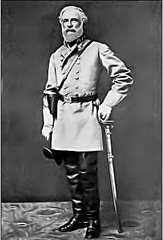
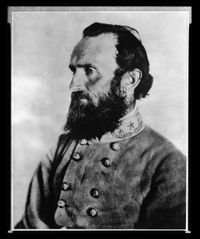
But through all of this, a total of thirteen states, all Southern seceded from the Union. The Confederacy elected Jefferson Davis as their first President. Robert E. Lee eventually took control of the Confederate forces. Lee had been offered the same position for the Union, but took the job for the Confederate army because it was his home. He would dare defend his home, the place where he was born, raised, and learned about life and God. Stonewall Jackson, who like Lee, was a devout Christian man, also became a major figure in the Confederate army. Some have said that Lee was the mastermind and planner for war, but it was Jackson who articulated Lee’s plans.
But while it seems Lincoln wanted to save the Union, and was right in doing so, the South saw this as a threat to their safety and home. The South saw themselves as having every right, legally, and to some every right morally, to secede. They saw themselves as fighting for their independence as the colonies did against Britain. From this, Lincoln was viewed largely in the South as a sort of evil emperor. But today we hear that Lincoln freed slaves and in being nice to the South, saved the Union.
Like most things, there is probably a little bit of truth in each of these views. Lincoln, compared to some Northerners, was actually somewhat kind and gracious to the South. Lincoln, however, was not quite the "Great Emancipator" we often think he was. Lincoln declared as if he had full authority the freeing of every slave in the Confederacy. He did nothing about slaves in the North. His plan though, was not to set the slaves completely free, but to send them right back to Africa where they came from. In fact, Lincoln in one of his many quotes said, "I will say then that I am not, nor ever have been in favor of bringing about in anyway the social and political equality of the white and black races - that I am not nor ever have been in favor of making voters or jurors of negroes, nor of qualifying them to hold office, nor to intermarry with white people; and I will say in addition to this that there is a physical difference between the white and black races which I believe will forever forbid the two races living together on terms of social and political equality. And inasmuch as they cannot so live, while they do remain together there must be the position of superior and inferior, and I as much as any other man am in favor of having the superior position assigned to the white race. I say upon this occasion I do not perceive that because the white man is to have the superior position the negro should be denied everything." Beyond that, he had little or no authority to do such a thing. He also, in being the President of a war, waged a war loosing more American lives than was lost in all of America’s other wars through World War II put together.
There were, therefore, some similarities to the Revolutionary War that the American colonies had toward Britain. But the way the colonies went about breaking off of the British crown was much more systematic, slow, and intellectually oriented. The South, rightly or wrongly, began putting more emphasis on emotion and sacred tradition than what was seen in the North or at other previous times in American history before the war. Perhaps the South should have held secession off to try to work from within, and either secede later, or never secede, but the emotions played high in many Southerners. This could be good or bad to America and the South. Many Southerners did not think as systematically as they should have, but the South did have the heart in battle to defend their land.
They had so much heart, that despite being outnumbered tremendously and having far less money, the South essentially won the first half of the war. The South had reason to fight- to protect their families, homes, lives, fortunes, and sacred honor, very much as the colonies did. But the colonies were able to receive foreign aid, whereas the South was not. Many other nations were very skeptical to having anything to do with being on the side of a nation that supports slavery. Though the Confederacy was not a nation that "recommended" slavery, or demanded slavery or even largely for slavery, slavery did exist in the South. Although many slave owners treated their slaves right, the fact of owning slaves was enough for a nation to be against the South. Beyond this, about half way into the war, the South lost Stonewall Jackson. Jackson was just one man, but to some he was the heart and soul of the Confederate army.
Thus, the depth that the North had eventually overpowered the heart of the South. It can only be wondered if the loss of Stonewall Jackson was a directly leading cause to the decline of the South.The North began to burn down houses that belonged to Southerners, many of whom fought in the war. The North began to take away the pride and joy of Southern men- their families and fortunes. That is what the Southerners fought for. The North had different causes, but had one ultimate underlying cause: to tear down the South, and rebuild to what they wanted it to be. They may have had different ideas for what they wanted it to be, but they all had some common ground, and wanted it different than how it was, and more in line with what the North wanted.
Shortly after the war, Lincoln was assassinated. Many in the South were probably not so sad because Lincoln was viewed as a tyrant. But Lincoln, as stated before, was actually more compassionate to the South than other Northerners, particularly Northern politicians were. This may have made reconstruction even worse for the South. Also, since not every Northerner wanted the same thing, there was confusion that took a while to be resolved, if it ever even has. Now, largely a result of the war, we see racial animosity, and rightly or wrongly, sectional pride.
But who is to blame? Should the North be blamed for waging war? Should the South be blamed for owning slaves, or seceding too early? Like many of things, there is a balance to these questions. Both sides do have plenty to be ashamed of, but also plenty of be proud of. What is read in history books, however, is largely biased and even untrue. It can be argued very well that the South should not have seceded; however, it is fair to say that they had every right, at least legally, to secede. If slavery was the one issue, it could have been done loosing little or no lives. Many other nations had ended slavery without even a war. The North for the abolition of slavery and many other reasons, put aggression upon the South. The South may have made it even worse by seceding, but it would have also probably been better if the North would not have waged war on the South.
But even though the South had every legal right, justified or unjustified to secede, even though the North killed many innocent Southern men, women, and children, and even though the North wanted to use the Central government to apply force to make the South the way that they wanted it, we hear otherwise. History is written by God, but often interpreted and taught by the victors. The war was not even a civil war. The war was a war fought amongst the United States of America, and the Confederate States of America. A Civil War is a war fought amongst different people within a nation trying to take over the same government. The North applied force through the United States Central Government to destroy the South. Sadly many in the South, and even in the North lost their lives, families, and fortunes- any or all of them.
But beyond all of this, pride is not found primarily in victory, but a strong fight for a good cause, which can be in both victory and defeat. The desiring to abolish slavery was a good cause; but the desiring to abolish slavery while killing thousands upon thousands of innocent people is quite another- especially when the slaves hardly wind up better off than they were. The desiring to hold on to slavery is wrong; but the desire to protect one’s heritage, even if it did have problems is a good cause. This cause was and even still is seen in the South, giving many Southerners a feeling of pride. The victors on paper can write their version of history on paper, but the victors in heart can write their version of history in their hearts.
In school, we learn about the American "Civil War," and the causes and effects behind it. But as is with so many things, history is written by the dominate people, nations, or the winners of war, and often is not written completely true. So in looking at this war, we should look at it open-mindedly, to consider the points and the drawbacks to both sides of the war.
The two sides, of course, in the war were the Northern United States of America, and the southern American states, the Confederate States of America. Most every war is a complicated issue, and does not come about all of a sudden. There are a few exceptions to this rule, but we see very little wars in the past that came up "all of the sudden" with one bad side doing something really bad, and a "good side" that corrects them. Even such horrible attacks as Pearl Harbor and the September 11th 2001 attacks were not something that came up suddenly, as neither did the American Revolution, but were a strong outpouring and showing of many years of conflict and anger amongst nations.
So in hearing that the war was so simple, we may need to take a closer look. Without ignoring pure facts, assuming that the South all of a sudden owned a whole lot of slaves, torturing them to no end, and the North on behalf of the slaves, outlawed slavery, but was left with no other choice but to have war on the evil South is a very dangerous assumption. The war may not have officially begun until 1861, but as we look at this more closely, we realize that there were many things leading up to the war before hand. Thus, we should look more closely as to what caused the war, the war itself, and the outcomes of the war.
Through the 1800’s sectionalism begin to take hold in the nation. Sectionalism is essentially the showing of pride or heritage to a particular part of a land under government, but with no government over specifically the section itself. Before secession, there was no real government governing specifically over the Southern United States. Each state had it’s government, and the United States had it’s central government. Sectionalism came about over time, not at once, by differences in tradition, culture, religion, politics, economical, geography, etc. Often times, these work in the dominoes affect.
Once one aspect of the above (or any other aspect that would lead to sectionalism), takes hold, it leads to other of the above differences. There were many geographical differences in the South as compared to that of the North. These led to many economical differences. The South was very and much more agricultural than the North was. The North was more industrial. The North, in many ways, was dominate. Many of the Founding Fathers was from the Northeast (some from the Southeast though), but none of them were from the West. The colonies were all along the East coast. This made the North against Westward Expansion. But the South often was helped by Westward Expansion, because it led more importance to the South. In fact, at one time in American’s history before the war, America’s dominate city seemed to be changing from the Northern New York City to the Southern New Orleans.
But the North did not take too well to that. The North wanted to use force to hinder or stop Westward Expansion. The North was a very, very important part to the nation themselves. Much of what made America great did come from the North, but at this time, many Northerners were not all too happy with more settling in the West, or a more important South. In many ways, it was the dangers of a Confederacy in the manner that America was founded by. Often times there is fight over power amongst sections of the nation in a Confederacy; and also, often times the bigger sections become the dominate voice in what should be an equal voice. America was beginning to see both of these affects.
The South resisted any changes the North wanted to make, often being somewhat overly sensitive in the matter. Besides the economical and geographical differences between the North and the South, there were religious differences, as shown much through the culture and tradition. The South was much more conservative and Christian than the North was. The South had also been seeing a new kind of literature and way of life, romanticism, coming about. The North was not at all like the South in this. The South put more of a romantic and emotional outlook to life than did the North. This is not to say that the South was a section founded only on emotionalism, and the North was a section founded only on intellect. The South simply placed a higher role on religion, tradition, and way of life in their lives and outlooks.
Thus, the cultures of the North and South were much different. The North did not really like the religious and conservative South. In many ways, the North felt the South made a bad name for America. The South was not at all too fond of the North’s ways either, and they had a lot of emotion in their actions.
With the South’s culture and literature, it made them often times defend even things that were wrong that they still did. A major example of this is slavery. The South had taken part in the slave trade, and often defended slavery. This is not to say that the South was the only place slavery existed, or the creator of slaver; nor is it to say that everyone in the South owned slaves. But the South did own more slaves than what was in the North, probably due to agricultural reasons.
Thus with all of this in mind, the North wanted a stronger central government to apply force to make things often the way they wanted. This is not to say that everyone in the North wanted an authoritarian central government in American wanting to control everything in the South, but the issue of state’s rights and the role of the central government began to play a role in political differences. The South, generally speaking, was for a smaller government, particularly the central government. The North looked for more government more so than the South. The South, in being conservative, did want a certain amount of what some would consider "authoritarian" laws, but the North wanted to take away Southern ideas, and probably looked to the government more so than the South. One major example of this could be seen in public education. Intellectuals, mostly from the North, looked to the government to make education laws, applying their curriculum to the classrooms. The South, often, was very cautious to a government school system, particularly done at the Federal level. All this said just shows the culture differences between the North and the South.
But a lot of times two cultures, even within a nation does not cause too much trouble or wars. But the cultures were not just a little different, but very, very different. Beyond just this, the North in being strong minded people, often what could be considered by intellectuals in the since that they put a stronger emphasis on the mind, and thought that they were right as well, would want to apply force to the South through the means of the Central Government. Often times in different cultures, both sides simply overlook the differences. Also, the South in having a higher emphasis on emotion, would have been very upset over the North, making them more likely to secede.
But not everyone in the North felt the same way. Some people wanted to just go and apply force to the South in almost every way. But not all felt that way at all. Meanwhile, the abolitionists, often in the North, were very much against slavery, wanting it stopped at all costs.
Thus, even with these somewhat different views, common ground and reason was there to apply force to the South. The South, on the other hand, being mostly conservative, resisted change, whether it be to keep the South from growing, or ending slavery. In 1861 Abraham Lincoln was elected as President of the United States of America, even without receiving a single vote in the Southeast. The South saw this as horrible, and essentially a threat to their home.
As soon as Lincoln was elected President, states began holding conventions to possibly secede. But many in the North, and even some in the South as well, felt that secession was illegal. Those in the North, even with different views, still had a certain amount of common ground in waging war on the South. Slavery was perhaps the most widely mentioned reason for waging war on the South. Rightly or wrongly, slavery was used, depending on how you view it, as the reason or the excuse for the North waging war on the South. But new President Abraham Lincoln’s main objective in the struggle between the North and the South was not to free slaves, but to save the Union. He said himself that if he "[C]ould save the Union without freeing any slave, I would do so, and if I could save the Union freeing all the slaves, I would do so, and if I could do it freeing some slaves and leaving others alone, I would also do that."
May it also be said that slavery was not the one underlying cause to the war. It was a very important issue at the time of the war, but that does not mean that it was the leading cause and factor to and in the war. It was a factor, but not the factor. State’s rights is perhaps the best way to sum up the factors leading to the war and the factors within the war. Slavery, perhaps was one aspect of state’s rights. Due to the importance slavery did have in the war, and due to what we are told by those who interpret history, it is an issue that must be talked about in much detail.
This is not to say that Lincoln did not care about slavery, but it was not his number one priority. But even with the different views in the North, there was common ground on each of the Northern views that could wage war on the South. There were different views in the South as well. Not every Southerner wanted to secede from the Union. In fact, the future Vice President of the Confederacy was very strongly against secession.
But through all of this, a total of thirteen states, all Southern seceded from the Union. The Confederacy elected Jefferson Davis as their first President. Robert E. Lee eventually took control of the Confederate forces. Lee had been offered the same position for the Union, but took the job for the Confederate army because it was his home. He would dare defend his home, the place where he was born, raised, and learned about life and God. Stonewall Jackson, who like Lee, was a devout Christian man, also became a major figure in the Confederate army. Some have said that Lee was the mastermind and planner for war, but it was Jackson who articulated Lee’s plans.
But while it seems Lincoln wanted to save the Union, and was right in doing so, the South saw this as a threat to their safety and home. The South saw themselves as having every right, legally, and to some every right morally, to secede. They saw themselves as fighting for their independence as the colonies did against Britain. From this, Lincoln was viewed largely in the South as a sort of evil emperor. But today we hear that Lincoln freed slaves and in being nice to the South, saved the Union.
Like most things, there is probably a little bit of truth in each of these views. Lincoln, compared to some Northerners, was actually somewhat kind and gracious to the South. Lincoln, however, was not quite the "Great Emancipator" we often think he was. Lincoln declared as if he had full authority the freeing of every slave in the Confederacy. He did nothing about slaves in the North. His plan though, was not to set the slaves completely free, but to send them right back to Africa where they came from. In fact, Lincoln in one of his many quotes said, "I will say then that I am not, nor ever have been in favor of bringing about in anyway the social and political equality of the white and black races - that I am not nor ever have been in favor of making voters or jurors of negroes, nor of qualifying them to hold office, nor to intermarry with white people; and I will say in addition to this that there is a physical difference between the white and black races which I believe will forever forbid the two races living together on terms of social and political equality. And inasmuch as they cannot so live, while they do remain together there must be the position of superior and inferior, and I as much as any other man am in favor of having the superior position assigned to the white race. I say upon this occasion I do not perceive that because the white man is to have the superior position the negro should be denied everything." Beyond that, he had little or no authority to do such a thing. He also, in being the President of a war, waged a war loosing more American lives than was lost in all of America’s other wars through World War II put together.
There were, therefore, some similarities to the Revolutionary War that the American colonies had toward Britain. But the way the colonies went about breaking off of the British crown was much more systematic, slow, and intellectually oriented. The South, rightly or wrongly, began putting more emphasis on emotion and sacred tradition than what was seen in the North or at other previous times in American history before the war. Perhaps the South should have held secession off to try to work from within, and either secede later, or never secede, but the emotions played high in many Southerners. This could be good or bad to America and the South. Many Southerners did not think as systematically as they should have, but the South did have the heart in battle to defend their land.
They had so much heart, that despite being outnumbered tremendously and having far less money, the South essentially won the first half of the war. The South had reason to fight- to protect their families, homes, lives, fortunes, and sacred honor, very much as the colonies did. But the colonies were able to receive foreign aid, whereas the South was not. Many other nations were very skeptical to having anything to do with being on the side of a nation that supports slavery. Though the Confederacy was not a nation that "recommended" slavery, or demanded slavery or even largely for slavery, slavery did exist in the South. Although many slave owners treated their slaves right, the fact of owning slaves was enough for a nation to be against the South. Beyond this, about half way into the war, the South lost Stonewall Jackson. Jackson was just one man, but to some he was the heart and soul of the Confederate army.
Thus, the depth that the North had eventually overpowered the heart of the South. It can only be wondered if the loss of Stonewall Jackson was a directly leading cause to the decline of the South.The North began to burn down houses that belonged to Southerners, many of whom fought in the war. The North began to take away the pride and joy of Southern men- their families and fortunes. That is what the Southerners fought for. The North had different causes, but had one ultimate underlying cause: to tear down the South, and rebuild to what they wanted it to be. They may have had different ideas for what they wanted it to be, but they all had some common ground, and wanted it different than how it was, and more in line with what the North wanted.
Shortly after the war, Lincoln was assassinated. Many in the South were probably not so sad because Lincoln was viewed as a tyrant. But Lincoln, as stated before, was actually more compassionate to the South than other Northerners, particularly Northern politicians were. This may have made reconstruction even worse for the South. Also, since not every Northerner wanted the same thing, there was confusion that took a while to be resolved, if it ever even has. Now, largely a result of the war, we see racial animosity, and rightly or wrongly, sectional pride.
But who is to blame? Should the North be blamed for waging war? Should the South be blamed for owning slaves, or seceding too early? Like many of things, there is a balance to these questions. Both sides do have plenty to be ashamed of, but also plenty of be proud of. What is read in history books, however, is largely biased and even untrue. It can be argued very well that the South should not have seceded; however, it is fair to say that they had every right, at least legally, to secede. If slavery was the one issue, it could have been done loosing little or no lives. Many other nations had ended slavery without even a war. The North for the abolition of slavery and many other reasons, put aggression upon the South. The South may have made it even worse by seceding, but it would have also probably been better if the North would not have waged war on the South.
But even though the South had every legal right, justified or unjustified to secede, even though the North killed many innocent Southern men, women, and children, and even though the North wanted to use the Central government to apply force to make the South the way that they wanted it, we hear otherwise. History is written by God, but often interpreted and taught by the victors. The war was not even a civil war. The war was a war fought amongst the United States of America, and the Confederate States of America. A Civil War is a war fought amongst different people within a nation trying to take over the same government. The North applied force through the United States Central Government to destroy the South. Sadly many in the South, and even in the North lost their lives, families, and fortunes- any or all of them.
But beyond all of this, pride is not found primarily in victory, but a strong fight for a good cause, which can be in both victory and defeat. The desiring to abolish slavery was a good cause; but the desiring to abolish slavery while killing thousands upon thousands of innocent people is quite another- especially when the slaves hardly wind up better off than they were. The desiring to hold on to slavery is wrong; but the desire to protect one’s heritage, even if it did have problems is a good cause. This cause was and even still is seen in the South, giving many Southerners a feeling of pride. The victors on paper can write their version of history on paper, but the victors in heart can write their version of history in their hearts.
Thursday, April 5, 2007
Ten Myths
Well I will put together a list of my top ten myths. These are social, political, ethical, and maybey even religous myths I have put together and I will show you why I think that they are myths.
MYTH 10- The population is too big and increasingly getting worse. This is a myth in my opinion. People have been talking about the population "bomb" for many years and it just hasn't happened yet. It has even been put that the whole world's population put only into the state of Texas would not even match the population density of New York state or New York City, I'm not sure which one honestly. People think that we will run out of food, but, often it's the same people who oppose hunting and fishing. With higher technology, we can farm on less land for the same amount of production, and all-round use our recorces better. This can go for tree-killing that envirementalists are worried about as well as for busting the myth of global warming. Children are sources of joy for parents and I would want no one telling me a limit to how many children I can have. The more children we prduce, the more people who can grow up and cure cancer, build safer car, aiplanes, trains, etc. We are only averaging about two children now anyways, which is just enough to replace the parents. We are no where near an exploded population.
MYTH 9- Atheists are neutral and open-minded. This is a myth. If an atheist and a Christian were in a debate, if the Christian was well-educated, he/she could easily show the atheists lack of personal dependence on God which they really ultimately must have, along with show their commitment to independence. Ultimately, neutrality itself is only a certain kind of bias. If you are "neutral," then you reject close-mindedness and so you are bias because you have a rejection. Ultimately, if someone denies God, then they must obtain this univers to have much of the same qualities of God that can not be explained without calling the universe God. Christians may be biased, but they are called to not compromise their faith, so they are called to be in a large way. Atheists are just biased because they chose to be independent in and of themselves.
MYTH 8- Global Warming is rapid and growing. This againis a myth. Global warming is an example of people who keep saying things to scare people. Politicians, the media, and sometimes regular, ordinary people who are not famous say things like this to scare people. People had been talking about the populoation bomb for a long time and it didn't happen, and people will probably continue to talk about the glabal warming catastrophy for a long time. We are better equiped to handle our recorses. Indians used to just burn whole forests to get what little they needed. Now we only see forests fires due to accidents or idiots who just want to set the forest on fire as a prank or something. One volcanoe really sets up about as much gas into the atmosphere as several years of driving anyways. I'm not at all against finding better ways to manage how we use things, but the reality is, we have. Things on a comfort standpoint really are getting better all the time. People like to say we have less free time, or the price of everything has gone up, or we will use up our welcome in the world so to speak, but really, we have higher technology, some goes to waste, but much of it is useful, and we just use things better. Global Warming is not a problem now in my opinion. They say that the temperature of the earth has increased over the last five hundred years, but how do they know what the exact temperature of the earth was five hundred years ago? The can estimate or guestimate, but they can't tell for sure. I don't see global warming as a problem, but as a myth.
MYTH 7- Guns kill people, so they should be outlawed. Once again, this is a myth. Any attempt to cut down on crime by cutting down on guns has not worked. Guns kill animals, which feed humans, and guns kill people who kill people. Guns can kill innocent people by accident or criminal intent, but so do cars, and planes, and other things as well as lack of guns to protect people. If you were a criminal, would you go to a house where the owner had a gun or didn't have a gun? Not that I would break into anyones house, but I certainly would not go into someone's house who I knew was a gun expert and had plenty of guns ready.
MYTH 6- Captialism helps only the rich. This is definetely a myth, and all though liberals claim capitialism over communism usually, their actions speak pretty loud. They fuss at Republicans and conservatives for helping only the rich. Those who preach less government are accused of helping the rich. That is not true at all. Less government and capitalism helps the poor reach their goals, and the rich maintain their goals. Sure life sometimes isn't fair but atleast it won't be because of an inefering government. Somtimes life isn't fair but capitalism is more fair than communism. Less is more when it comes to government in many ways. Captialism gives the poor person living in the ghetto a chance to get a small job, get paid and then move up, and move out of the ghetto to a more comfortable, afordable place. It also allows the person who does not work hard the probability of declining in the business world. That's the ways it mostly is in America and that is the way it should be. Capitalism may not be perfect, but it is closer to perfect than communism.
MYTH 5- Religion is the enemy of science. Another myth. Sure many and most of the "brand name" scientists out there may not be Christian, but a good many, probably majority of scientists believe in some God or deity. It is more than one would realize too. Christian scientists are often kicked out of teaching at major universities because of their "prejudice" faith. Even many who are not Christians still believe in a God or high power because they see no other way. Ultimately, religion can be viewed as a friend of schience becasue it explains it's origin. If God didn't exist, I mean no God, where did science come from. Science did not create God, but I believe God created science.
MYTH 4- Wal-Mart is desroying society and the free market. This is a myth. This is actually the opposite of what the myth teaches. Wal-Mart creates jobs, and save people money, and is succes to their own wealth. How is that destroying socity? It's not! Just because Wal-Mart has more doesn't mean that we were cheated into having less. The demand for wealth factor is important. Donald Trump would not work at Wal-Mart, but a hard-working immigrant would. Granted many immigrants are illegal and don't pay taxes, but still, Wal-Mar may pay people less, but they charge less and they don't force anyone to work for them. Those who work for them had a choice. Wal-Mart creates more jobs than the government. Wal-Mart saves shoppers money. Every other store has the right to do what Wal-Mart has done. Wal-Mart just found a nice strategy. Wal-Mart helps the economy, not hurts it.
MYTH 3- Highering legal immigrants hurts the society and takes away jobs. This is a little tricky because rarely do I defend the immigrants, much less illegal immiigrants, but this is about the legal immigrants- those who pay taxes, speak reasonable English, etc. Those who want to be apart of the American dream. Highering the legal immigrants means lower prices ore more jobs ore a combination. Many thinks it takes away jobs because the Mexican's work for less. It may in the short run, but there is more money in the pot so that more jobs can be created. Anyways, what is wrong with a hard-working legal immigrant getting money? Nothing! They still work for it. If these people are so worried, then they can get out and work more. Many places wouldn't higher an immigrant because someone like me would much rather have a hard-working, well-to-do white or black American who speaks very good English working, but if highering immigrants saves me money, then I guess is it may be worth it. Many people will complain if Mexicans work for less, and if the government gives them benifits, but their ancestors were immigrants not too long ago.
MYTH 2- The Civil War was about a nice North and a mean, slavery-oriented south. This is another issue that may have to do with immigration. Let's first say that the "Civil War" was not a Civil War. It was a war between The Confederate States of America against the United States of America. Slavery did not even begin in the South. The South had some bad things going on, such as some slavery, but slavery was rare in the South, and many of the head Southerners wanted to end it. The North and the U.S. Federal Government wanted to wage war on the South and agress onto the South who had less money. Many of the Southerners depended on slaves, and many of the slaves depended on Southerners. They would work hard for a good owner and somewhat of a good home. They had higher standerds of morality, and other benifits compared to Africa. This war was not all about slavery. It in general had to do with states rights. Slavery, perhaps, was the Yankee's way to make the South look bad in and throughout history. The South legally seceeded, and the North illegally aggressed on the South. The North was good in some ways and the South was bad in some ways, but the Yankee myth is not the correct view and this is a myth.
MYTH 1- The world is getting worse. This is a big myth. The world seems more complicated, evil, and hard. There are crooked politicians, crime in the streets, and more complications, etc. However I have shed some light on these myths. People want to scare people into believing crazy things. We have more free-time, and we have more luxeries. Could we survive without the internet? Many think not but last generation we survived without internet, cell phones, etc. Now when we spend all day on the internet we complain about not having enough free time. We complain about the crime, but there was crime last generation. There were crooked politicains. Think about the water-gate ordeal, and the civil rights issues, and all of the assassinations that happened. Consider five hundred years ago when you were in trouble with your life if you disagreed with the Pope. We certainly have a ong time to go before we are where we should be, but we are in many ways getting better all the time (Like Winn Dixie, right lol).
Well there's my top ten myths. You can read the blogs about the Civil War, Wal-Mart, Global Wariming, Gun/hunting controls, and Immigration if you want more depth into some of these topics.
What do you think?
Ryan
MYTH 10- The population is too big and increasingly getting worse. This is a myth in my opinion. People have been talking about the population "bomb" for many years and it just hasn't happened yet. It has even been put that the whole world's population put only into the state of Texas would not even match the population density of New York state or New York City, I'm not sure which one honestly. People think that we will run out of food, but, often it's the same people who oppose hunting and fishing. With higher technology, we can farm on less land for the same amount of production, and all-round use our recorces better. This can go for tree-killing that envirementalists are worried about as well as for busting the myth of global warming. Children are sources of joy for parents and I would want no one telling me a limit to how many children I can have. The more children we prduce, the more people who can grow up and cure cancer, build safer car, aiplanes, trains, etc. We are only averaging about two children now anyways, which is just enough to replace the parents. We are no where near an exploded population.
MYTH 9- Atheists are neutral and open-minded. This is a myth. If an atheist and a Christian were in a debate, if the Christian was well-educated, he/she could easily show the atheists lack of personal dependence on God which they really ultimately must have, along with show their commitment to independence. Ultimately, neutrality itself is only a certain kind of bias. If you are "neutral," then you reject close-mindedness and so you are bias because you have a rejection. Ultimately, if someone denies God, then they must obtain this univers to have much of the same qualities of God that can not be explained without calling the universe God. Christians may be biased, but they are called to not compromise their faith, so they are called to be in a large way. Atheists are just biased because they chose to be independent in and of themselves.
MYTH 8- Global Warming is rapid and growing. This againis a myth. Global warming is an example of people who keep saying things to scare people. Politicians, the media, and sometimes regular, ordinary people who are not famous say things like this to scare people. People had been talking about the populoation bomb for a long time and it didn't happen, and people will probably continue to talk about the glabal warming catastrophy for a long time. We are better equiped to handle our recorses. Indians used to just burn whole forests to get what little they needed. Now we only see forests fires due to accidents or idiots who just want to set the forest on fire as a prank or something. One volcanoe really sets up about as much gas into the atmosphere as several years of driving anyways. I'm not at all against finding better ways to manage how we use things, but the reality is, we have. Things on a comfort standpoint really are getting better all the time. People like to say we have less free time, or the price of everything has gone up, or we will use up our welcome in the world so to speak, but really, we have higher technology, some goes to waste, but much of it is useful, and we just use things better. Global Warming is not a problem now in my opinion. They say that the temperature of the earth has increased over the last five hundred years, but how do they know what the exact temperature of the earth was five hundred years ago? The can estimate or guestimate, but they can't tell for sure. I don't see global warming as a problem, but as a myth.
MYTH 7- Guns kill people, so they should be outlawed. Once again, this is a myth. Any attempt to cut down on crime by cutting down on guns has not worked. Guns kill animals, which feed humans, and guns kill people who kill people. Guns can kill innocent people by accident or criminal intent, but so do cars, and planes, and other things as well as lack of guns to protect people. If you were a criminal, would you go to a house where the owner had a gun or didn't have a gun? Not that I would break into anyones house, but I certainly would not go into someone's house who I knew was a gun expert and had plenty of guns ready.
MYTH 6- Captialism helps only the rich. This is definetely a myth, and all though liberals claim capitialism over communism usually, their actions speak pretty loud. They fuss at Republicans and conservatives for helping only the rich. Those who preach less government are accused of helping the rich. That is not true at all. Less government and capitalism helps the poor reach their goals, and the rich maintain their goals. Sure life sometimes isn't fair but atleast it won't be because of an inefering government. Somtimes life isn't fair but capitalism is more fair than communism. Less is more when it comes to government in many ways. Captialism gives the poor person living in the ghetto a chance to get a small job, get paid and then move up, and move out of the ghetto to a more comfortable, afordable place. It also allows the person who does not work hard the probability of declining in the business world. That's the ways it mostly is in America and that is the way it should be. Capitalism may not be perfect, but it is closer to perfect than communism.
MYTH 5- Religion is the enemy of science. Another myth. Sure many and most of the "brand name" scientists out there may not be Christian, but a good many, probably majority of scientists believe in some God or deity. It is more than one would realize too. Christian scientists are often kicked out of teaching at major universities because of their "prejudice" faith. Even many who are not Christians still believe in a God or high power because they see no other way. Ultimately, religion can be viewed as a friend of schience becasue it explains it's origin. If God didn't exist, I mean no God, where did science come from. Science did not create God, but I believe God created science.
MYTH 4- Wal-Mart is desroying society and the free market. This is a myth. This is actually the opposite of what the myth teaches. Wal-Mart creates jobs, and save people money, and is succes to their own wealth. How is that destroying socity? It's not! Just because Wal-Mart has more doesn't mean that we were cheated into having less. The demand for wealth factor is important. Donald Trump would not work at Wal-Mart, but a hard-working immigrant would. Granted many immigrants are illegal and don't pay taxes, but still, Wal-Mar may pay people less, but they charge less and they don't force anyone to work for them. Those who work for them had a choice. Wal-Mart creates more jobs than the government. Wal-Mart saves shoppers money. Every other store has the right to do what Wal-Mart has done. Wal-Mart just found a nice strategy. Wal-Mart helps the economy, not hurts it.
MYTH 3- Highering legal immigrants hurts the society and takes away jobs. This is a little tricky because rarely do I defend the immigrants, much less illegal immiigrants, but this is about the legal immigrants- those who pay taxes, speak reasonable English, etc. Those who want to be apart of the American dream. Highering the legal immigrants means lower prices ore more jobs ore a combination. Many thinks it takes away jobs because the Mexican's work for less. It may in the short run, but there is more money in the pot so that more jobs can be created. Anyways, what is wrong with a hard-working legal immigrant getting money? Nothing! They still work for it. If these people are so worried, then they can get out and work more. Many places wouldn't higher an immigrant because someone like me would much rather have a hard-working, well-to-do white or black American who speaks very good English working, but if highering immigrants saves me money, then I guess is it may be worth it. Many people will complain if Mexicans work for less, and if the government gives them benifits, but their ancestors were immigrants not too long ago.
MYTH 2- The Civil War was about a nice North and a mean, slavery-oriented south. This is another issue that may have to do with immigration. Let's first say that the "Civil War" was not a Civil War. It was a war between The Confederate States of America against the United States of America. Slavery did not even begin in the South. The South had some bad things going on, such as some slavery, but slavery was rare in the South, and many of the head Southerners wanted to end it. The North and the U.S. Federal Government wanted to wage war on the South and agress onto the South who had less money. Many of the Southerners depended on slaves, and many of the slaves depended on Southerners. They would work hard for a good owner and somewhat of a good home. They had higher standerds of morality, and other benifits compared to Africa. This war was not all about slavery. It in general had to do with states rights. Slavery, perhaps, was the Yankee's way to make the South look bad in and throughout history. The South legally seceeded, and the North illegally aggressed on the South. The North was good in some ways and the South was bad in some ways, but the Yankee myth is not the correct view and this is a myth.
MYTH 1- The world is getting worse. This is a big myth. The world seems more complicated, evil, and hard. There are crooked politicians, crime in the streets, and more complications, etc. However I have shed some light on these myths. People want to scare people into believing crazy things. We have more free-time, and we have more luxeries. Could we survive without the internet? Many think not but last generation we survived without internet, cell phones, etc. Now when we spend all day on the internet we complain about not having enough free time. We complain about the crime, but there was crime last generation. There were crooked politicains. Think about the water-gate ordeal, and the civil rights issues, and all of the assassinations that happened. Consider five hundred years ago when you were in trouble with your life if you disagreed with the Pope. We certainly have a ong time to go before we are where we should be, but we are in many ways getting better all the time (Like Winn Dixie, right lol).
Well there's my top ten myths. You can read the blogs about the Civil War, Wal-Mart, Global Wariming, Gun/hunting controls, and Immigration if you want more depth into some of these topics.
What do you think?
Ryan
Subscribe to:
Posts (Atom)